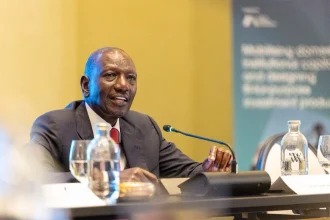
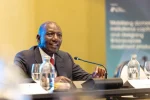


On September 21, on the sidelines of this year’s United Nations General Assembly in New York, President William Ruto delivered a speech that was less about diplomacy and more about architecture — the architecture of a future African digital economy.
Speaking during the high-level convening on the “Accra Reset”, an initiative led by Ghanaian President John Mahama, Ruto argued that Africa’s next development challenge is not merely building roads, ports or fibre-optic cables.
It is building trust: trust in skills, qualifications, institutions and digital systems that can allow African talent to move across borders and participate in the emerging global intelligence economy.
At the centre of Kenya’s proposal is a new idea called MasterKey — a continent-wide system through which citizens could securely hold and share verified records of their education, skills and work experience.
If successful, it could become one of Africa’s most significant digital public infrastructure projects: an attempt to make talent as portable as capital, goods and information.
Next Phase of African Integration
For decades, African integration has largely been discussed through trade agreements, transport corridors and customs unions. The African Continental Free Trade Area (AfCFTA) aims to create a market of more than 1.4 billion people with a combined GDP exceeding US$3 trillion.
But the rise of artificial intelligence is changing the terms of integration.
The economies likely to gain most from the AI era will not necessarily be those with the largest natural resources. They will be those that can combine digital infrastructure, computing power, trusted data, research capacity and skilled workers.
Ruto’s argument in New York was that Africa already possesses one of these assets in abundance: people.
The continent is the world’s youngest, with more than 60 per cent of Africans under the age of 25. Every year, millions enter labour markets that often cannot create jobs at the pace required. At the same time, digital work, remote employment and global technology services are increasingly crossing borders.
The challenge is that skills remain trapped within national systems.
A certificate earned in Nairobi may require lengthy verification in Accra. A professional qualification obtained in Kigali may not be easily recognised in another country. Employers often struggle to verify credentials, while workers remain vulnerable to fraud, exploitation and informal recruitment networks.
MasterKey seeks to solve this problem through digital trust.
Building a Passport for Skills
Kenya will lead the first implementation of the MasterKey Corridor under the Accra Reset initiative.
The system would allow individuals to store and securely share verified records of qualifications, skills and work experience across institutions and countries. The records would come from authorised institutions, while citizens would retain control over what information they share.
Importantly, MasterKey would not issue jobs, visas or professional licences. Those decisions would remain with governments, regulators and employers.
Its role would be narrower, but potentially transformative: creating trusted evidence.
A qualification issued in Nairobi could be instantly verified in Accra, Kigali or another participating city. An employer could confirm credentials without lengthy paperwork. A worker could prove experience across borders more efficiently and securely.
The idea mirrors broader global trends in digital public infrastructure, where countries are increasingly using interoperable digital systems to improve service delivery, identity management and economic participation.
Kenya has already invested heavily in this direction through fibre expansion, digital hubs, e-government systems and its wider Digital Superhighway programme. MasterKey represents an attempt to move beyond infrastructure and ask a deeper question: what can citizens actually do with these systems?
Africa and the Intelligence Economy
Underlying the speech was an even larger argument: Africa should not enter the age of artificial intelligence merely as a consumer of technology.
Ruto argued that Africans are already workers, software developers, researchers, entrepreneurs and creators contributing to the global technology economy. The challenge is ensuring the continent has sufficient agency to shape technologies rather than simply adopt them.
That requires more than connectivity.
Countries will need computing capacity, reliable energy, quality data, advanced AI models, research institutions and regulatory expertise. No country, Ruto acknowledged, can build all these layers alone.
The result is a new development agenda centred on partnerships between governments, universities, companies, investors and development institutions.
It also raises questions of governance.
Artificial intelligence is increasingly influencing education, healthcare, finance, public administration and critical infrastructure. African institutions will require the expertise to regulate these technologies, manage risks and protect citizens from fraud, discriminatory algorithms and cybersecurity threats.
In this sense, the Accra Reset is not simply about technology. It is about sovereignty.
Who owns data? Who verifies skills? Who sets standards? Who controls digital systems? And who benefits from the economic value they create?
From Dialogue to Delivery
Perhaps the most important line in Ruto’s speech was also the simplest.
“When we meet again,” he said, “our test should be practical: was a trusted record issued in one African country recognised and used in another?”
It is a reminder that Africa’s development conversation is increasingly shifting from declarations to implementation.
The continent has no shortage of visions. What it often lacks are systems that work across borders.
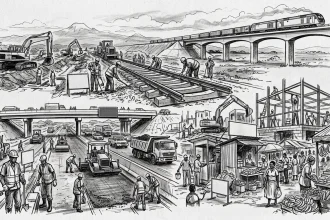
If MasterKey succeeds, it may not make headlines like a railway, a highway or a major infrastructure project. Yet it could quietly create something equally important: a trusted African labour market in which skills, credentials and opportunity travel more freely.
In an age where technology, capital and ideas move globally, Africa is making the case that its people should be able to do the same — with trust, safety and dignity.