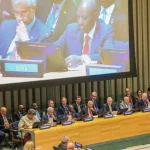
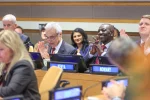
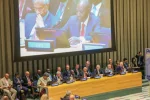


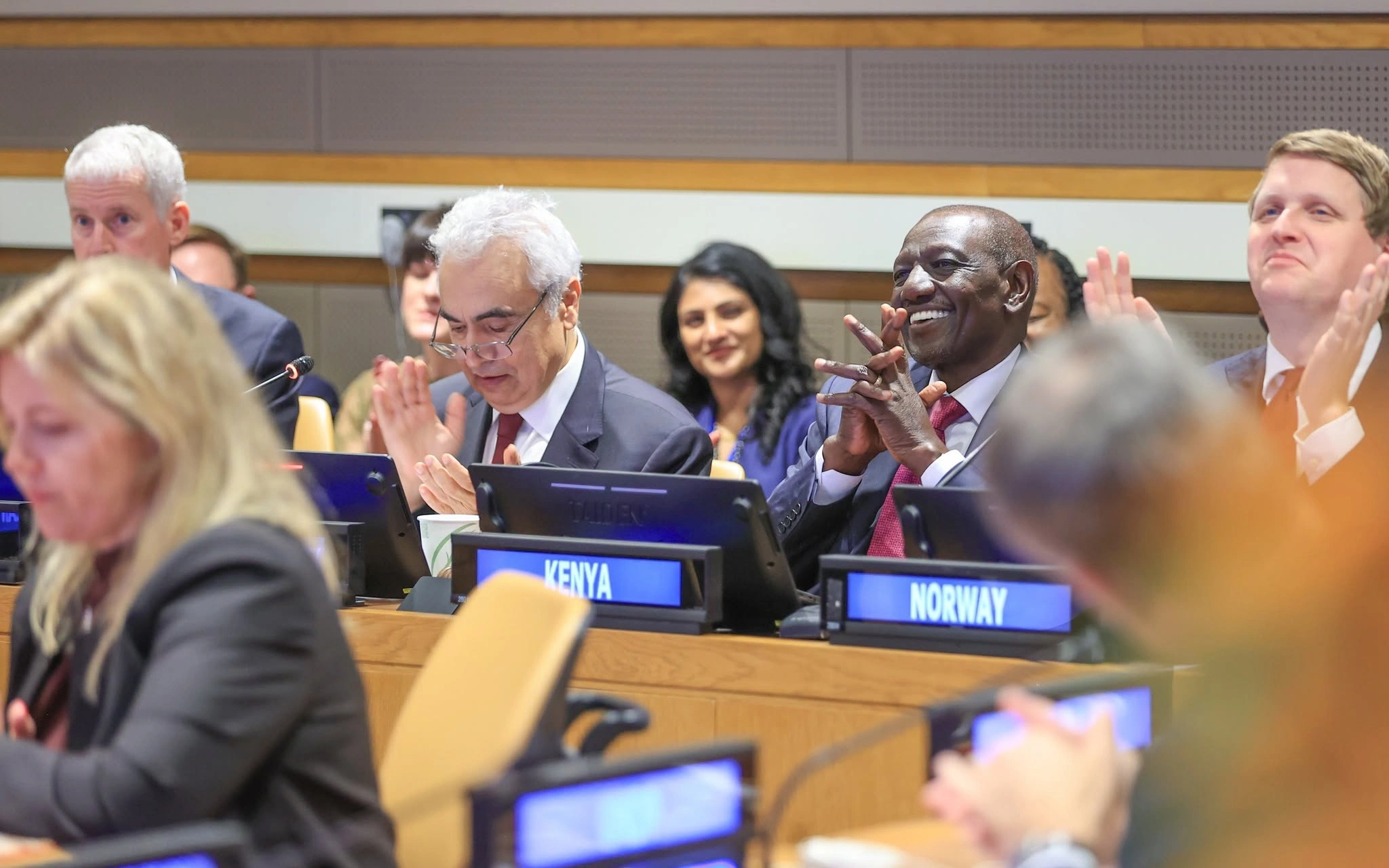
President William Ruto used the sidelines of the 81st UN General Assembly to stage something Kenya has not hosted before: the first high-level event on clean cooking in Africa held during UNGA week.
Flanked by IEA Executive Director Fatih Birol and Norwegian co-hosts, he framed household energy, three-stone fires, charcoal, firewood smoke, not as a welfare issue but as infrastructure policy, arguing it belongs “in the plans of every ministry and institution that shapes how our economies grow.”
The number he wants remembered is small: achieving universal clean cooking access across Africa costs an estimated $2 billion a year through 2040, against $3 trillion the world spends on energy annually. This is less than a tenth of one per cent.
He announced Kenya will co-host a Second Africa Clean Cooking Summit in Nairobi on January 27–28, with Norway, the United States and the IEA, and challenged fellow leaders to arrive with “one concrete step” already delivered; a policy approved, a procurement launched, financing deployed.
It is a well-built argument, and Kenya has real material to back it. The country has positioned itself as the continent’s LPG growth story: consumption rose 14.7 percent in 2025 to 475,943 metric tonnes, on top of 15.1 percent growth in 2024, as government zero-rating and the National LPG Growth Strategy pulled households off kerosene and biomass.
Ruto’s government also launched an Institutional Clean Cooking Investment Pack this year, identifying a $600 million opportunity across schools, healthcare facilities and correctional institutions.
And the health case he cited, more than 26,000 premature deaths a year from household air pollution in Kenya, tracks with recent research from the NIHR CLEAN-Air Africa group, which puts the toll at 26,000–27,000 annually, disproportionately among women and children.
The Pitch vs The Ledger
What the speech does not mention is the Petroleum Development Levy (Amendment) Order, 2025 — gazetted in November last year, months before Ruto stood up in New York to argue that clean cooking’s biggest constraint is fragmented demand and misallocated risk, not a shortage of capital.
The order raised the levy on LPG from 40 cents to Sh5.40 per kilogram, a more than thirteen-fold increase, applied at the same rate as levies on petrol, diesel and jet fuel.
The Consumer Federation of Kenya has called the levy “a direct contradiction” of the government’s own clean cooking policy, and pushed — so far unsuccessfully — for its suspension, arguing it was gazetted without the public participation Article 10 of the Constitution requires.
Kenya’s own experience already shows what happens when LPG gets taxed like a discretionary fuel rather than treated as displacement infrastructure.
When VAT on cooking gas was reintroduced in 2021, researchers working with the Ministries of Health and Energy found that half of urban households in Western Kenya using LPG cut back their consumption — and three-quarters of those households reported cooking more often with charcoal or wood instead.
Price sensitivity at the household level is precisely the friction Ruto described to the UN as capital being “held back” by fragmented, unmanaged demand. The difference is that this time the fragmentation is coming from Nairobi’s own fiscal policy, not the market.
The government would likely argue the levy is a general revenue instrument, not a clean cooking measure, and that it has separately used Petroleum Development Levy proceeds to cushion pump prices for consumers, as it did in July, drawing down Sh945 million to hold prices steady during a period of global volatility.
That is a defensible position on its own terms especially with cooking gas prices expected to rise next month due to the sharp hike in global propane and butane costs.
What January Actually Tests
Ruto’s own framing supplies the test. He told delegates in New York that when they reconvene in Nairobi in January, each should be able to point to “one concrete step”; not another announcement, but delivery: a policy approved, financing deployed, a project advanced.
Kenya will be the host government at that summit, which means the question will not be whether it can cite the $600 million Investment Pack or the LPG consumption growth figures again.
It will be whether the Petroleum Development Levy, the one domestic fiscal lever squarely within Ruto’s own control, and the one his administration has already been accused of misusing against its stated clean cooking goals, has moved at all.
The argument Ruto says the world has “yet to win” is that clean cooking belongs in every ministry’s planning, not just the energy portfolio. Kenya’s own Treasury and Energy ministries offer, in the same calendar year, a live test case of what happens when it doesn’t.