

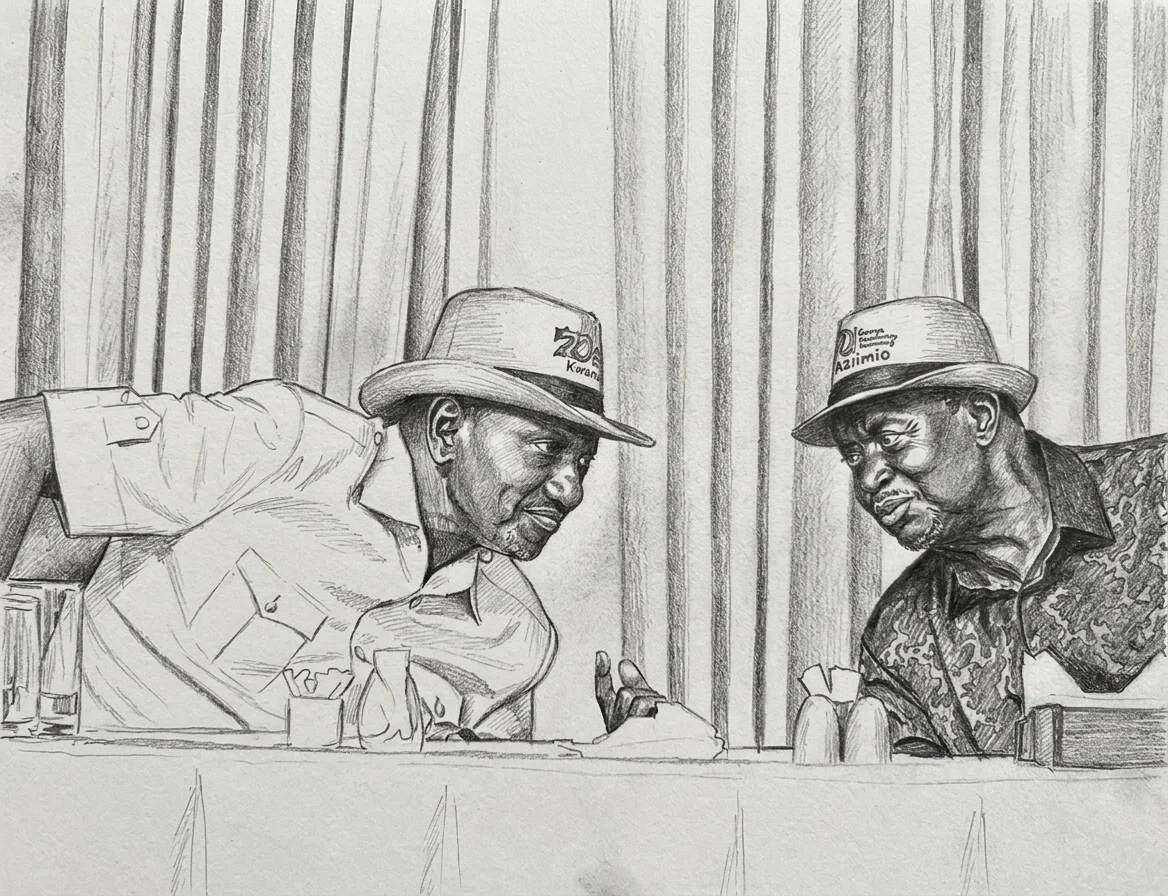
The partnership between the United Democratic Alliance (UDA) and the Orange Democratic Movement (ODM) is becoming a defining calculation of the 2027 General Election.
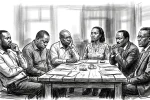
What began as a political accommodation within government is now being organised into a possible electoral coalition, complete with joint committees, a proposed manifesto and negotiations over how the two parties will share political power.
The arrangement has obvious political logic. President William Ruto gains access to a party with a substantial national following and established political networks, while ODM gains proximity to government and the chance to translate its support into influence over the next administration.
Both sides have every reason to believe cooperation could improve their electoral prospects. But an alliance built around the distribution of political advantage is not automatically a partnership built around a common national programme.
The danger is that Kenya could be presented with a coalition whose internal negotiations are more developed than its answers to the country’s problems. That is the test UDA and ODM must confront before they ask voters to endorse their partnership.
A coalition agreement can determine who gets which position, but a manifesto must explain what those positions will achieve.
Negotiations Moving Faster Than Policy Debate
The two parties have taken concrete steps towards formalising their relationship. In August, ODM announced plans to work with UDA on a joint manifesto, with both sides appointing representatives to develop a shared policy agenda. The process has since moved towards a formal coalition framework for the August 10, 2027 General Election.
By October 27, UDA reported progress from the joint manifesto committee, saying the proposed document would be anchored on President Ruto’s Bottom-Up Economic Transformation Agenda (BETA) and the philosophy of Usawa Ni Sawa.
The committee is expected to build on existing government programmes, identify areas where delivery has fallen short and develop commitments for the next electoral cycle.
There is nothing inherently wrong with two political parties developing a common manifesto. Coalitions need shared priorities, agreed decision-making structures and mechanisms for resolving disputes.
The public conversation around this partnership has focused on who will receive what, rather than the more important question of what the country should expect in return.
ODM seeks an arrangement reflecting what it sees as an equal partnership: more political appointments, a possible Deputy President’s position, and negotiated electoral deals where the parties might otherwise compete.
Some leaders have proposed 50–50 power-sharing and zoning in selected strongholds. UDA has resisted, with Interior Principal Secretary Raymond Omollo warning against forcing the ruling party into conditional pre-election deals.
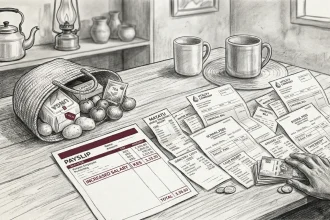
These negotiations matter politically, but they cannot replace policy. A Deputy President’s post, cabinet appointments or a pact to avoid competing candidates may stabilise a coalition, but none explains how the next government will lower living costs, create sustainable jobs for graduates or shield public institutions from political interference.
The alliance is therefore at risk of confusing the architecture of political cooperation with the substance of governing.
Unfinished Business Of The Original Bargain
The partnership’s political foundations stem from an understanding between Ruto and the late Raila Odinga, which brought the opposition leader into a broad-based arrangement and launched the National Dialogue Committee (NADCO) process to address the country’s political and institutional tensions.
That history matters: the 2027 alliance cannot credibly claim to be entirely new without accounting for the commitments that enabled it.
NADCO recommended electoral, governance, inclusion and political competition reforms. Implementing them was part of a broader bargain to ease confrontation and establish a more stable framework for national engagement.
Key reforms remain unfinished, raising concerns about electoral readiness as the next election nears. The commission warns that reforms enacted too close to polling day could disrupt preparations.
Electoral credibility is no technical footnote to coalition negotiations; it underpins any political partnership seeking a national mandate. Parties negotiating post-election power-sharing should also ensure election institutions are prepared and trusted.
A broader accountability question also remains. If NADCO produced commitments in exchange for political cooperation, who is responsible for ensuring they are implemented?
Will ODM make fulfilment a condition of continued partnership, or will demands for institutional reform fade once positions and electoral arrangements are settled?
The same applies to UDA: a governing party cannot claim the benefits of broad political consensus while treating its accompanying institutional reforms as optional. Elite-negotiated stability remains fragile if the public sees little improvement in the institutions that shape their lives.
Joint Manifesto Must Go Past Repackaging BETA
Anchoring the manifesto on BETA poses a challenge: Ruto’s economic agenda already guides the administration. To build their 2027 platform around it, the parties must say what worked, what failed, and what they would change.
A credible manifesto should begin with an honest assessment of the administration’s record, not a list of programmes and promises detached from the experience of the people expected to finance and benefit from them.
The questions are straightforward but difficult.
What has happened to the promise of expanding employment opportunities? Have households experienced a meaningful improvement in purchasing power? Are healthcare reforms delivering reliable access to services without transferring unpredictable costs to patients?
Has the education system received the resources necessary to meet its obligations? Are counties receiving predictable and adequate resources to deliver the services assigned to them?
What has the government achieved in tackling corruption, reducing waste and improving public accountability?
ODM has historically presented itself as a political movement concerned with devolution, equitable distribution of national resources, social protection, access to healthcare and education, human rights and the fight against corruption.
These priorities appear in its stated demands for the proposed joint manifesto.
The difficulty is not identifying areas where the two parties can agree in principle. Almost any political formation can endorse better healthcare, more jobs, improved education and equitable development.
The real test is whether the coalition can agree on the difficult decisions required to deliver those outcomes, including how much they will cost, how they will be financed, which programmes will be prioritised and what happens when promised results are not achieved.
For instance, a manifesto that promises expanded public services without explaining how it will finance them risks repeating the familiar cycle of ambitious announcements followed by budgetary constraints, delayed disbursements and incomplete projects.
A promise to fight corruption means little without a commitment to protect independent oversight institutions, enforce procurement rules and ensure that political allies are not shielded from accountability.
The coalition must also explain how its partners will resolve policy disagreements.
If UDA and ODM disagree over taxation, public spending, devolution or the management of state corporations, which party’s position prevails?
Will the coalition have a transparent mechanism for making those decisions, or will the political leadership have the final word?
Without such clarity, a joint manifesto risks becoming a negotiated document of agreeable language rather than a binding government programme.
Voters Shouldn’t Endorse a Political Blank Cheque
Kenyan politics has a temptation to treat coalition- building as evidence of national consensus. Bringing together parties that once competed against each other can be presented as a sign of maturity, stability and inclusivity.
But more political actors at the table do not automatically mean more citizens are represented in the decisions being made.
A partnership between UDA and ODM must be judged by what it does with the political influence it is assembling.
If the principal achievement is an arrangement that gives the two parties a stronger chance of retaining or gaining power, then the coalition will have served its immediate political purpose without necessarily advancing the public interest.
The opposition, too, has a responsibility to offer voters a credible alternative and to scrutinise the coalition’s claims. But competing political formations should not lower the standard against which the emerging alliance is judged.
The country needs more than a contest over which political leaders can assemble the largest electoral bloc.
UDA and ODM still have time to make the proposed partnership more substantive. They can publish the draft manifesto, disclose the principles guiding their coalition agreement, set measurable targets, provide timelines and identify the institutions responsible for delivering each commitment.
They can also publish a clear assessment of the NADCO commitments and explain which reforms have been implemented, which remain outstanding and why.
Most importantly, they can make the manifesto a public contract rather than a campaign document, with clear indicators citizens can use to assess the coalition’s performance.
The 2027 election should not be reduced to a negotiation over who occupies State House, who becomes Deputy President or how political influence is distributed between the two parties. Those are legitimate questions in a competitive democracy, but they should not define the country’s political future.
UDA and ODM are entitled to pursue an alliance that improves their chances of winning. Kenyans, however, are entitled to demand an alliance that improves the chances of good governance.
Until the partnership shows it has a common answer to the country’s most pressing problems, it remains a partnership of political convenience whose greatest achievement may be consolidating power, rather than a shared vision for what that power should deliver.