




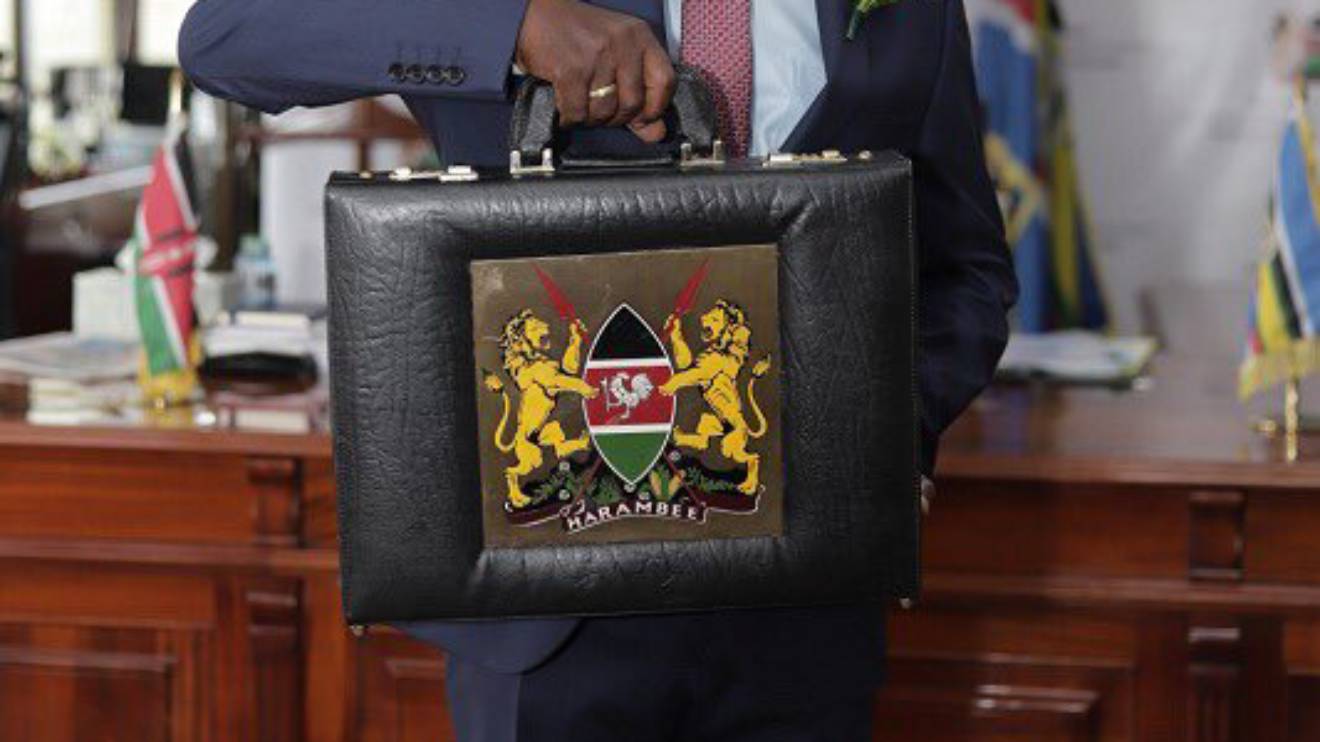
The National Assembly has opened the stage for public participation for the Finance Bill 2026, released by the National Treasury on April 30.
By the National Treasury’s own framing, this is a different kind of Finance Bill; one that does not raise tax rates, but instead bets that better enforcement, a wider net, and digital infrastructure can deliver the revenues that rate hikes failed to sustain politically.
Cabinet Secretary John Mbadi told the Budget and Appropriations Committee plainly: the government has absorbed the lesson of 2024.
When mass protests, ignited by a Gen Z mobilisation on social media, forced the complete withdrawal of that year’s Finance Bill, it was a structural rupture in the politics of Kenyan taxation.
The 2026 iteration reflects a deliberate recalibration, favouring incremental base-broadening over the sweeping new levies that triggered the unrest.
“The government has learned from the 2024 anti-Finance Bill protests. Instead of new rates, the 2026 Bill places pressure on KRA to modernise its digital infrastructure, expand the tax base through automated tracking, and close loopholes,” Mbadi said.
The Mitumba Question
The most immediately contentious provision targets mitumba, the second-hand clothing trade that clothes millions of Kenyans, particularly low-income households.
The Bill introduces a presumptive tax framework under which 16 per cent VAT continues to apply at the point of entry. Still, now a 5 per cent profit margin is deemed on the customs value of the goods, and a 30 per cent income tax is levied on that assumed profit as a final, consolidated charge.
Treasury projects the provision will generate an additional Sh12 billion annually. The government frames this as a simplification, consolidating a fragmented, multi-point tax structure into a single, predictable levy designed in consultation with the traders themselves.
Critics are less sanguine. The mitumba trade sits at the intersection of two competing pressures: affordable clothing for consumers who have few alternatives, and the struggling domestic textile sector that has long argued it cannot compete with low-cost imports.
The Bill’s declared intent to “level the playing field” for local manufacturing while bringing informal traders into the formal tax system reads as an economically coherent policy, but advocates for the poor argue the cost will be borne downstream, in the markets of Gikomba and Toi, by buyers who are already squeezed by inflation.
From Frontier to Tax Jurisdiction
The Finance Bill 2026 formalises Kenya’s ambition to treat the digital economy as a full participant in the tax system. Several interlocking proposals reinforce this direction.
Withholding tax obligations are expanded to cover merchant service fees and interchange fees paid to banks and payment processors. The definition of royalties is broadened to include payments to payment network service providers for use of their platforms.
Payment gateways, switching systems, clearing networks, and settlement platforms all fall within this expanded definition.
VAT is now proposed on digital financial services, including money transfers, payment processing, settlement, merchant acquisition, and aggregation services supplied via software platforms for a fee or commission.
According to law firm Bowmans, this measure is likely to make fintech players less competitive relative to traditional financial institutions, which are exempt.
Cryptocurrency and virtual assets receive a structured regulatory taxonomy for the first time. Virtual asset service providers, exchanges and trading platforms must file annual information returns with KRA detailing user activity. Kenya would be permitted to enter into international agreements for the automatic exchange of virtual asset data across borders.
The Global Minimum Tax
The full implementation of Kenya’s Domestic Minimum Top-Up Tax (DMTT), introduced under the Finance Act 2025, is confirmed and operationalised under the 2026 Bill.
The measure applies to multinational enterprise groups with consolidated revenues of at least 750 million euros (Sh114 billion) globally, requiring them to pay a top-up tax wherever their effective Kenyan tax rate falls below 15 per cent.
This aligns Kenya with the OECD-led Pillar Two framework, shifting multinational taxation from negotiated incentives toward formula-driven compliance.
A notable carve-out remains: US-headquartered companies are exempt under a January 5, 2026, international agreement. Given that several of the largest digital multinationals operating in Kenya are US-based, this exemption represents what analysts at Cliffe Dekker Hofmeyr describe as a significant potential revenue leakage for the KRA.
Closing the Landlord Gap
The Bill proposes raising the residential rental income tax rate from 7.5 per cent to 10 per cent. A new Non-Resident Rental Income Tax is also introduced, requiring foreign property owners earning income from Kenyan property to register under a simplified framework and pay a final levy monthly.
Analysts have raised concerns that the rental rate increase could drive non-compliance among landlords who find the higher burden difficult to absorb, potentially widening rather than narrowing the collection gap.
On the positive side, the Bill offers targeted incentives: CGT and stamp duty exemptions on transfers of property to real estate investment trusts (REITs), and VAT exemptions for PPP infrastructure projects.
KRA Gets New Tools
The operational spine of the 2026 Bill is a set of administrative reforms designed to restructure how KRA collects, verifies, and enforces compliance.
The electronic Tax Invoice Management System (e-TIMS) is extended to cover all professional services, including legal and medical consultancies.
Pre-populated tax returns, automated drafts generated by KRA from existing data, will be introduced, reducing filing friction for compliant taxpayers.
Tax return deadlines are compressed by two months, moving from 30 June to 30 April for individuals with income, and to 31 January for nil filers.
The Bill also formalises a data-driven assessment power for the Commissioner under a new Section 29A of the Tax Procedures Act, enabling KRA to issue assessments based on integrated data systems.
A tax amnesty provision extends the regularisation window for outstanding tax liabilities to 31 December 2026.
Sector-Specific Impacts
Kenya Airways faces a substantial cost increase: the Bill proposes deleting a withholding tax exemption on payments made by the national carrier to non-resident providers of specialised technical, maintenance, compliance, training, and digital systems support services.
Mobile phones attract a proposed 25 per cent excise duty levied at device activation rather than import. Consumer advocates warn this risks pricing smartphones out of reach for lower-income users, undercutting digital inclusion objectives.
The gambling sector faces a new 20 per cent withholding tax on winnings, while scrap metal dealers face a 1.5 per cent WHT on sales.
2027 in the Background
The Finance Bill 2026 cannot be read in isolation from the political calendar. Kenya goes to the polls in 2027, and the Ruto administration is navigating the dual challenge of revenue adequacy, the KRA collected KSh 2.57 trillion against a target of KSh 3.32 trillion in FY 2024/25, and public tolerance for taxation in a cost-of-living environment that remains punishing for ordinary households.
The 2024 Gen Z protests expressed a deeper frustration: that the tax burden falls disproportionately on employed Kenyans paying PAYE, while the informal sector, the wealthy, and multinationals have historically operated with limited exposure.
The 2026 Bill’s compliance-first orientation attempts to address this structurally.
Whether the strategy succeeds depends on execution. The KRA’s target of expanding active taxpayers from 7 million to 11.5 million by June 2027 is ambitious.
The Finance Bill 2026 provides the legal architecture; whether the institutional capacity matches it will determine whether this measured fiscal gamble pays off, or whether the structural frustrations that produced 2024 find new expression in 2027.
The Public participation process led by the Departmental Committee on Finance takes place in May and June before the Bill is considered by MPs.