



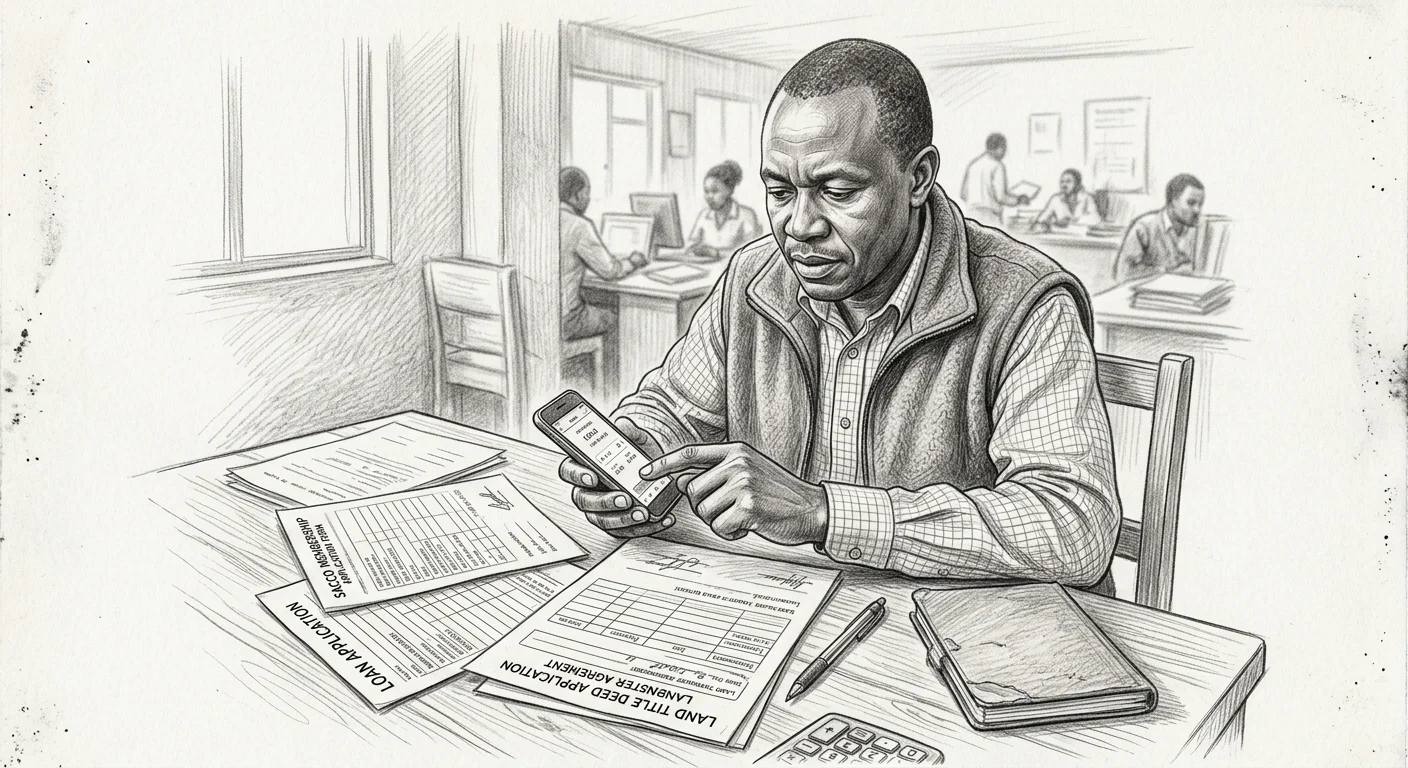
As households and small businesses turn to mobile lenders for quick cash, borrowing is becoming part of monthly survival. But when loans pay for food, transport and school fees rather than investment, where does inclusion end and vulnerability begin?
A delayed salary, medical bill, school fees due before payday or a business short of stock can leave Kenyans facing a timing problem, or a persistent gap between income and expenses.
Mobile loans bridge that gap quickly, without bank visits or extensive paperwork. Yet regular borrowing raises a key question: does credit help people move forward, or merely carry them to payday with another repayment due?
Kenya’s digital credit market illustrates this tension. In July 2026, the Central Bank of Kenya (CBK) said it had licensed 25 more providers, bringing the total to 252. By May 2026, providers had issued 8.37 million loans worth Sh150.56 billion. The market now extends far beyond a handful of lending apps.
Credit can help households manage uncertainty and pursue opportunities. But repeated borrowing for everyday expenses may signal that income is not keeping pace with living costs.
When the Next Payday Is Already Spent
Digital loans are attractive because they are fast and convenient. Unlike conventional bank loans, they often require less documentation and no collateral, and can provide small sums to people who lack access to traditional credit.
The problem arises when borrowing shifts from occasional emergencies to routine necessity. A household might borrow for an unexpected hospital bill, expecting to repay from its next salary.
A trader might buy stock ahead of a busy period, expecting sales to cover the debt and earn a profit. In both cases, the loan has a specific purpose and plausible repayment source.
But borrowing repeatedly for food, rent, transport or to repay another loan may ease immediate pressure without fixing an underlying shortfall.
Repayments then leave less for future expenses, prompting another loan. A temporary cash-flow problem can become a borrowing cycle.
This is not simply about responsible choices. Workers with irregular earnings, casual labourers and small traders with fluctuating sales may have few alternatives when essential costs cannot wait. Credit helps them manage uncertainty, but repayments remain fixed even when income does not.
A Rapidly Expanding Credit Market
The CBK’s 2025 Bank Supervision Annual Report says licensed digital lenders’ outstanding loans rose 99.6 per cent, from Sh55.2 billion in December 2024 to Sh110.1 billion in December 2025. Loan accounts grew from about 3.9 million to 6.74 million.
Accounts do not equal individual borrowers: one person may borrow from several providers or hold multiple accounts. Market growth does not mean every borrower is struggling. Digital lenders offer business, education, development, asset-financing and short-term personal loans.
Still, the market’s scale merits attention alongside household financial-health data. The 2024 FinAccess Household Survey, conducted by the CBK, KNBS and Financial Sector Deepening Kenya, found formal financial access reached 84.8 per cent of adults, up from 83.7 per cent in 2021.
Yet only 18.3 per cent of Kenyans were financially healthy, and 16.6 per cent of borrowers had defaulted entirely.
Access does not guarantee financial security. People may have bank accounts, use mobile money and qualify for loans, yet lack savings for emergencies or income disruptions. Inclusion is meaningful when it helps people manage money, withstand shocks and pursue opportunities. If credit access grows faster than repayment capacity, convenience can deepen vulnerability.
The Real Cost of Quick Money
A loan’s cost is more than the amount received. Borrowers should understand the total repayment, including interest, fees, other charges and penalties for late payment.
A small loan may seem manageable for an immediate expense, but repeated borrowing changes the equation. Loans from multiple platforms make repayment dates and total debt harder to track, especially when lenders assess each loan separately.
The risk extends beyond interest: repayments may leave too little for essentials, forcing borrowers to take another loan simply because they lack cash.
The effects can affect entire households: spending falls, savings run out, and funds for education or business investment go to debt repayment. For small businesses, repayments drain working capital for stock, suppliers, and staff.
Credit can be productive, raising future income or helping households weather temporary shocks. But repeated consumption borrowing without higher income leaves borrowers with less room each month.
Regulators and lenders must pair credit expansion with clear pricing, responsible affordability checks and effective consumer protection.
Regulation Cannot Replace Financial Resilience
The CBK intervened in digital lending partly because of concerns about unregulated providers, including high costs, abusive debt collection, and misuse of personal information.
The Digital Credit Providers Regulations, 2022, created a licensing and oversight framework for non- deposit-taking digital lenders and established consumer protections.
Providers must address complaints, acknowledge transactions, and issue statements on request. They may not threaten, publicly shame, or use borrowers’ phone contacts without authorisation to collect repayments.
Licensing has expanded: in July 2026, the CBK announced 252 licensed providers. However, it continues to warn about unregulated operators. Consumers should check a provider’s licence and not assume an app is legitimate simply because it is available on a phone.
Regulation cannot address every reason people borrow. Even a licensed lender may offer an unsuitable loan. Transparent pricing supports informed choices, but does not provide the income needed for repayment.
If households repeatedly borrow for food, transport and other essentials, tighter lending rules are not enough. Policy must also address unreliable earnings, limited savings, high essential costs and lack of affordable emergency finance.
Employers, financial institutions, government and consumer groups all have a role. Employers can consider the effects of delayed or unpredictable pay.
Lenders can improve affordability checks and clarify repayment terms. Consumer education can help borrowers compare total costs, understand the risks of multiple loans and seek help before arrears become unmanageable.
Flexible savings options may help households with irregular earnings build a buffer, though they cannot replace adequate income. Better-suited working- capital facilities and predictable payment arrangements can help small businesses avoid costly short-term loans.
A Loan Should Open A Door, Not Become The Door
Digital credit has transformed access to financial services in Kenya. Millions of loans are now available through platforms at almost any time, offering convenience traditional lenders often could not match.
That achievement matters. Credit can support business, education, investment and emergencies. The goal is not to discourage borrowing, but to distinguish loans that create or protect future value from those that merely delay financial hardship.
Financial inclusion should be measured not by how many people can get loans, but by whether they can borrow fairly, repay without sacrificing essentials and emerge better off.
When people borrow each month for the same expenses, the question is no longer how easily they can access credit, but why their income is insufficient.
A loan to buy business stock may be an investment; one for a temporary emergency may offer vital breathing room. But when a family must borrow again to pay for the month it has just lived through, credit no longer bridges the gap — it becomes part of it.
The real test of Kenya’s expanding credit market is therefore not the volume of money lent, but whether that money helps households build financial security — or simply finances the wait until the next payday.