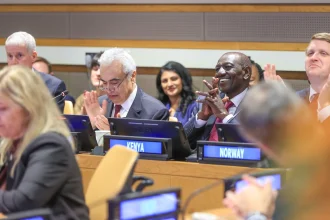


On September 10, the Competition Authority of Kenya approved the sale of Diageo’s 65 per cent stake in East African Breweries to Japan’s Asahi Group Holdings, clearing the last major regulatory obstacle to a $2.3 billion transaction first announced back in December 2025.
The headline version of this story is easy to write and mostly beside the point: a British drinks multinational is selling one of Kenya’s most recognisable companies to a Japanese one.
What that headline doesn’t answer is the only question that actually matters to anyone whose income runs through EABL rather than whoever holds the shares: what, concretely, changes now.
Why Diageo Is Leaving
EABL is not a special case in Diageo’s thinking. It is the fifth African business the company has sold in roughly two years, following earlier disposals in Nigeria, Seychelles, Ghana, Cameroon and Ethiopia.
Diageo has described the wider divestment as part of a strategy to shed businesses it now considers non-core and reduce leverage on its balance sheet; corporate language for a decision made in London about a global portfolio, in which Kenya’s beer market was one line item among several being reassessed at once.
The company expects estimated net proceeds of $2.3 billion after tax and transaction costs, money that flows back into a global balance sheet, not into any Kenyan reinvestment plan. That framing matters for how the rest of this story should be read.
Nothing about Diageo’s decision was driven by anything happening in the Kenyan market itself. It was a portfolio call, and Kenya happened to be one of the assets on the list.
What Asahi Is Actually Buying
The transaction covers Diageo’s 65 per cent controlling stake in EABL, along with Diageo Kenya Limited and a 53.68 per cent interest in UDV Kenya Limited – the spirits business sitting alongside EABL’s beer operations.
EABL itself owns the remaining 46.32 per cent of UDV Kenya and, notably, retains management control of the spirits business even after the ownership change.
This detail is easy to lose in the transaction-value headlines but relevant to anyone trying to work out how much operational control is actually shifting versus how much is simply a change of shareholder.
For Asahi, the deal represents its first direct operations anywhere on the African continent; a genuinely new kind of relationship for EABL’s brands, which have carried a British corporate parent for decades.
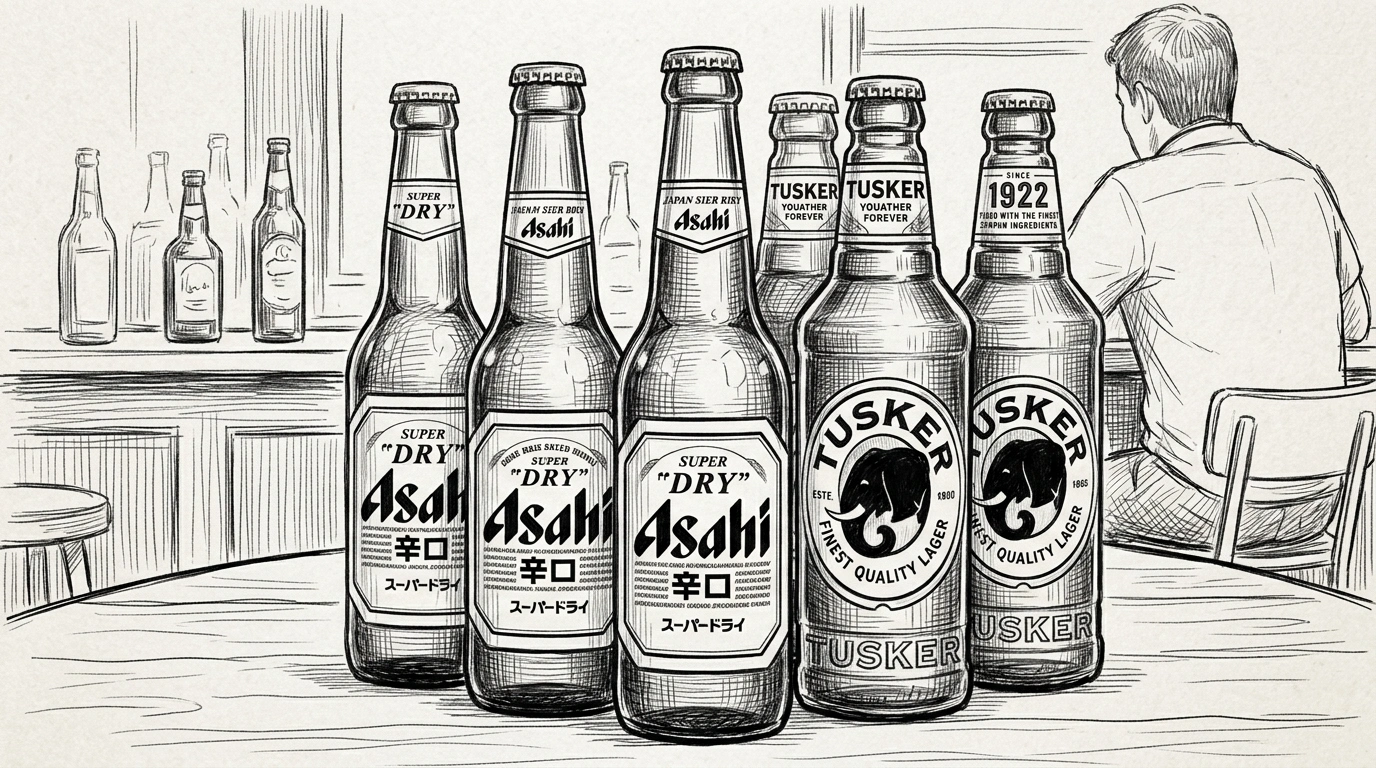
What it means for the day-to-day experience of drinking a Tusker is, on current evidence, close to nothing: Tusker is an EABL brand, and EABL is the business Asahi is acquiring intact, not dismantling.
Conditions That Actually Carry Weight
Where this deal gets genuinely interesting is in what Kenya’s regulator attached to its approval. The conditions are aimed less at the transaction itself than at what a new, larger, more distant owner might do with the market power EABL already has. Two conditions stand out.
First, EABL must reserve sufficient funds from the transaction proceeds to cover any liabilities that surface after completion. This is a safeguard against the new ownership structure leaving legacy claims (regulatory, contractual, or otherwise) without a clear source of payment.
Second, and more consequential for how the market actually functions day to day, EABL must reserve 20 per cent of the retail cooler space it controls for competing beverage brands.
That second condition is not a technicality. Refrigerated display space in Kenyan retail – the shelf a customer actually reaches into at a bar, a shop, a restaurant – is one of the more powerful levers a dominant brewer has over which competing products a consumer even sees as an option.
A regulator forcing a fifth of that space open to rivals is a direct attempt to prevent a change of ownership from hardening into a tighter grip on distribution than existed before the sale. Whether Asahi’s Kenyan operation actually complies with that requirement in practice, and whether CAK has the capacity to monitor cooler space across the country’s retail network rather than simply publish the rule, is a question this piece cannot answer yet, and one worth returning to a year from now.
Reserve Figure That Isn’t Final
In August, CAK Director-General David Kemei told the National Assembly’s Finance Committee that the merging parties would establish a reserve equivalent to roughly 4 per cent of the transaction value.
This would have worked out to about Sh12.2 billion against the earlier-reported Sh304.6 billion transaction value, or as much as Sh15.5 billion against the broader Sh388.2 billion figure that includes Diageo’s UDV Kenya stake.
That 4 per cent figure was Kemei’s testimony about where negotiations stood in August. It is not what the final approval, issued in September, actually specifies.
The approval requires EABL to reserve “sufficient funds… to meet any outstanding liabilities”; language that sets an obligation without publishing a number.
Any version of this story that states a fixed reserve amount as settled fact is reporting a proposal as if it were a conclusion. The honest version says: a reserve requirement exists; its likely scale was estimated at around 4 per cent of transaction value, and the final figure, if one is ever made public, has not yet appeared.
It is also worth being precise about where this transaction actually stands. EABL’s own statement following the approval was careful on this point: the company “notes the approval by the Competition Authority of Kenya regarding the proposed transaction between Diageo PLC and Asahi Group Holdings”, proposed, not completed.
The deal has also faced real legal friction on its way here: distributor Bia Tosha filed a court challenge that was dismissed in April, after which EABL asked Kenya’s Chief Justice in June to expedite related hearings, suggesting the company itself was concerned about further delay risk even after the main legal obstacle had cleared.
CAK’s regulatory clearance removes the largest remaining hurdle, but it is not the finish line, and any coverage that treats the September approval as the moment ownership changed hands is ahead of where the facts currently sit.
What This Changes For Kenya
Strip away the transaction mechanics and the real question is what happens to the people whose livelihoods run through this business rather than around it.
These are the barley and sorghum farmers supplying EABL’s breweries, the distributors whose margins depend on shelf access, the retailers now guaranteed a slice of cooler space they may not have had before, and the excise revenue the Kenyan state collects regardless of who holds the shares above the operating company.
None of that changes automatically the day a share register updates. What actually happens to local sourcing contracts, distributor relationships, and retail competition under a Japanese parent with no prior African operations to model itself on?
This is a story that can only be reported forward from here through what Asahi’s management actually does in its first eighteen months in Kenya, not through what a transaction announcement promised.