





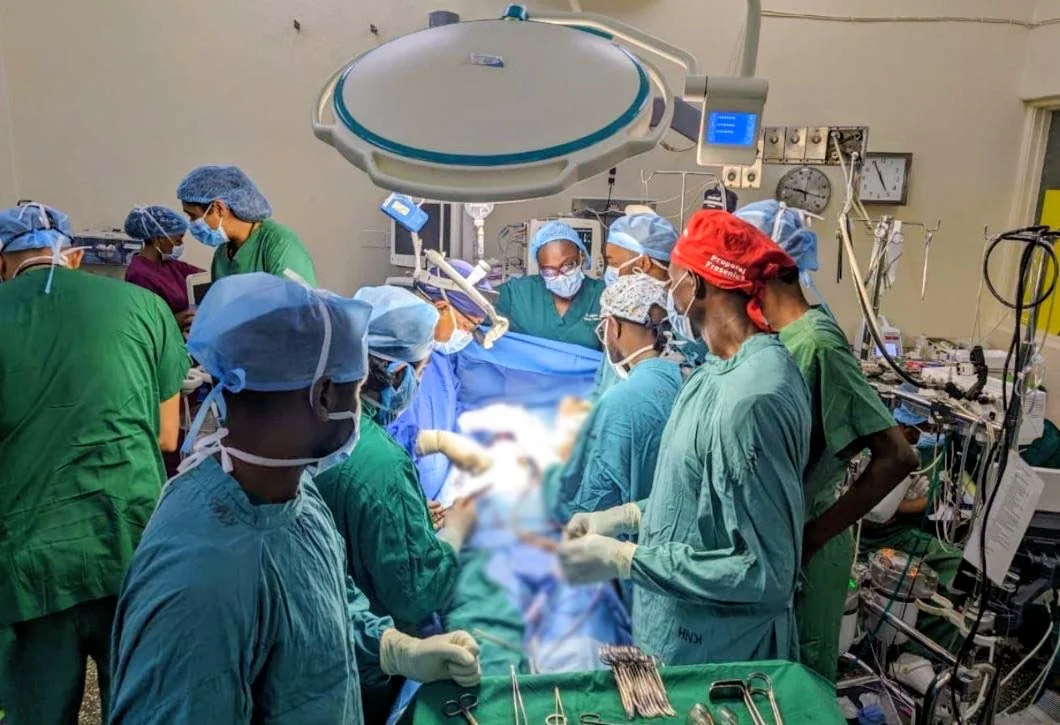
Kenyatta National Hospital (KNH) recently announced the successful completion of a complex six-hour open-heart surgery on a 35-year-old patient. This milestone underscores a critical message: advanced cardiac procedures are now routinely available within Kenya, eliminating the perceived necessity for patients to seek treatment abroad.
The complex operation involved mitral valve replacement, tricuspid valve repair, and reduction of an enlarged upper heart chamber (left atrium), a common complication from long-term valve disease. Surgeons used a standard heart-lung machine to maintain blood circulation while the heart was temporarily stopped, a well-established technique in cardiac surgery.
In a detailed thread on social media, KNH explicitly stated the motivation behind sharing the story: “Why share this? Because too often, people think such care requires travelling abroad. This partnership between KNH and Egyptian specialists proves that lifesaving heart surgery can be performed right here, saving real lives.”
The hospital described the procedure as “nothing experimental, just excellent care delivered through collaboration.”
Changing Perceptions
KNH’s announcement serves multiple strategic purposes, with the first being countering medical tourism myths. Many Kenyans with complex heart conditions have historically travelled to countries like India, Israel, or South Africa for open-heart surgery, often at high personal cost. By highlighting this case, KNH aims to demonstrate that equivalent expertise exists domestically.
The social media post also showcases partnerships as the surgery resulted from close collaboration between KNH’s local team and visiting Egyptian cardiac specialists, illustrating knowledge transfer and capacity building.
As Kenya’s largest referral hospital, KNH positions itself as a center of medical excellence capable of handling high-level cases within the public and private wings, potentially reducing financial burdens on patients and families.
This case reflects broader progress in Kenya’s cardiothoracic capabilities. KNH has conducted various cardiac interventions in recent years, supported by specialised teams and equipment. However, challenges such as resource constraints, equipment maintenance, and staffing remain topics of public discussion.
By transparently documenting these successes, KNH not only celebrates its clinical staff but also fosters a sense of national pride. Ultimately, these efforts signal to stakeholders the immense value of investing in specialised local services, encouraging more Kenyans to place their trust in the domestic healthcare system.