




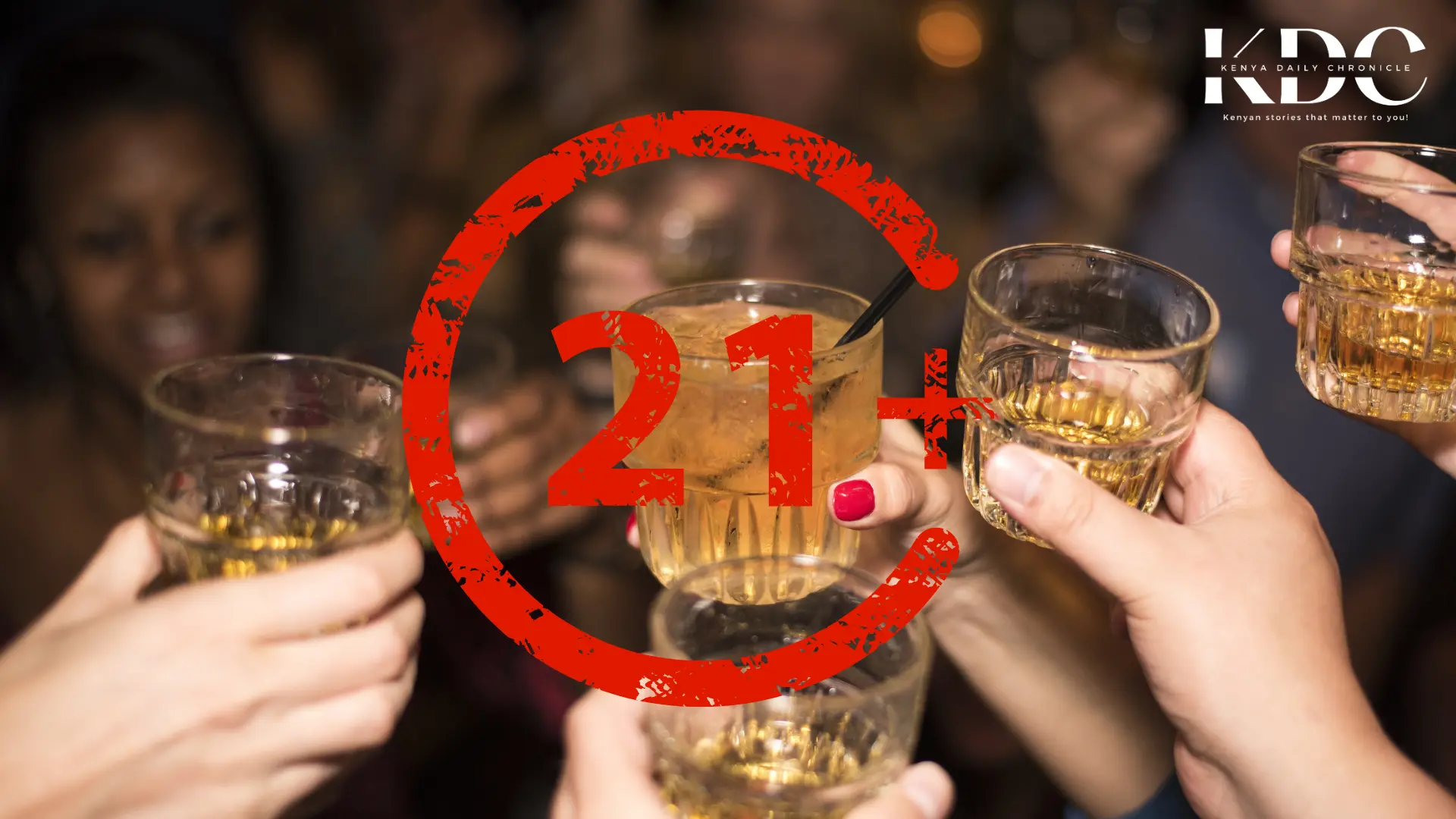
Kenya has raised the minimum legal age for purchasing, consuming, and selling alcohol from 18 to 21 and imposed a sweeping ban on celebrity endorsements of alcohol brands.
These measures, part of the newly unveiled National Policy for the Prevention, Management, and Control of Alcohol, Drugs, and Substance Abuse, approved by the Cabinet on June 24, 2025, mark a significant shift in the nation’s approach to tackling a public health emergency that threatens its young population.
The decision to raise the drinking age to 21 is grounded in scientific research and global best practices, which demonstrate that delaying alcohol consumption reduces the risk of addiction, brain damage, and risky behaviours.
The National Authority for the Campaign Against Alcohol and Drug Abuse (NACADA) cites alarming statistics: approximately 13 per cent of Kenyans aged between 15 and 65, roughly 4.7 million people, consume alcohol, with the highest prevalence among young adults aged 18 to 24.
A 2025 NACADA survey of over 15,000 university students revealed that 87 per cent consume alcohol, with cigarettes and shisha also widely used, underscoring the urgency of these reforms.
“Raising the legal drinking age to 21 will not only delay the onset of alcohol use among the youth but also provide law enforcers and community leaders with stronger legal backing to curb underage drinking,” said Interior Cabinet Secretary Kipchumba Murkomen.
He emphasised that the policy offers a “united front” to protect communities from the growing threat of substance abuse, particularly among children, youth, and women.
Celebrity Endorsements
The prohibition of celebrity endorsements targets a key driver of youth alcohol consumption. NACADA reports that one in four teenagers first tried alcohol after exposure to celebrity endorsements or online advertisements.
“Celebrity endorsements have a big influence on young people. We are removing that pressure and glamorisation,” NACADA stated, highlighting the need to dismantle marketing tactics that exploit the influence of public figures.
The policy also bans alcohol advertisements on social media, billboards, and during children’s TV programs, school events, and public holidays, ensuring that young people are shielded from aggressive marketing.
The policy adopts a multi-sectoral approach, balancing demand reduction, through prevention, education, and rehabilitation, with supply reduction via stringent regulations.
Beyond raising the drinking age and banning celebrity endorsements, the policy introduces several other measures such as the ban on digital alcohol sales as well as supermarkets and restaurants.
Online alcohol sales, vending machines, and home deliveries will be outlawed to close digital loopholes that allow minors easy access to alcohol through mobile apps and courier services.
In addition, alcohol outlets will be prohibited within 300 meters of schools, places of worship, and residential areas, potentially forcing the relocation or closure of thousands of bars and liquor shops.
All alcohol containers must carry clear health warnings in English and Kiswahili to promote informed decision-making. The government also plans to establish public recovery centers at national and county levels to address the high demand for treatment amid limited resources.
These reforms build on Kenya’s previous efforts, such as the 2010 Alcoholic Drinks Control Act, which faced challenges due to weak enforcement and corruption. The 2025 policy shifts the narrative by treating alcohol and drug abuse as a public health issue rather than solely a criminal one, aiming to reduce stigma and enhance access to care.
Collective Action
Spearheaded by NACADA, the policy’s implementation involves collaboration with county governments, law enforcement, community leaders, and civil society.
NACADA Deputy Director Kirwa Lelei emphasised the need for a cultural shift: “This is not just a policy on paper. It is a call to action at all levels. We are losing too many young people, and these reforms are necessary to save lives.”
The agency has launched campaigns like “Positive Parenting” to engage families and plans to train teachers, healthcare workers, and police to detect early signs of abuse without stigmatising victims.
The policy aligns with international frameworks, including the UN Drug Conventions and the Sustainable Development Goals (SDG 3.5), as well as Kenya’s Constitution, which guarantees the right to health and consumer protection.
It was developed through consultations with stakeholders, including the Ministry of Health, faith-based groups, and organisations like the International Institute for Legislative Affairs (IILA) and Students Campaign Against Drugs (SCAD).
Despite widespread support, the policy faces hurdles. Enforcement remains a concern, given past struggles with corruption and weak oversight. The alcohol industry, a significant economic contributor through taxes and jobs, may resist measures like zoning laws and marketing bans.
Western alcohol giants like Diageo, Heineken, and AB InBev, which dominate Kenya’s market, have capitalised on weak regulations, using digital ads and influencers to target young consumers. The policy’s success hinges on robust legislation and public cooperation, as NACADA’s proposals are not yet legally binding.
Critics, such as Sam Ikwaye of the Pubs Entertainment and Restaurants Association of Kenya (PERAK), argue that raising the drinking age could harm businesses, given that young adults aged 18 to 21 are a significant market segment. However, NACADA counters that the social costs of alcohol abuse—domestic violence, school dropouts, and hospital admissions—far outweigh economic concerns.
Defining Moment
With 3.6 million young Kenyans abusing alcohol and contributing to social issues like gender-based violence and poor academic outcomes, the stakes are high.
The policy represents Kenya’s most comprehensive effort to date to reverse this crisis. By raising the drinking age to 21 and banning celebrity endorsements, Kenya joins countries like the United States, where higher age limits have reduced youth drinking and related harms.
As NACADA rolls out public engagement campaigns and collaborates with counties, the policy’s success will depend on sustained commitment. “We are making a statement that our youth matter and their future is worth protecting,” said Lelei.