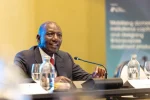

On Tuesday, President William Ruto called for far-reaching changes to the United Nations Security Council and the global financial system, arguing that existing institutions no longer match the realities of a more multipolar world.
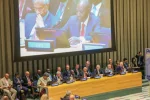
Speaking while co-hosting the Partners for Multilateralism (P4M) Summit on the sidelines of the 81st UN General Assembly, Ruto said trust in international cooperation would return only when “rules are applied consistently, institutions reflect the world they govern, and cooperation delivers results that people can see and feel.”
“To restore trust in international cooperation, we must reform the rules and institutions that have not kept pace with the world they are expected to govern,” he said. Kenya, he added, would keep pushing for a Security Council that is “more representative and inclusive, particularly for Africa.”
He also urged a fairer international financial architecture that prices risk more accurately and lets developing countries mobilise more of their own capital.
The P4M gathering brought together leaders and officials from the European Union, Canada, Brazil, India, Australia, Barbados and Kenya.
European Council President António Costa co-hosted the event. Canadian Prime Minister Mark Carney, delayed by air-traffic disruptions, was represented by Canada’s UN ambassador.
The group presented the initiative as a flexible network of middle powers rather than a new bloc, aimed at supporting UN reform and practical cooperation on climate, AI, supply chains and development finance.
Ruto’s remarks aligned with a broader push at this year’s assembly, whose theme is “Restoring trust, managing transformation: A United Nations that delivers for all.” UN Secretary-General António Guterres, in his final high-level address, separately described the absence of a permanent African seat as “unjust and indefensible.”
The Kenyan president has repeatedly framed the issue as one of legitimacy and fairness, noting that a continent of 54 countries and more than 1.4 billion people remains without a permanent voice on the body charged with international peace and security.
The P4M declaration adopted at the summit echoed the call for institutions that are “more effective, representative, inclusive and fit for purpose.”