





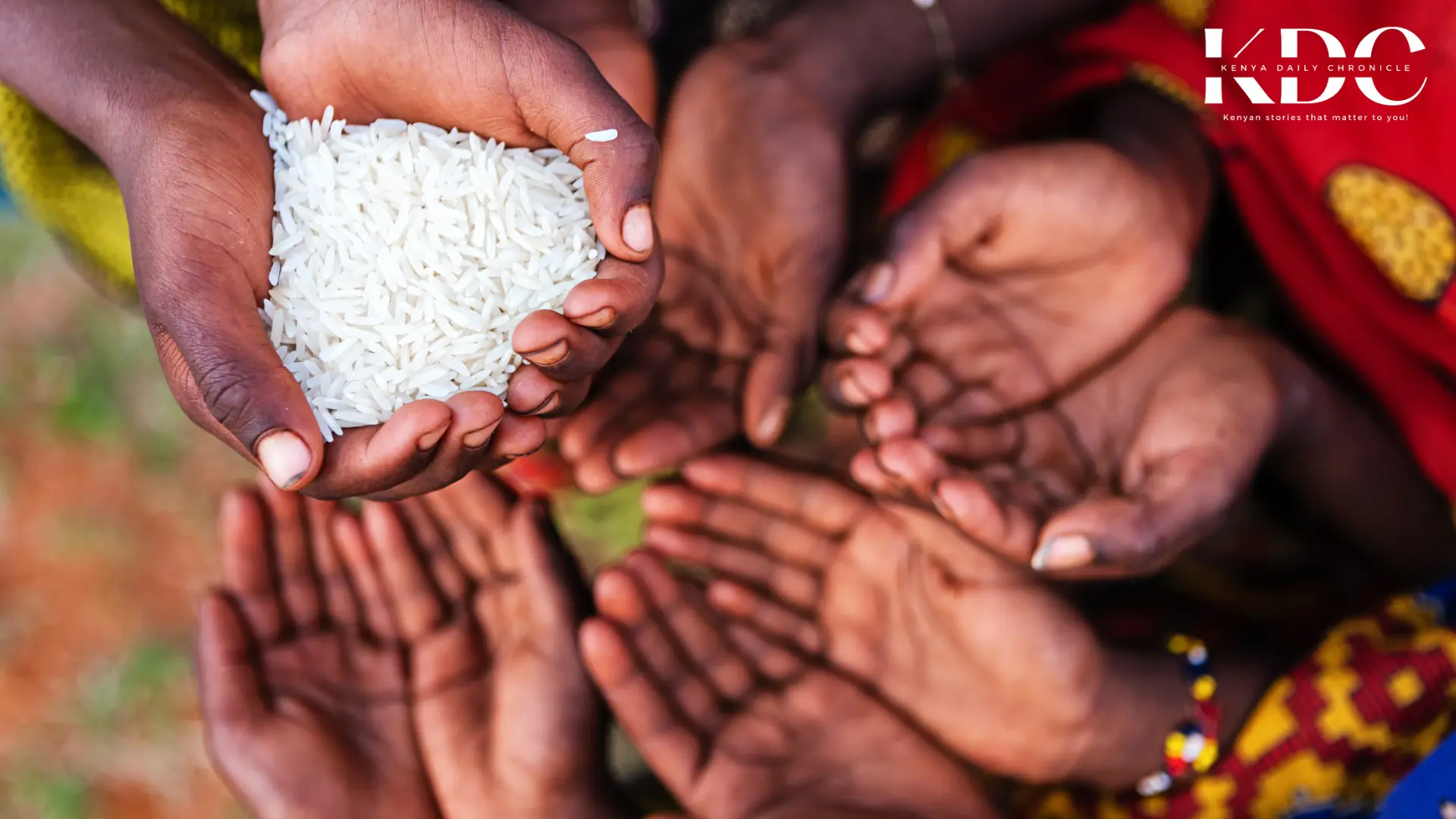
Kenya is facing a deepening food crisis, with nearly 2.1 million people projected to face acute food insecurity by early 2026, a worsening situation driven by a combination of erratic rainfall, high food prices, and humanitarian funding cuts.
The food crisis gripping Kenya is not an isolated event, but a severe part of a wider regional catastrophe, according to a report by the Intergovernmental Authority on Development (IGAD) released on Tuesday.
The IGAD Regional Focus of the 2025 Global Report on Food Crises reveals that an estimated 42 million people across six IGAD member states are facing high levels of acute food insecurity this year.
This grim reality marks a tripling of the number of acutely food-insecure people in the region since 2016, with the most severe crises unfolding in Sudan and South Sudan.
The Sudan currently has the largest highly food-insecure population at 24.6 million, while South Sudan has the highest proportion of its population (57 per cent) in crisis or worse.
Within this regional context, Kenya’s situation is particularly concerning. While some parts of the country experienced improved rainfall in 2025, the gains have been insufficient to reverse the cumulative effects of a prolonged drought from 2020 to 2023.
The latest data shows that between July and September 2025, approximately 1.8 million Kenyans were already experiencing high levels of acute food insecurity, a figure projected to rise to 2.1 million by early 2026.
This worsening outlook is primarily due to a forecast of below-average rainfall during the upcoming short rains season.
Interconnected Drivers Fuel a Vicious Cycle
The crisis in the IGAD region is driven by a complex web of interconnected and mutually reinforcing factors.
As stated by IGAD’s Executive Secretary, Dr. Workneh Gebeyehu, the crisis is “more than just hunger” and is a “stark reminder of the interconnected challenges we face: conflict, the severe effects of climate change, economic shocks, and displacement.”
The key drivers include to the crisis include climate extremes where the region is experiencing a destructive cycle of droughts followed by floods. In Kenya, El Niño-induced floods killed over 11,500 livestock and damaged agricultural land.
Looking ahead, IGAD’s Climate Prediction and Applications Centre (ICPAC) forecasts drier-than-usual conditions in parts of the region, including eastern Kenya.
High inflation, currency depreciation, and elevated fuel and transport costs have limited the purchasing power of households across the region further deepening the crisis.
The IGAD region has the largest number of forcibly displaced people in the world, with 23.2 million people displaced as of the end of June. The Sudan alone accounts for about 10 million internally displaced persons (IDPs).
These displaced populations often face the worst food security and nutrition outcomes due to a loss of livelihoods and a heavy reliance on diminishing humanitarian aid.
Humanitarian Funding Cuts
Despite the alarming situation, acute malnutrition remains at a critical level, with 11.4 million children acutely malnourished in seven member states.
Unfortunately, due to significant funding cuts, an estimated 1 million people could be left without access to life-saving treatment.
The World Food Programme’s Regional Director, Eric Perdison, noted that while saving lives is an immediate priority, “we must also build resilience and support communities in standing on their own feet.”
In Kenya, the most affected areas are the arid and semi-arid lands (ASALs), including Turkana, Marsabit, and Mandera counties.
The Kenyan government has stated it will require over Sh4 billion to provide assistance to the vulnerable population.
FAO’s Farayi Zimudzi emphasised that while anticipatory actions are necessary to protect rural livelihoods, they must be paired with long-term resilience-building and investment in sustainable agriculture to break the cycle of food insecurity.