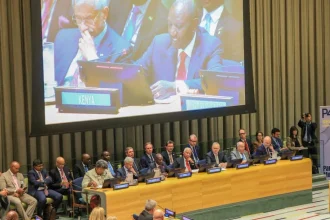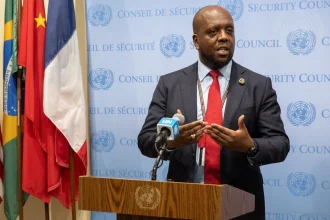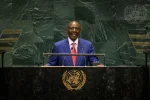

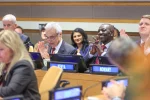

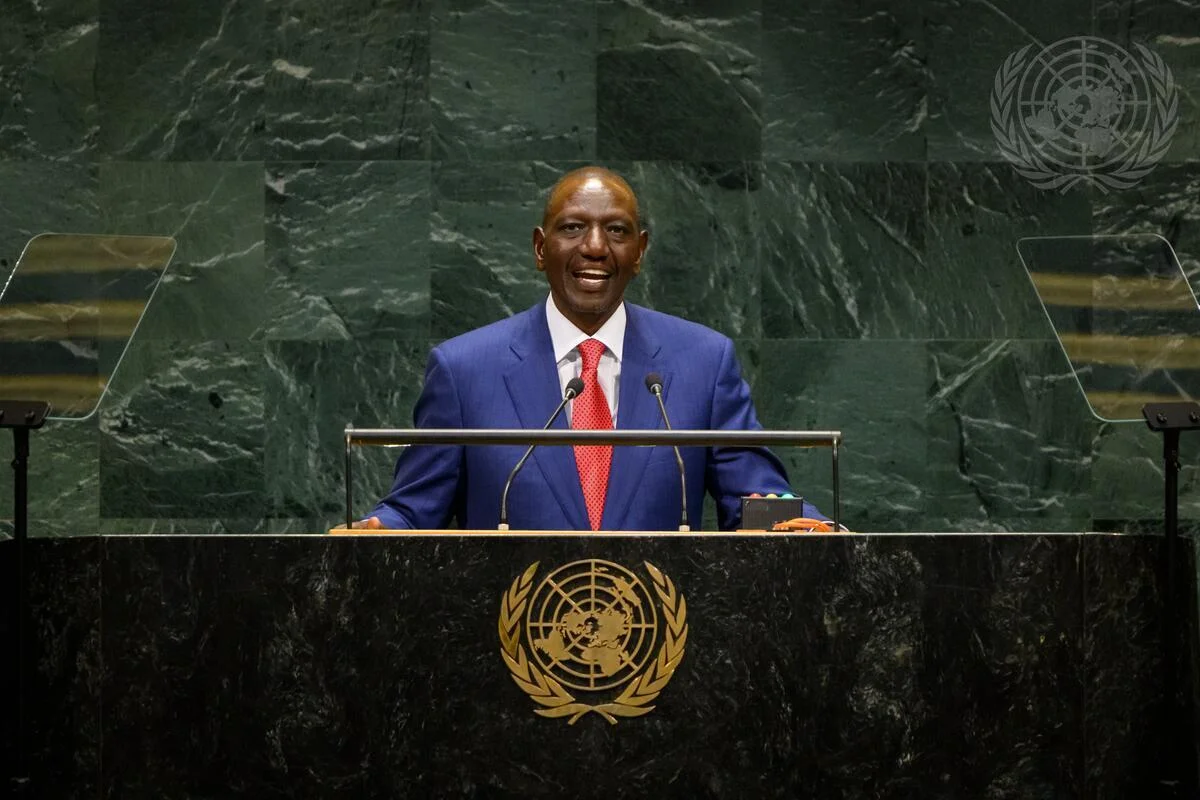
Addressing the 81st session of the UN General Assembly on September 23, President William Ruto delivered what has become a familiar Kenyan diplomatic refrain on Africa’s exclusion.
Ruto presented Kenya’s position as part of a wider African demand for a more representative global order, linking reform of the UN Security Council to reform of the international financial system.
The President argued that institutions created after the Second World War are struggling to govern a world that has changed dramatically — with Africa demanding greater representation, cheaper development finance and a stronger voice in global decision-making.
The institutions built in San Francisco in 1945 are being asked to govern a world they no longer reflect, and the cost of that mismatch is measured in Africa’s exclusion from power and in the price African nations pay for capital.
The argument is not new, and what’s worth interrogating is whether Kenya’s renewed push carries any more leverage this time than it has in the seventeen years the reform conversation has already stalled; and whether the domestic delivery record Ruto cited as evidence actually holds up.
The Security Council Case
Ruto’s central charge is structural: Africa holds 54 of the UN’s 193 member states — more than a quarter of the Assembly — yet has no permanent seat on the body that decides questions of war and peace.
“We are frequently the subject of its decisions, permanently discussed but permanently excluded,” he told delegates. He traced that exclusion to 1945, when only four African states were represented at the UN’s founding because most of the continent remained under colonial rule.
The reform process he invoked has its own long, largely static history. The General Assembly moved Security Council reform into intergovernmental negotiations in 2008; those negotiations began the following year and, as Ruto himself acknowledged, “seventeen years later, we are still negotiating.”
He pointed to 1963, when the Council expanded from eleven to fifteen members, as precedent for structural change.
That expansion, though, added non-permanent seats; it left the five veto-holding permanent members untouched, which is precisely the imbalance Ruto is now asking the Assembly to revisit.
The Pact for the Future did commit member states to treating Africa’s underrepresentation as a reform priority, but a stated priority is not a mechanism, and Ruto’s speech does not point to any procedural change that would break the deadlock.
For Kenya, the question is not simply whether the UN remains relevant, but whether it can adapt quickly enough to remain effective.
The Financial Architecture Case
The second half of the address builds a numbers-heavy case on development finance, and here the figures largely check out. Ruto cited global public debt reaching $102 trillion in 2024, with developing countries holding less than a third of that debt, paying roughly $1 trillion in interest.
“Capital must price risk; it must not price prejudice,” he said.
But the President’s argument was not presented as a case for governments escaping responsibility. He acknowledged the need for countries to manage debt prudently, strengthen institutions, develop credible projects, deepen domestic capital markets, honour contracts and confront corruption.
UN Trade and Development’s own 2024 data puts the precise figure at $921 billion, a 10 per cent rise on 2023, so Ruto’s number rounds up but is directionally accurate. UNCTAD’s underlying finding is stark either way. 3.4 billion people now live in countries spending more on debt interest than on either health or education.
The UNDP figure Ruto cited, that subjective sovereign credit ratings have cost African countries approximately $75 billion through excess interest and foregone lending, is well-established.
It comes from a widely cited 2023 UNDP study (the precise figure is $74.5 billion) that has since been picked up by the African Union, the World Economic Forum and finance ministries across the continent, and has helped drive the creation of an African Credit Rating Agency now expected to begin operations in 2026.
Ruto also used the address to outline a more ambitious economic proposition for Africa: that the continent should move beyond exporting raw materials and capture more value from its own resources.
Africa, he said, possesses enormous mineral wealth, agricultural potential, renewable-energy resources and a young population, alongside a continental market of more than 1.5 billion people increasingly connected through the African Continental Free Trade Area.
Kenya’s Own Delivery Record
Kenya’s counterpart claim is that it is not merely making the ask but modelling the delivery. On education, the headline figures Ruto cited- 100,000 additional teachers recruited, more than 23,000 classrooms built, 1,600 laboratories in development- are real and have been repeated consistently by the government across multiple venues over the past year.
Independent reporting confirms the totals, though it also notes the original teacher shortage the hiring was meant to close was larger still, meaning the staffing gap “remains significant” even after the recruitment drive.
Kenya’s education budget has grown substantially under this administration, from roughly Sh540 billion to over Sh700 billion.
Ruto told the Assembly Kenya expects to “break ground” within a week on the East Africa refinery in Lamu. Aliko Dangote has confirmed September 30, 2026 as the groundbreaking date for a 700,000-barrel-a-day facility with a revised $16 billion price tag.
He presented the project as an example of the broader principle of adding value within Africa rather than exporting resources in their least processed form.
But the framing of this as a Kenyan achievement overstates Nairobi’s role. The project is roughly 70 per cent debt and 30 per cent Dangote-company equity, with the Kenyan government’s proposed stake sitting at around 10 per cent, worth roughly $500 million — a minority position in a private venture rather than a state-built industrial project.
Independent analysis has also flagged that Lamu port currently has no operational crude-handling or storage infrastructure, and that the LAPSSET pipeline needed to feed the refinery at scale is not projected to commission until 2032–33, years after the refinery’s own targeted completion window.
The groundbreaking is real; the delivery timeline behind it is considerably less certain than the speech implied.
Run through the Chronicle’s usual lens — state-controlled outcomes versus outcomes that depend on others — and the speech splits into three tiers rather than two.
The reform asks (a permanent African Security Council seat, fairer credit ratings, cheaper concessional finance) that depend on institutions Kenya does not control at all.
The education investment is a genuine, verifiable, state-controlled achievement, even if the staffing gap it was meant to close has not fully closed.
The refinery sits awkwardly in between: real and imminent, but substantially privately financed and dependent on infrastructure Kenya has not yet built, making it a weaker example of state delivery than the speech’s framing suggested.
What Would Move The Needle
None of this makes the reform argument wrong. The 17-year stall, the doubling of interstate conflicts, the $102 trillion debt figure — these describe a real and worsening gap between the UN’s founding promises and its current output.
But a General Assembly floor speech, however well-argued, is a demand-side document. It restates the case for reform; it does not change the incentives of the parties who would have to agree to it.
The next marker of whether this push has real weight behind it won’t be delivered from a podium in New York. It will be whether Kenya, working through the African Union’s Common African Position on Security Council reform, can convert this Assembly moment into concrete movement in the intergovernmental negotiations track before the next General Assembly session.
On that measure, and on the domestic delivery record cited to support it, Ruto’s speech is stronger on argument than it is on evidence.