


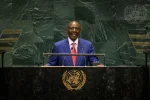

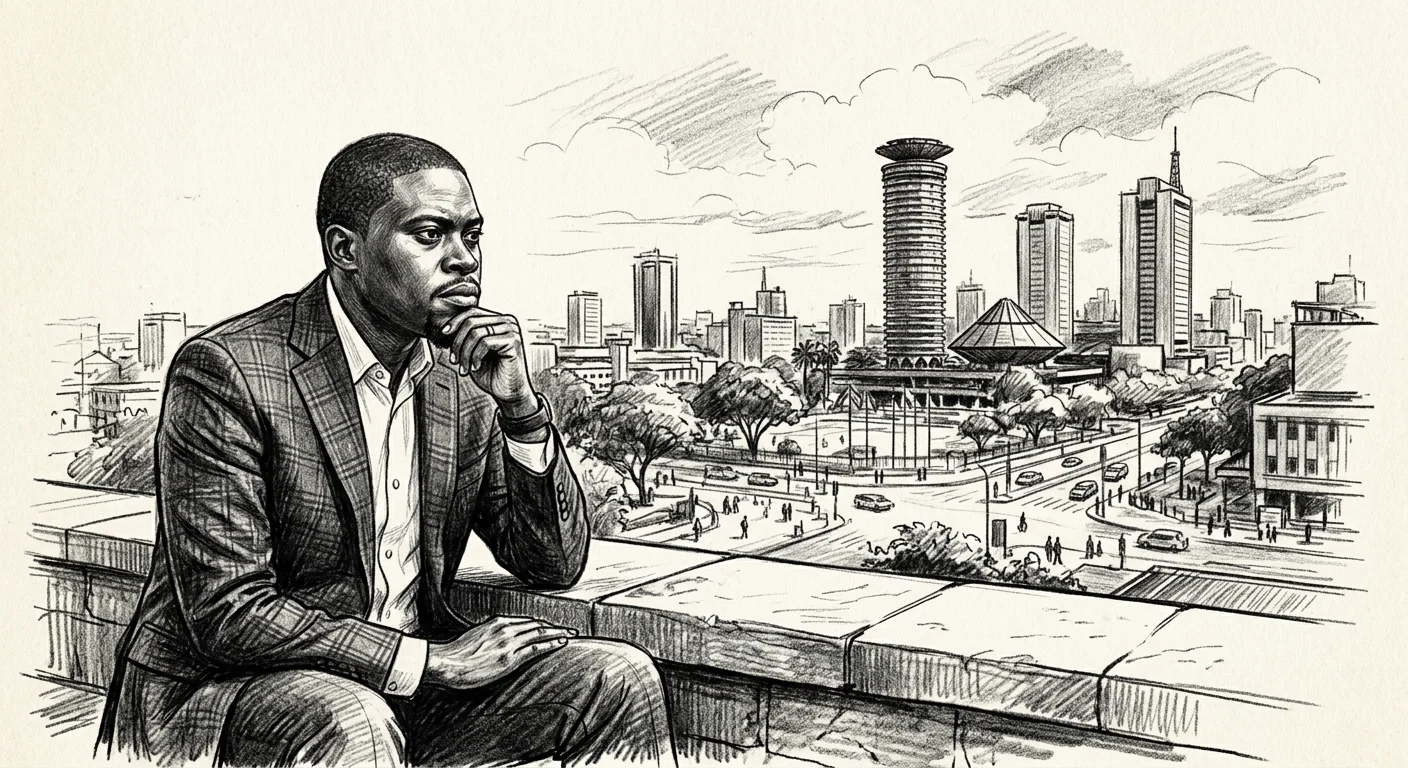
Nairobi’s next gubernatorial election is beginning to look less like a conventional contest over City Hall and more like a referendum on a larger question: what does it actually take to run a capital city of Nairobi’s scale, and who should be held responsible when the machinery does not work?
Governor Johnson Sakaja has spent much of his first term arguing that the problem is partly structural.
Nairobi is simultaneously a county, Kenya’s capital, the country’s commercial centre and the daytime home of millions more people than its residents. Its infrastructure obligations thus stretch beyond what a conventional county budget can support.
That argument acquired a concrete political form in February when Sakaja and Prime Cabinet Secretary Musalia Mudavadi signed a cooperation agreement at State House, witnessed by President William Ruto.
This placed an estimated Sh80 billion of national government-backed projects behind a programme covering roads, water, sewerage, street lighting, waste management, housing and related infrastructure.
The agreement gives Sakaja something he has repeatedly said Nairobi needs: more resources. It also gives his opponents something else – a powerful political question about whether the governor has demonstrated that he can manage the city with the resources and powers already available to him.
A Problem Bigger Than City Hall
Sakaja’s own description of Nairobi’s financing gap is deliberately stark. Appearing before the Senate, he compared Nairobi’s roughly Sh45 billion in available county resources with Paris, which he said operates on a budget of about Sh1.5 trillion while serving roughly two million residents, against Nairobi’s daytime population of about seven million.
The comparison is not a like-for-like measure of municipal finance – different countries have different systems for allocating responsibilities, raising revenue and funding metropolitan infrastructure – but Sakaja’s underlying argument is straightforward.
Nairobi’s obligations have grown faster than the resources available to the county government, and the law recognises that Nairobi is different. Section 6 of the Urban Areas and Cities Act identifies Nairobi as the capital city and allows the two levels of government to agree on the performance of functions and delivery of services, including provisions for funding and joint projects.
The financing gap is visible across the city. Nairobi needs a reliable road and drainage network to cope with rapid development and increasingly severe flooding; a functioning sewerage system; dependable water supply; public lighting; organised waste collection and disposal; and infrastructure capable of supporting the commercial, residential and diplomatic functions expected of a national capital.
The backlog is substantial enough that even a well-funded administration cannot clear it through a handful of flagship projects. It requires maintenance systems as much as construction, predictable revenue as much as one-off capital injections, and institutions that keep services running after the ribbon-cutting ceremonies end.
That distinction matters for Sakaja because his political defence cannot ultimately rest on how much money Nairobi has received. It will rest on what Nairobians can see and experience as a result.
The Sh80 Billion Experiment
The February 17 package includes Sh8.7 billion for roads, bridges and drainage; Sh3.7 billion for street lighting; investments in water treatment and distribution; major sewerage works under the Nairobi River regeneration programme; informal-settlement electricity connections; and projects involving waste management and urban infrastructure.
The lighting programme illustrates the scale of the ambition. Nairobi has approximately 70,000 lighting points, with only about 30 per cent operational. The plan is to complete 10,000 stalled installations while adding another 40,000 lights.
The road programme is similarly broad, with the agreement providing for 247 kilometres of roads, while the wider package includes drainage and bridge works.
Water and sewerage interventions include upgrading the Ng’ethu Treatment Plant, expanding sewer infrastructure along the Nairobi River corridor and supporting additional last-mile sewer connections.
But there is an important qualification to the phrase “Sh80 billion for Nairobi.”
The money is not simply an additional Sh80 billion deposited into the Nairobi County Treasury for Sakaja’s administration to spend.
National government agencies are implementing programmes and projects, while both levels of government continue to carry their respective budgeting responsibilities. That makes the pact less a giant county budget top-up than a coordinated national-county development programme.
By March, implementation had started with a joint steering and implementation structure bringing together national government ministries, departments and agencies and the county government.
The government has since reported progress on projects, while Nairobi County has presented a broader scorecard claiming more than 300 kilometres of roads constructed or rehabilitated and extensive street-lighting work.
There has been no independent verification of these numbers, but the city has been turned into a construction site over the last couple of months.
The political test, therefore, is becoming increasingly simple: can the pact turn into functioning infrastructure quickly enough for residents to experience the difference before they vote?
NMS Question Has Not Gone Away
The most politically sensitive part of the agreement is not the money. It is the question of who controls Nairobi. Sakaja has repeatedly insisted that the pact is not a repeat of the Nairobi Metropolitan Services arrangement introduced during the Sonko administration, under which national government structures took over several county functions.
His legal argument rests principally on cooperation rather than transfer. Article 6(2) of the Constitution describes national and county governments as distinct and interdependent and requires them to conduct their relations through consultation and cooperation, while Article 189 specifically permits the two levels of government to cooperate and establish joint committees and joint authorities.
Article 187, by contrast, deals specifically with the transfer of functions and powers between levels of government and establishes conditions around such transfers, including arrangements for the necessary resources.
Sakaja’s position is that the February agreement does not transfer Nairobi’s constitutional functions to the national government and does not create another institution to run City Hall. Instead, national agencies are providing resources and implementing specific projects alongside the county government.
The legal framework for Nairobi itself also expressly contemplates an agreement between the two levels of government covering funding, administration and joint projects. Critics have nevertheless argued that the substance of the arrangement matters as much as the label attached to it.
Politically, however, the distinction has become difficult to escape. Critics have described the arrangement as a “hostile takeover”, arguing that national government involvement amounted to an erosion of devolution.
For Sakaja, that means the pact has to accomplish two things at once: deliver projects and demonstrate that Nairobi remains firmly under the constitutional authority of its elected county government.
The Emerging Contest
The governor’s challengers are arriving with different arguments, different constituencies and, increasingly, different political vehicles.
Babu has built the clearest political attack around accountability and control of Nairobi’s resources.
He has publicly opposed the national government agreement and pledged to abolish it if elected governor, arguing that the arrangement was procedurally and constitutionally flawed.
By September, he had also moved towards his own political vehicle, The Mwananchi Party, amid tensions over the political direction of the wider Linda Mwananchi movement.
James Gakuya, the Embakasi North MP and a figure within Rigathi Gachagua’s Democracy for the Citizens Party, represents a different challenge. Gachagua has said DCP intends to field a candidate for Nairobi governor, with Gakuya among those seeking the party’s ticket.
The contest therefore carries a second layer beyond City Hall: the struggle for political influence in Nairobi between Sakaja’s camp and Gachagua’s DCP.
Margaret Wanjiru has now formally entered the race on the Kenya Moja Movement ticket. Her pitch is built around restoring dignity, order, accountability and effective management to the capital, with sanitation, water, infrastructure, healthcare and the business environment among the areas she has identified.
Her campaign also gives the opposition field another established political network, particularly through her long-standing church and political base.
Ronald Karauri, who declared his bid in February, is presenting a management argument, contending that Nairobi’s persistent problems are fundamentally failures of leadership and administration.
What Nairobi Voters Will Measure
For Sakaja, the central political argument is likely to be built around incumbency and delivery. He can point to programmes such as Dishi na County, CBD improvements, youth employment initiatives, markets, roads and the growing national government partnership.
The county administration says it has expanded its road rehabilitation programme, street lighting, markets and employment initiatives, while the Sh80 billion agreement gives it access to a larger pool of nationally implemented infrastructure projects.
But incumbency also removes one of the easiest political defences available to an opposition candidate: the claim that the problems are entirely somebody else’s fault.
By 2027, Sakaja will have had five years to explain what his administration could do with the powers of City Hall, what required intervention from the national government, and what remains unresolved despite both. That will make the Sh80 billion pact politically double-edged.
If roads are completed, streetlights become reliable, water supply improves, sewer connections expand and waste management becomes visibly more dependable, Sakaja will have a straightforward argument that cooperation produced results that City Hall could not have achieved alone.
If the projects remain largely announcements, or if the city’s daily experience continues to be dominated by garbage, flooding, traffic, water shortages, broken roads and unreliable lighting, opponents will have an equally straightforward counterargument: the deal became an admission that the incumbent needed the national government to do the job.
The opposition’s challenge is different. A crowded field may give Nairobi voters several competing versions of change, but it does not automatically produce a coherent alternative administration.
The candidates have different parties, political alliances, constituencies and explanations for what has gone wrong. That makes the question of consolidation important without making the outcome predetermined.
If several challengers remain in the race, they will be competing not only against Sakaja but also against one another for the same pool of voters who want a different direction at City Hall.
If political formations eventually negotiate a common candidate, the contest would be reshaped around a clearer incumbent-versus-alternative choice.
Either way, Nairobi’s 2027 election will eventually have to move beyond personalities.
Previous Nairobi contests have shown that the candidate who consolidates first, not the candidate with the strongest platform, is the one who actually sets the terms of the contest.
On current evidence, nobody in Nairobi’s opposition has done that yet.