




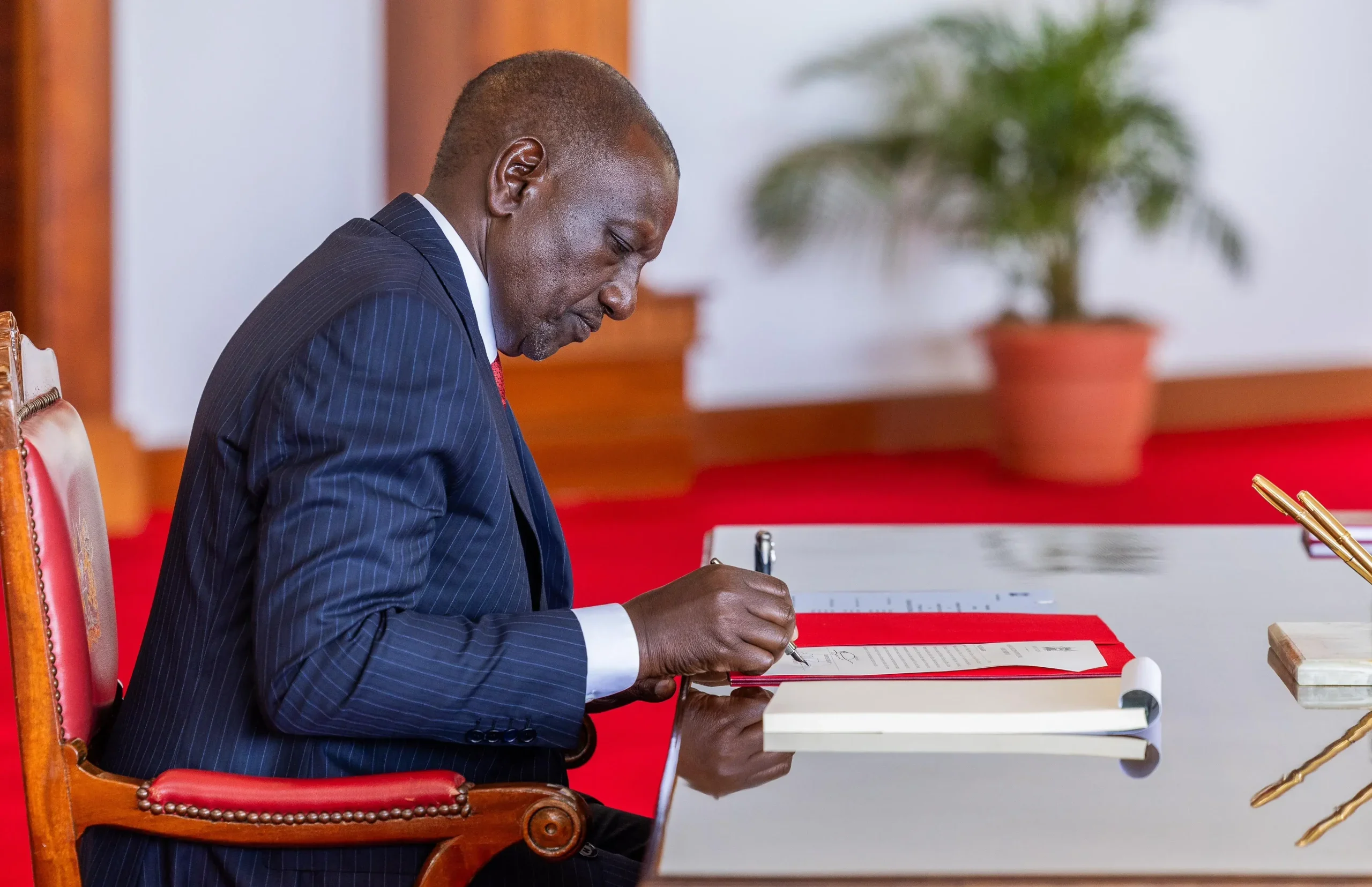
In Kenya, the presidential pardon is a significant constitutional power vested in the President, allowing them to grant clemency to individuals convicted of crimes.
This authority, often seen as an act of mercy, is a critical aspect of the justice system, balancing legal consequences with compassion.
Let us explore how the presidential pardon works in Kenya, its legal basis, processes, and implications.
What is a Presidential Pardon?
A presidential pardon is an executive action by the President of Kenya to forgive or reduce the punishment of a convicted individual.
It can result in the complete release of a prisoner, a reduction of their sentence, or the commutation of a penalty (e.g., changing a death sentence to life imprisonment).
The pardon does not erase the conviction but mitigates its consequences, reflecting the President’s discretionary power to show leniency.
Legal Basis for Presidential Pardons
The power to grant pardons is enshrined in Article 133 of the Constitution of Kenya, 2010. This article establishes the Power of Mercy, which allows the President to:
- Grant a full pardon, freeing a convicted person from their sentence.
- Reduce a sentence, such as shortening the prison term.
- Commute a sentence, substituting a severe penalty with a less severe one.
- Grant a respite, temporarily suspending a sentence, often for medical or humanitarian reasons.
The President exercises this power on the advice of the Advisory Committee on the Power of Mercy, a body established under the Power of Mercy Act, 2011.
This committee ensures that the process is structured, transparent, and fair.
The Advisory Committee on the Power of Mercy
The Advisory Committee plays a pivotal role in the pardon process. According to the Power of Mercy Act, 2011, the committee is chaired by the Attorney General and includes members such as the Cabinet Secretary for Interior, the Principal Secretary responsible for correctional services, and other appointed individuals with expertise in law, human rights, or related fields.
- The committee’s responsibilities include:
Receiving and reviewing petitions for clemency from convicted individuals or their representatives. - Conducting investigations, including consulting victims, families, and relevant authorities.
- Advising the President on whether to grant a pardon or commute a sentence.
- Ensuring the process aligns with constitutional principles and public interest.
How the Pardon Process Works
The process for obtaining a presidential pardon in Kenya is structured and involves several steps:
1. Petition Submission: A convicted person, their family, legal representatives, or even the Advisory Committee itself can initiate a petition for clemency. Petitions are typically submitted through the correctional services or directly to the Advisory Committee.
2. Review and Investigation: The Advisory Committee reviews the petition, examining factors such as:
- The nature and severity of the crime.
- The convict’s behavior and rehabilitation progress in prison.
- The impact of the crime on victims and society.
- Humanitarian considerations, such as the convict’s health or family circumstances.
The committee may consult prison authorities, victims, or other stakeholders to gather comprehensive information.
3. Recommendation to the President: After deliberation, the committee submits its recommendations to the President. These recommendations are not binding, but the President typically relies on them to make an informed decision.
4. Presidential Decision: The President decides whether to grant a pardon, commute a sentence, or deny the petition. The decision is communicated through an official gazette notice or public announcement.
5. Implementation: If a pardon or commutation is granted, the relevant authorities, such as the Kenya Prisons Service, implement the decision, releasing the individual or adjusting their sentence accordingly.
Criteria for Granting Pardons
While the President has broad discretion, the Advisory Committee considers several factors to ensure fairness and transparency:
- Rehabilitation: Evidence of remorse, good conduct, and rehabilitation in prison.
- Health and Age: Terminal illness, old age, or other humanitarian concerns.
- Nature of the Offense: Minor offenses or cases with mitigating circumstances may receive priority.
- Public Interest: The impact of the pardon on society, victims, and justice.
- Time Served: Whether the convict has served a significant portion of their sentence.
Historical Context and Notable Examples
Presidential pardons in Kenya have often been used to decongest prisons, reward reformed inmates, or address unique cases.
For instance:
In December 2024, President William Ruto pardoned 4,753 petty offenders during the Jamhuri Day celebrations. This included 4,735 prisoners and 18 others whose death sentences were commuted to life imprisonment, following recommendations from the Power of Mercy Advisory Committee.
Historically, former presidents Daniel arap Moi and Mwai Kibaki also used this power during national holidays to grant clemency to thousands of inmates, particularly those convicted of minor offenses.
However, pardons have sometimes sparked controversy. Critics argue that high-profile cases or politically motivated pardons can undermine justice, especially if victims’ rights are overlooked.
The Advisory Committee’s role is crucial in mitigating such concerns by ensuring a rigorous vetting process.
Limitations and Checks
The presidential pardon is not absolute and is subject to constitutional and legal checks:
- The President cannot pardon individuals for certain offenses, such as impeachment-related convictions.
- The Advisory Committee ensures decisions align with principles of fairness, justice, and public interest.
- Public scrutiny and media coverage act as informal checks, holding the process accountable.
Implications of Presidential Pardons
Presidential pardons have significant implications:
- Rehabilitation and Reintegration: Pardons give reformed offenders a second chance to reintegrate into society.
- Prison Decongestion: Releasing petty offenders helps reduce overcrowding in Kenya’s prisons.
- Public Perception: While pardons can be seen as acts of compassion, controversial decisions may erode public trust in the justice system.
- Victim Considerations: The process must balance the rights of convicts with those of victims, ensuring justice is not undermined.
Comparative Analysis: Presidential Pardons in Other Jurisdictions
To understand Kenya’s pardon system, it’s useful to compare it with other jurisdictions, highlighting similarities and differences in legal frameworks, processes, and public perceptions.
United States
Legal Basis: The U.S. Constitution (Article II, Section 2) grants the President the power to pardon federal offenses, except in cases of impeachment. Unlike Kenya, there is no mandatory advisory committee, though the Office of the Pardon Attorney in the Department of Justice reviews petitions and makes recommendations.
Process: Individuals submit petitions to the Pardon Attorney, who evaluates based on factors like remorse, post-conviction conduct, and societal impact. The President has near-unlimited discretion, with no obligation to follow recommendations.
Key Differences: The U.S. process is less structured than Kenya’s, lacking a statutory committee. U.S. pardons often attract controversy, especially when granted to high-profile figures (e.g., President Trump’s pardons of political allies). Kenya’s Advisory Committee adds a layer of transparency absent in the U.S.
United Kingdom
Legal Basis: The UK’s equivalent is the Royal Prerogative of Mercy, exercised by the monarch on the advice of the Home Secretary or other ministers. It is rooted in common law rather than a written constitution.
Process: Petitions are reviewed by the Ministry of Justice, with input from judges or parole boards. Pardons are rare and typically granted for miscarriages of justice (e.g., quashing wrongful convictions) rather than routine clemency.
Key Differences: Unlike Kenya’s focus on rehabilitation and prison decongestion, UK pardons prioritize correcting judicial errors. Kenya’s process is more accessible to ordinary convicts, while UK pardons are exceptional.
South Africa
Legal Basis: Section 84(2)(j) of South Africa’s Constitution grants the President the power to pardon or reprieve offenders, similar to Kenya’s Article 133. The process is guided by the Department of Justice and Constitutional Development.
Process: Petitions are submitted to the Department, which reviews them with input from correctional services and victims. The President makes the final decision, often consulting advisors but without a formal committee like Kenya’s.
Key Differences: South Africa’s process is less formalized than Kenya’s, with no statutory advisory body. South Africa also uses pardons for political reconciliation, as seen in post-apartheid amnesties, whereas Kenya’s pardons focus more on humanitarian and practical goals like prison decongestion.
India
Legal Basis: Article 72 of India’s Constitution allows the President to grant pardons, similar to Kenya’s framework. However, the power is exercised on the advice of the Council of Ministers, making it less discretionary than in Kenya.
Process: Petitions are reviewed by the Ministry of Home Affairs, which consults state governments and judicial authorities. The President’s decision is heavily influenced by ministerial advice, unlike Kenya’s reliance on an independent committee.
Key Differences: India’s process is more bureaucratic and tied to political structures, while Kenya’s Advisory Committee provides a specialized, less politicized review. India’s pardons are often reserved for high-profile or death penalty cases, unlike Kenya’s broader application.