

For years, Kenya’s discoveries of oil in Turkana, titanium in Kwale, and rare earth minerals elsewhere have been accompanied by the same promise: that natural resources would transform the country’s economic fortunes. The challenge has never been discovering the wealth but preserving it.
That is the logic behind the Sovereign Wealth Fund Act, 2026, a state-owned investment vehicle designed to save, invest and manage revenues from petroleum and mineral resources for current and future generations.
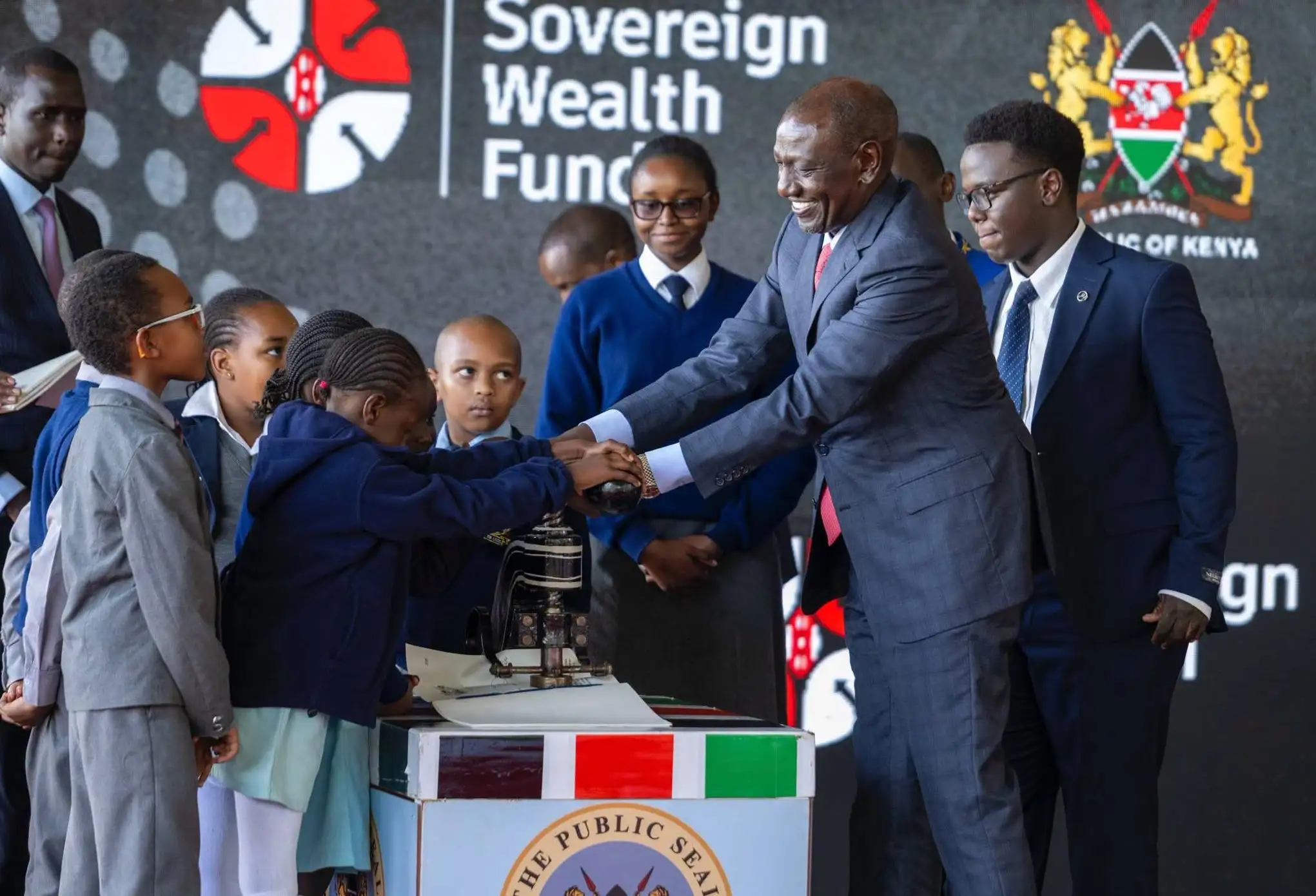
At the assent ceremony on July 8, 2026, at State House, Nairobi, President Ruto described the Fund as the missing counterpart to the National Infrastructure Fund launched in March.
“If the National Infrastructure Fund builds the assets that grow our nation, the Sovereign Wealth Fund preserves and multiplies the wealth those assets create,” Ruto said.
It is an ambitious proposition. Sovereign wealth funds have produced dramatically different outcomes worldwide; some have become trillion-dollar national savings accounts, others vehicles for political patronage. Which path Kenya follows is still an open question, and the law itself will not answer it.
Unlike taxes or ordinary revenue, income from natural resources is temporary: oil fields run dry, mineral deposits are exhausted, and once extracted, they cannot be replaced.
Economists have long argued that governments should convert finite resource windfalls into permanent financial assets rather than spend every shilling as it arrives.
That philosophy is embedded in Article 201(c) of the Constitution, which requires that the benefits and burdens of public resources be shared equitably between present and future generations, a principle the government says the new Act finally gives practical effect to.
The legislation arrives as Kenya anticipates commercial oil production from the Lokichar Basin and points to a newly completed nationwide mineral survey indicating significant strategic and industrial deposits.
Rather than wait until substantial revenues begin flowing, the government has chosen to build the institution first, a deliberate sequencing, but also the crux of the problem below.
Countries like Norway (Government Pension Fund Global, built on oil revenues), Singapore (Temasek Holdings and GIC, leveraging trade surpluses and state-owned enterprises), and Botswana (Pula Fund, derived from diamond revenues) have successfully used SWFs to stabilise budgets and build substantial wealth for future generations.
In Kenya’s case, the SWF is meant to pool income from natural resources, which are yet to be fully exploited but hold potential, privatisation proceeds from state-owned enterprises, and returns from public asset investments.
The goal is to create a diversified portfolio that can generate sustainable income and act as a buffer against economic shocks.
Three funds in one
The Act creates three distinct windows.
The Stabilisation Component acts as an economic shock absorber, providing buffers against commodity price collapses, pandemics or other disruptions, the kind of shock Kenya faced during Covid-19 and, more recently, the oil-price disruption from the Israel-Iran conflict.
The Strategic Infrastructure Investment Component finances priority infrastructure projects and leverages private capital alongside the National Infrastructure Fund.
The Future Generations (Urithi) Component is the most consequential: thirty per cent of petroleum and mineral revenues will be automatically deposited into it and professionally invested for long-term growth, a fixed share that, in principle, cannot simply be absorbed into annual government spending.
That last point is where the government’s framing runs into arithmetic. Thirty per cent of petroleum and mineral revenue only matters if there is meaningful petroleum and mineral revenue to take thirty per cent of.
Kenya’s mining and quarrying sector currently contributes under one per cent of GDP, and government policy itself does not project that share reaching ten per cent before 2030.
Turkana crude has moved from pilot shipments to routine but small-volume exports, with independent modelling long treating its near-term national revenue contribution as marginal.
The pilot Turkana crude exports fetched Sh3.6 billion, according to Energy and Petroleum Cabinet Secretary Opiyo Wandayi, as the government aims for the first commercial export by December.
The Institute of Economic Affairs made the point directly in its review of the Bill: Kenya is not a major resource-rent economy, and the countries with successful sovereign funds typically combine large windfalls with persistent fiscal surpluses.
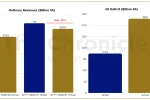
Kenya is running a budget deficit, with debt-servicing consuming a rising share of ordinary revenue. In the first half of the last financial year, debt service costs rose to 81.1 per cent of total tax revenues at Sh942 billion.
Treasury’s own capitalisation plan reflects this reality more honestly than the ceremony did: the Fund’s initial balance, expected in the region of Sf200 billion, is seeded largely by privatisation proceeds, chiefly the partial divestiture of the state’s Safaricom shareholding, not by mineral or petroleum revenue.
The Fund’s founding capital, in other words, is asset-sale money standing in for resource-rent money that has not yet materialised.
Lessons from Elsewhere
A cross-section of countries around the world has tried similar funds, with mixed results. Kenya can draw critical lessons from both the successes and failures to ensure that its Sovereign Wealth Fund meets the goals that it is set for.
Botswana’s Pula Fund, created in 1994, remains Africa’s best benchmark. Managed by the central bank, it follows strict fiscal rules: deposits are made from mineral revenues, and withdrawals are allowed only under clear conditions. Regular audits and public reports sustain credibility. The lesson here is that Kenya should entrench withdrawal and investment rules in law, not rely on executive discretion.
Nigeria’s Sovereign Investment Authority (NSIA) was set up in 2011 to manage oil wealth. Despite some successful projects, political disputes over fund control and inconsistent contributions have weakened its impact. Therefore, Kenya must protect its funds from intergovernmental wrangling and ensure steady funding sources.
Chile runs two major funds: the Economic and Social Stabilisation Fund and the Pension Reserve Fund. Deposits and withdrawals are automatically tied to fiscal surpluses and deficits. Every transaction is published online. It would therefore be prudent for Kenya to link deposits and withdrawals to measurable economic indicators and commit to real-time transparency.
Malaysia’s 1Malaysia Development Berhad (1MDB) started as an ambitious development fund but turned into a global scandal after billions were misappropriated through political networks. For the Kenyan one to succeed, transparency and independent audits must be built into the fund’s DNA, not left to goodwill.
Rwanda’s Agaciro Development Fund and Rwanda Infrastructure Fund successfully mobilise citizens and the diaspora to invest in national development. Accountability is enforced through open quarterly reports. Kenya could invite domestic and diaspora investors to participate in the fund through transparent shareholding models.
Ghana operates both a Stabilisation Fund (for short-term shocks) and a Heritage Fund (for future generations). After years of mismanagement, reforms introduced withdrawal caps and stronger audit requirements. Kenya can consider a two-tier approach, one fund for long-term savings, another for infrastructure investment.
Singapore’s Temasek Holdings and GIC are professionally run and commercially driven, with clear separation from political offices. Their annual reports are publicly available and audited by independent firms. Therefore, Kenya must appoint fund managers based on merit and insulate the board from political interference.
Learning from Norway
President Ruto repeatedly invoked Norway’s Government Pension Fund Global, now worth roughly $2.2 trillion and holding stakes in thousands of companies globally, alongside Botswana’s Pula Fund and Rwanda’s sovereign investment structures.
The comparison is deliberate, and the underlying point that successful funds are built on governance rather than resource abundance alone is correct. But it cuts both ways.
Nigeria offers the clearer cautionary tale than the President’s speech acknowledged: its precursor to a modern sovereign fund, the Excess Crude Account, was drained by unauthorised withdrawals and political discretion over more than a decade, falling from billions of dollars to a few hundred thousand by 2023, before Nigeria rebuilt a more insulated vehicle, the NSIA, in its place.
The lesson is not that resource funds fail for lack of good drafting; Nigeria’s original legislation was reasonably conventional, too, but they fail when revenue can be routed around the safeguards on paper.
That is precisely the gap Kenya’s own Controller of Budget flagged during the Bill’s earlier stages: the draft law was silent on how Fund revenues relate to the Consolidated Fund required under Article 206 of the Constitution, and the Board’s composition lacked independent oversight representation.
The Act’s safeguards are genuine: application of the Public Finance Management framework, audited annual financial statements, published reports to the National Assembly, parliamentary approval of investment policy, and criminal penalties for misappropriation.
Investment restrictions also bar speculative derivatives, domestic real estate, private equity and Kenyan-issued securities, narrowing the scope for politically motivated allocation. President Ruto framed independent professional management and accountability as central to the institution.
Those are the right commitments. They are also, for now, commitments rather than track record, and the Controller of Budget’s concerns about board independence suggest they were not uncontested even inside the legislative process.
Passing the law was the easier step. The Fund now has to perform two jobs that pull in different directions, shielding the budget from shocks while building an endowment that, by design, cannot be raided for near-term relief, with a resource base that is, by the government’s own projections, years away from matching the ambition of the rhetoric around it.
Whether Kenya inherits Norway’s discipline or Nigeria’s Excess Crude Account will be decided less by the State House ceremony than by whether a government running persistent deficits can leave the Fund alone the first time a shock makes raiding it tempting.