



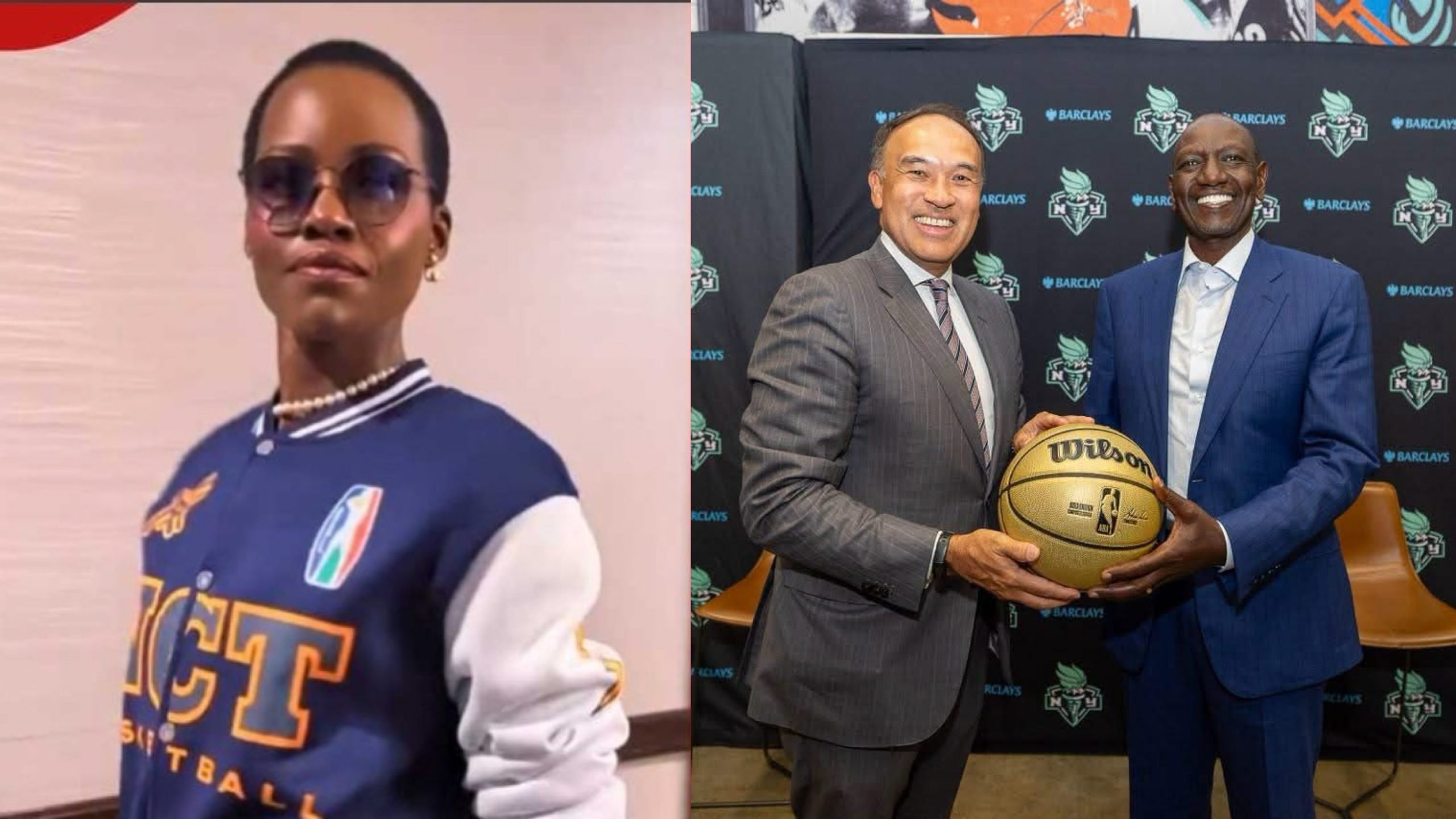
Two things that could shape the Kenyan basketball scene in future took place almost simultaneously last week.
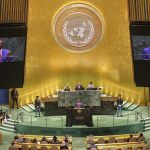
In New York, President William Ruto met with NBA Deputy Commissioner Mark Tatum in a meeting that put basketball infrastructure at the centre of Kenya’s conversation with the Association.
On Instagram, Hollywood Star, Lupita Nyong’o announced that she had become an investor in Nairobi City Thunder, which made history in 2025 as the first Kenyan side to qualify for the NBA- and FIBA-backed Basketball Africa League, and repeated the feat in 2026.
That matters because Kenya’s basketball story may ultimately be less about building one spectacular arena and more about creating an ecosystem around the sport.
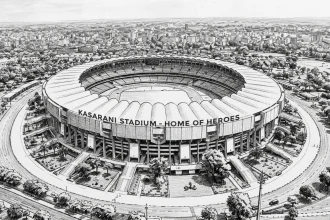
In the New York meeting, Ruto and Tatum discussed the proposed Railway City multi-purpose arena, the refurbishment of Kasarani, continued investment in basketball courts and the integration of courts into Affordable Housing Programme projects.
Ruto also said the meeting reviewed progress in Kenya’s partnership with NBA Africa and the Basketball Africa League.
That is a significant shift in how Kenya is talking about the sport.
Basketball is no longer being presented only as a youth programme or a pathway for talented players. It is increasingly being discussed as part of the country’s sports, entertainment and urban-development economy.
The infrastructure, however, deserves a closer look.
The Arena Is Real
The proposed Railway City arena has moved beyond a concept. In April, Kenya Railways signed a lease agreement with Zaria Group for a modern arena and entertainment district within Nairobi Railway City.
The government describes it as a multi-purpose facility for international events, creative industries and entertainment.
As we wrote last week, the planned arena is placed within a wider Sh38.14 billion Railway City development. Phase One will feature a 10,000-seat multipurpose indoor arena, supported by a 140-room branded hotel, 70 serviced apartments, retail outlets, restaurants and leisure facilities.
Plans also include a public plaza, a green pedestrian boulevard and an outdoor performance space, with the entire development taking approximately 6.8 hectares near Nairobi Railway Station, according to regulatory filings.
The arena is part of a development agreement and a private-led investment structure.
It is not the same thing as a basketball arena appearing as a conventional line item in the national sports development budget.
The 2026 allocation for Sports Kenya under the development and management of sports facilities is about Sh442.3 million. Its published performance targets include the upgrade of Kasarani, regional stadia and community sports grounds.
The government has allocated billions towards upgrading the Moi International Sports Centre, with Sh3.6 billion cited for the first phase and a further Sh3.1 billion estimated for a second phase aimed at bringing the facility to AFCON standards.
The catch is that this is primarily a broader sports-stadium upgrade. The public documents do not turn the Kasarani investment into a dedicated national basketball infrastructure programme.
That leaves Kenya with three different categories: a privately structured arena project, publicly funded stadium refurbishment and a wider promise of basketball-court development.
Kenya Has A BAL Team
Nairobi City Thunder became the first Kenyan team to play in the BAL and returned for a second consecutive season in 2026. The club won the Kenyan Basketball League in 2024 and 2025 and qualified for the 2026 BAL after going through the Road to BAL process.
Its 2026 campaign ended with a 2–3 record in the Kalahari Conference, narrowly missing the playoffs after losing the relevant head-to-head tiebreaker to Tanzania’s Dar City.
That is progress, but the regional comparison shows how much further the infrastructure conversation can go.
Rwanda has turned the BK Arena into a central part of its basketball and events strategy.
The BAL has held games there since its first season, and Rwanda has secured multi-year rights to host the league’s playoffs and finals, including in 2026.
The Rwanda Development Board has also linked the BAL partnership to youth development and tourism promotion.
Senegal has the 15,000-capacity Dakar Arena and a long-established basketball culture. Its national champion qualifies directly for the BAL, while ASC Ville de Dakar reached the 2026 playoffs after only its second BAL appearance.
Nigeria is also now part of the expanding BAL footprint. Maktown Flyers became the country’s first new BAL participant in 2026, while Nigeria is among the seven countries whose national champions receive automatic BAL qualification.
The point is not that Kenya needs to copy any one of these countries, but a professional league team is only one component of a basketball economy.
The BAL itself says infrastructure, player development and fan engagement are among the factors considered when assessing potential permanent franchise proposals.
That makes the quality and availability of courts more than a sporting question; they become part of the business model.
Affordable Housing Courts
The most intriguing part of the Ruto-Tatum conversation may actually be the least glamorous: putting basketball courts inside Affordable Housing developments. There is evidence that the idea is technically possible.
The Eldoret Railway City Affordable Housing project, for example, includes a basketball court among its planned amenities, alongside housing, shops, a swimming pool, a school and other facilities.
The project was reported at 30 per cent completion in October 2025 and is scheduled for completion in 2027.
What is less clear is the scale. There is a difference between individual housing projects including a basketball court and a national policy that systematically integrates playable courts into Affordable Housing developments.
Kenya does not need every court to produce a professional player. It needs enough accessible courts for children to play regularly, coaches to work locally, clubs to form and competitions to develop.
Not Only Government Money
There is another development that complicates the usual government-versus-infrastructure story. Nairobi City Thunder is attracting private capital.
I&M Bank announced a Sh10 million investment in the club in June, covering the remainder of the 2026 Kenyan Basketball League season and supporting its participation in competitions including the BAL.
Then came an even higher-profile investor: Lupita, who described herself as proud to back the Kenyan BAL team.
Her investment adds celebrity visibility and potentially another commercial dimension to a club that is already building a national and continental identity.
The pieces are beginning to appear: a BAL franchise, corporate investment, celebrity ownership, NBA development programmes, proposed courts in housing projects and a planned 10,000-seat arena.
However, the missing piece is the connective tissue. How many courts will actually be built? Who will maintain them?
How many will be publicly accessible? What happens between school basketball and the professional game?
Can Nairobi City Thunder become a commercially sustainable franchise? And can Kenya eventually host BAL games regularly rather than sending its leading club abroad for league play?
The Ruto-Tatum meeting put those questions on the table.
The infrastructure test now is whether the next announcement comes with a completion date, a financing structure, a functioning court or a team playing in front of a paying home crowd.
For basketball, that is where ambition becomes infrastructure.