



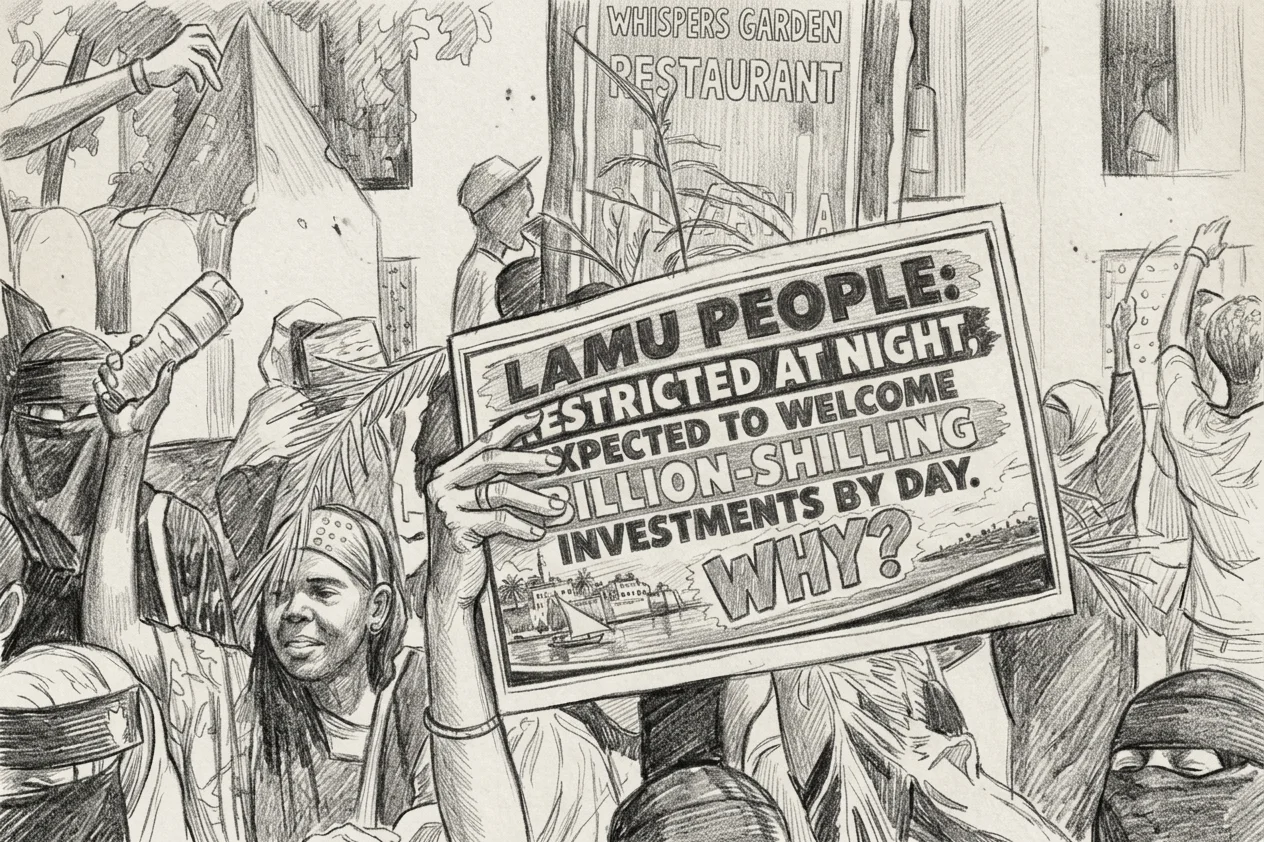
The political argument around Kenya’s planned refinery in Lamu was supposed to be about development. Instead, almost immediately after the groundbreaking, it became an argument about disclosure.
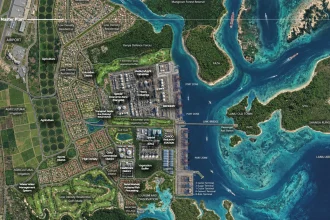
The project is enormous: a planned 700,000-barrel-per-day refinery backed by Nigerian billionaire Aliko Dangote, with an estimated investment of $16 billion (Sh2.07 trillion). Kenya sees it as a cornerstone of industrialisation, energy security and transformation of Lamu into a regional economic hub.
But the scale of the investment raises a simple question the government must now answer clearly: what exactly has Kenya agreed to?
That question moved into the political arena after Nairobi Senator Edwin Sifuna said Parliament had not seen the agreement between the government and Dangote and questioned the commitments Kenya had made to facilitate the project.
President William Ruto responded that Parliament has procedures for lawmakers to request government agreements. Sifuna then invoked Article 35 of the Constitution, which gives citizens a right of access to information held by the State and requires the State to publish and publicise important information affecting the nation.
The disagreement is political, but the underlying question is institutional, and vital to building trust in Kenya’s governance. Kenya has spent years learning that the most consequential part of a mega-project is often not the ribbon-cutting. It is the contract underneath it.
Investment Large Enough to Require Questions
Nothing unusual about a government seeking private capital for infrastructure and industrial development. Indeed, Kenya needs private investment to expand its industrial base without placing the entire cost on the public balance sheet.
The issue is what happens when the public interest becomes intertwined with private investment. In the Lamu case, the state is not merely providing a regulatory environment for a factory.
The project requires land. It is connected to port infrastructure. It has implications for roads, energy and pipelines. The government has discussed a crude pipeline linking Turkana to Lamu. At the same time, Ruto has said the refinery will also rely on crude from other countries because Kenya’s current production would represent only a fraction of planned capacity.
That makes the agreement more consequential than a conventional commercial contract. It could touch public land, public infrastructure, taxation, energy policy, environmental regulation, crude supply, investment obligations, and the wider industrial strategy for the Coast.
Those are precisely the areas in which transparency matters most. The question is not whether every commercial detail must be published. Governments routinely have legitimate reasons for protecting commercially sensitive information.
The question is whether they understand the fundamental bargain: empowering citizens with knowledge.
What exactly is Dangote committing to, and what are Kenya’s specific obligations in this agreement? What is Kenya committing? What infrastructure will the government build or finance?
What land is being provided for the project, and what infrastructure will the government build or finance to support it? What incentives have been offered?
Will Kenya have an ownership stake? If so, how will it finance that stake? Who will own the refinery and associated infrastructure? What happens if construction is delayed?
What happens if the investment does not reach its promised scale? And what obligations survive a change of government?
These are not hostile questions. They are the basic questions that accompany an investment being presented as one of the most consequential industrial projects in Kenya’s history.
Parliament Is Part of the Bargain
The dispute between Ruto and Sifuna is partly about procedure. Ruto’s position, as reported this week, is that lawmakers who want the agreement should follow Parliament’s established process for requesting government documents.
Sifuna argues that the public interest in the project warrants disclosure and that constitutional access to information should not depend simply on executive discretion.
Parliamentary oversight does not necessarily mean every commercial document becomes public in its entirety. But commercial sensitivity does not mean a major agreement involving the state becomes immune from scrutiny.
Kenya’s constitutional architecture does not treat Parliament as a spectator in executive decision-making. When the state makes commitments with long-term consequences, lawmakers have a role in understanding them, particularly where public resources, land or infrastructure are involved.
The refinery therefore presents an opportunity to establish a transparent model for future large investments. The government could disclose the material public obligations while protecting genuinely confidential commercial information.
Parliament could scrutinise the agreement without turning the process into a political theatre. The investor could explain the commercial logic without disclosing information that would compromise its competitive position.
That would shift the debate from whether the government is hiding something to the more useful question of what information citizens actually need to know.
Land Dispute Makes Transparency Important
The timing of the transparency argument matters because the refinery is already facing a separate legal dispute over land.
The land dispute raises concerns about fairness and the need for transparent resolution for affected communities.
The project therefore raises two distinct accountability questions at the same time. One concerns the agreement between the state and the investor.
The other concerns the agreement between the state and the citizens whose land is affected. They should not be confused, but they are connected by one principle: development works better when the people expected to live with its consequences understand the terms.
That is particularly important in Lamu because the refinery is being presented as part of a much larger industrial transformation.
If the project is eventually accompanied by a crude pipeline, petrochemical industries, power generation, logistics facilities and new manufacturing activity, its consequences will extend well beyond the refinery boundary. So will its benefits.
The government has already described the project in terms of regional industrialisation and energy security. Ruto has said the refinery could serve both Kenya and wider East African markets, while the government is positioning Lamu as a broader industrial and logistics hub.
The bigger the promise, the more useful it becomes to establish a public record against which that promise can eventually be measured.
Kenya Needs a Scorecard, Not Just a Ceremony
The easiest way to make the Dangote agreement politically useful is to turn it into a measurable public compact.
If the project is expected to be completed by 2030, Kenyans should know which milestones to reach along the way.
If the refinery is expected to process 700,000 barrels per day, there should eventually be a clear distinction between planned capacity, installed capacity and actual utilisation.
If thousands of jobs are promised, the country should be able to distinguish between temporary construction employment and permanent skilled employment.
If local content is part of the project, the value of contracts going to Kenyan companies should be measurable.
If Lamu is to become an industrial hub, the supporting infrastructure should be tracked alongside the refinery.
If Kenya is expected to provide roads, pipelines, land or other infrastructure, those commitments should be visible in public budgets and implementation reports.
And if the government offers incentives to attract investment, the public should eventually be able to assess what it received in return.
This is where transparency stops being a political slogan and becomes a management tool. The government itself benefits from a clear record because all future administrations will inherit the project.
Parliament will continue to change. The investor will remain a private company. Officials will come and go.
A properly documented agreement allows the country to distinguish between what was promised, what was delivered and what changed along the way.
That is especially important because Kenya’s history of mega-projects contains enough examples of ambitious announcements whose costs, timelines and benefits became difficult to reconstruct after the political moment had passed.
The Question Is Bigger Than Sifuna and Ruto
The current dispute has inevitably been personalised. Ruto has criticised Sifuna’s demand for the agreement, while Sifuna has framed disclosure as a constitutional obligation.
Other political figures, including Ndindi Nyoro, have also called for greater disclosure around the refinery’s ownership structure and the government’s commitments. But the issue should survive both politicians.
The refinery will almost certainly outlast the current political argument. So will the public obligations created around it. That is why the useful question is not whether Sifuna has won an argument with Ruto, or whether the government has successfully defended its position.
It is whether Kenya can establish a credible standard for transparency around investments of national significance.
The country needs investment. It needs industrialisation. It needs infrastructure and jobs. None of those objectives is served by turning every investment agreement into a political battlefield.
But neither are they served by asking citizens to trust that the terms are in their interest without giving them enough information to understand the bargain.
The Dangote refinery is therefore already testing something beyond Kenya’s ability to attract capital. It is testing whether the country can pursue large-scale development while maintaining the constitutional principle that public power and public commitments ultimately belong to the public.
The groundbreaking marked the beginning of the refinery. The disclosure debate may determine what kind of precedent it sets.