

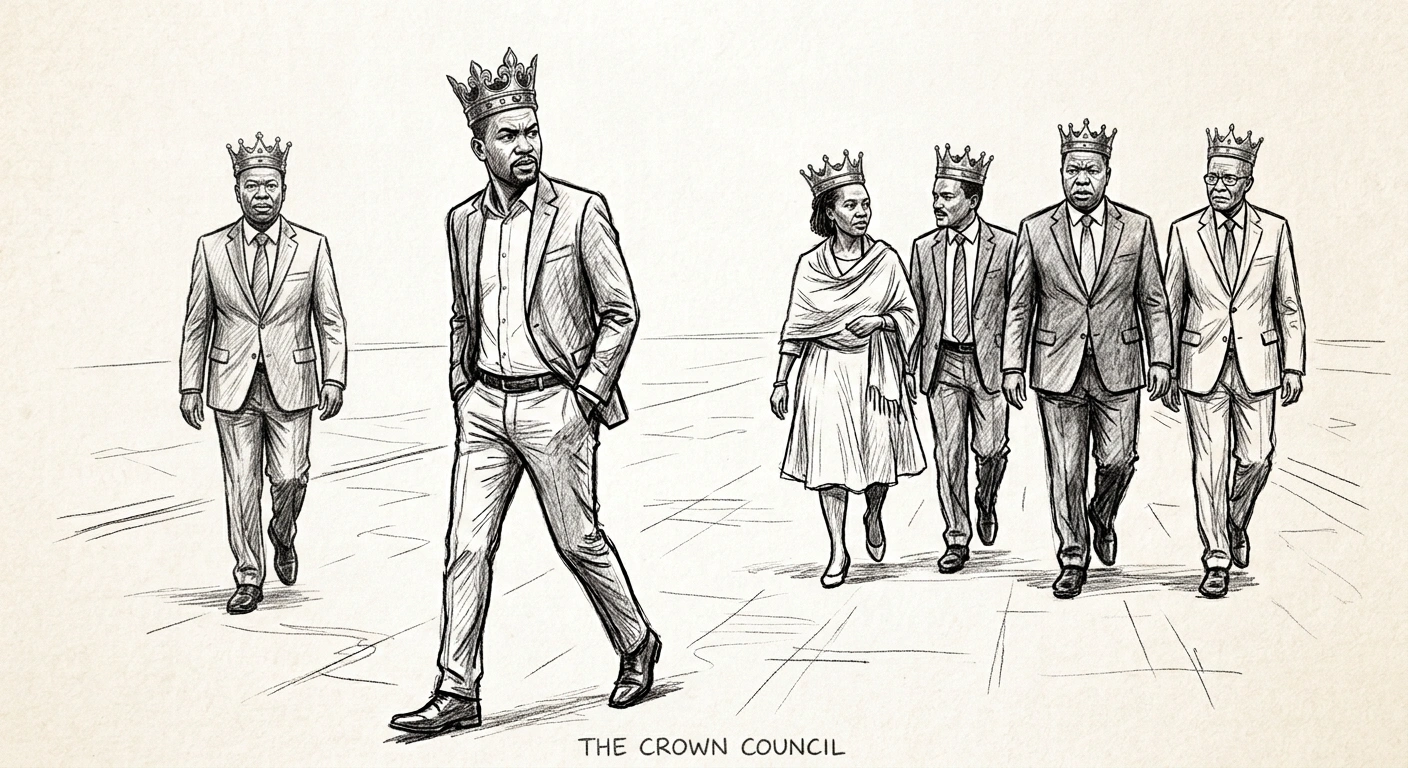
The opposition’s challenge extends beyond selecting a candidate; it involves understanding how multiple ambitions, like those of Sifuna, Orengo, and Kalonzo, impact coalition stability and the 2027 electoral landscape, which should concern all engaged citizens.
This week, however, it has become increasingly clear that the opposition’s challenge is institutional as well as mathematical.
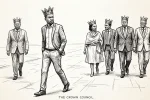
Multiple political vehicles are being assembled around different leaders and formations, even as those same leaders continue to call for a single opposition candidate.
Edwin Sifuna’s Linda Mwananchi movement has formally selected him as its presidential candidate, and he later launched The Equality Party as his political vehicle.
The Political Parties Disputes Tribunal has cleared the Linda Mwananchi movement to seek reservation of the name as a political party, and the Registrar has since approved the reservation for 90 days.
James Orengo is preparing to unveil a political vehicle of his own, with the Liberal Democratic Party reportedly acquired for his presidential ambitions. He has also reaffirmed his commitment to opposition unity and selecting a single candidate.
Kalonzo Musyoka is building the Ukombozi Alliance around the reorganisation of the former Azimio structure, while Rigathi Gachagua’s Democratic Congress Party has kept its distance from the formation.
The result is a political landscape in which leaders advocate unity while building the institutions they will use to negotiate it.
That is not necessarily contradictory, because in coalition politics a party is more than an electoral machine: it is also a source of bargaining power.
The Vehicle Comes Before the Ticket
Kenyan presidential politics has always placed unusual importance on the party vehicle. Control over these processes gives leaders tangible influence in coalition talks, making readers feel the power of party control in shaping the future.
Linda Mwananchi’s path illustrates the issue. After the Political Parties Disputes Tribunal overturned the Registrar’s earlier refusal to reserve the name, the movement secured the reservation. It can now proceed with the formal steps required to establish a party.
The case also shows how control over party names and registration, including the 90-day reservation, can affect the opposition’s ability to present a united front and negotiate effectively for 2027.
The reason is straightforward: whoever controls a political vehicle enters coalition negotiations with something tangible.
Sifuna now leads a movement that has endorsed him as its presidential candidate; Orengo is preparing his own vehicle; Kalonzo has a coalition structure around Ukombozi; and Gachagua has the DCP.
Other opposition politicians are maintaining their parties or exploring alternative vehicles.
Each structure gives its leader a place at the negotiating table.
As Sifuna, Orengo and Kalonzo develop separate vehicles, the focus on control of these structures can be seen as an opportunity for the opposition to strengthen its bargaining position and work towards unity.
One Coalition, Several Centres of Power
The Ukombozi Alliance illustrates the challenge. Kalonzo has presented the rebranded alliance as a broader opposition platform, but several political actors have rejected it or questioned aspects of its reorganisation.
The DCP has said it will not join Ukombozi in its current form, while the National Liberal Party has sought clarity about the legal and organisational basis for the rebranding. Martha Karua has previously rejected the proposed reorganisation and has not joined the new structure.
Meanwhile, Linda Mwananchi has been building its own structure and has endorsed Sifuna as its presidential candidate. Orengo is also preparing an independent political vehicle.
His significance lies not only in his status as another presidential aspirant, but also in his senior role within the broader opposition and his public insistence that the opposition must ultimately agree on one candidate. His decision adds another centre of power to a coalition supposedly moving toward consolidation.
The contradiction is only apparent: leaders may agree on the destination while disagreeing over who should control the route.
The opposition’s current negotiations do not necessarily signal disunity; they may reflect a strategy of building structures to strengthen bargaining positions before pursuing formal unity.
This phase of opposition politics differs from the simplistic view of coalition-building. Leaders may be establishing separate parties not because they have abandoned unity, but because unity has yet to produce a mechanism for deciding how power and resources will be shared.
A party gives a leader organisational infrastructure, candidates for parliamentary and county seats, a membership base and a stronger position when coalition agreements are drafted. Most importantly, it gives a presidential aspirant something tangible to bring to the table.
That may explain why the opposition is discussing a single candidate while developing several political vehicles. The underlying calculation is that unity is best negotiated from strength, not political dependence. The danger is that each vehicle may eventually develop its own interests.
A party develops its own parliamentary candidates. Local leaders develop their own ambitions. Financiers develop relationships with particular politicians. Regional interests become attached to particular organisations. Party officials acquire institutional stakes in the survival of their vehicle.
The Sifuna Question Changes the Arithmetic
Linda Mwananchi has formally endorsed Nairobi Senator Edwin Sifuna as its presidential candidate, meaning the movement is no longer merely a platform through which he might negotiate with other opposition leaders. It now has its own explicit presidential proposition.
Recent surveys have placed Sifuna and Kalonzo Musyoka neck and neck ahead of Fred Matiang’i and Rigathi Gachagua. Those figures measure preferences in that particular survey and period; they do not establish an electoral outcome or demonstrate how a coalition would perform.
Politically, however, the number matters for another reason: a candidate who enters coalition negotiations with an established support base has a stronger bargaining position than one who arrives merely as a senior party official. This is why the opposition’s internal arithmetic is becoming more complicated.
Kalonzo can point to his established party and long presidential history; Gachagua to the political significance of his Mt Kenya base; Orengo to his long political career and position in Nyanza; and Sifuna to a newly mobilised movement and a growing national profile. Matiang’i remains another potential presidential vehicle.
None of these claims automatically determines who should lead the coalition, but they help explain why choosing a leader will be difficult.
The opposition has focused heavily on the presidential ticket because it is the most visible part. Yet a presidential coalition is only as durable as the political architecture beneath it.
Decisions about parliamentary candidates, gubernatorial races, constituency allocations, coalition resources, campaign machinery, the manifesto and running mate will all shape its strength. So too will its handling of parties that do not receive the positions they expect, and the coalition’s future after the election.
Kenya has repeatedly produced broad electoral alliances that functioned better as campaign arrangements than as governing structures.
The opposition therefore faces two organisational tasks: selecting a single presidential candidate who can unite several political constituencies, and building a coalition that gives parties and politicians who miss out on the top prize a reason to remain in the arrangement.
Opposition’s Biggest Asset May Be Its Complication
The growing number of opposition formations may look like evidence of disunity, but a more useful interpretation is that the opposition is still negotiating its institutional form. Competing centres of power are emerging because its leaders have yet to agree on the rules for sharing power.
Sifuna’s party gives him leverage, as do Orengo’s vehicle, Kalonzo’s Ukombozi structure and Gachagua’s DCP. Smaller parties may also hold the parliamentary and county candidates needed to make a national coalition work.
The coming months will be less about persuading every opposition leader to abandon ambition than about creating a mechanism to organise it. If such a mechanism emerges, the proliferation of parties may prove temporary.
If it does not, the opposition could enter 2027 with an impressive collection of alliances, parties and presidential ambitions, but no common political machine.
The important development this week is therefore not simply that another opposition party may be launched.
Kenya’s opposition is increasingly building the structures through which it will negotiate its eventual unity. Before it can become one coalition, it is becoming a party system of its own.