

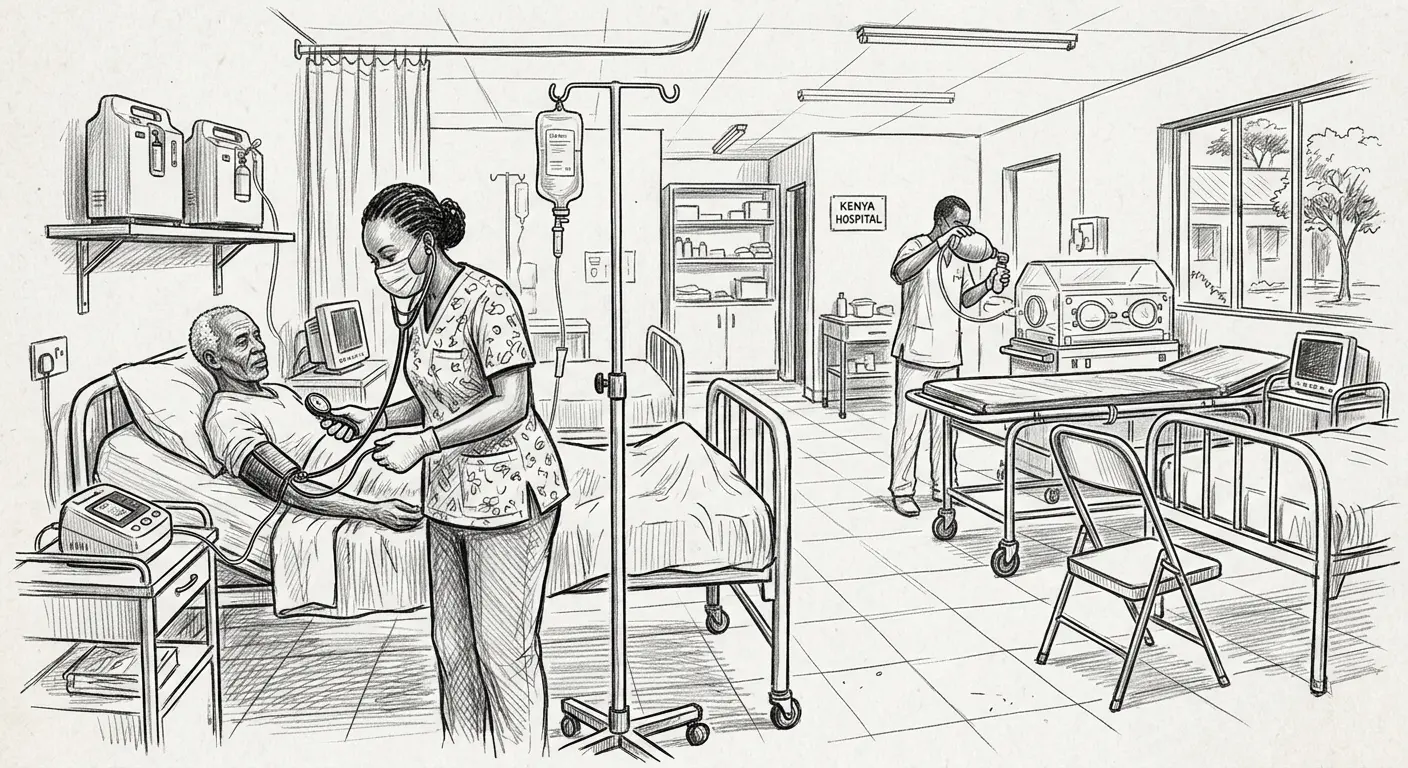
Kenya’s health system is approaching a major transition. Over the next five years, the Government is expected to assume more of the financial and operational responsibilities currently supported by the United States, placing a greater burden on domestic institutions and public finances for essential services.
This is an important test of national ownership as essential services cannot depend indefinitely on external support, but taking responsibility does not guarantee the resources, systems or capacity to sustain them.
The Parliamentary Budget Office’s November 2026 report outlines the transition under the Kenya– United States Government-to-Government Health Cooperation Framework.
This five-year partnership covers disease surveillance and outbreak response, laboratories, health-product supply chains, the workforce, digital infrastructure, and integration of priority disease programmes into Kenya’s health financing and service delivery. Its central aim is to gradually transfer financing and implementation to the Kenyan Government.
The key question is whether domestic budgets, procurement and institutions can take on these responsibilities without disrupting services.
The Financing Burden Is Shifting
The PBO expects United States support to fall from US$414.294 million in 2026 to US$161.494 million in 2030.
Against the 2025 baseline, Kenya’s additional health expenditure is projected to rise from Sh10 billion in 2027 to Sh20 billion in 2028, Sh35 billion in 2029 and Sh50 billion in 2030.
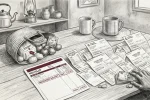
These funds must sustain ongoing services, not just new projects, including healthcare workers, medicines, laboratory services, digital systems and supply chains. Unlike time-limited development projects, these services must continue as donor funding declines.
United States support is also tied to Kenya meeting its co-investment commitments. If the Government misses them in a given calendar year, the United States may give nine months’ notice to reduce or end funding, the PBO reports. Kenya must therefore both prepare for declining support and meet agreed commitments.
Medicines And Supply Chains
The agreement covers commodities for HIV, tuberculosis and malaria programmes, as well as maternal, newborn and child health. United States financing for specified commodities is expected to decline as Kenya’s share rises. By 2030, Kenya’s additional financing is projected at about US$59.8 million, increasing to US$74.8 million in 2031.
The United States plans to transfer procurement, warehousing and distribution of its commodities to the Kenya Medical Supplies Authority (KEMSA) by 31 December 2026, supported by a framework and readiness assessment.
The PBO also calls for stronger traceability, including GS1-based systems to detect loss, diversion and falsified products. Even with funding, poor planning, unreliable suppliers, inadequate storage or weak distribution can cause shortages. Kenya must finance both medicines and the systems that deliver them.
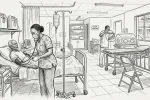
The same applies to staffing. The PBO says the United States intends to fund 28,668 frontline healthcare-worker full-time equivalents in 2026 and 21,407 in 2027. As support declines, domestic institutions must sustain these services. Kenya must ensure facilities retain enough staff to provide care.
Budgets Must Match Responsibilities
The transition comes amid competing spending demands. The PBO cites high interest payments, rigid recurrent expenditure and pressure on public finances. Health must compete with debt, infrastructure, education and social protection.
An international commitment may appear in policy documents without being secured in predictable annual budgets. A sustainable transition requires clear allocations, timely releases, reliable procurement and accountability, not merely a headline pledge to increase domestic spending.
National and county governments must also coordinate. Facilities, staff, commodities, and budgets must work together. Central planning that is poorly aligned with county-level delivery could leave service gaps, even when funds are allocated.
The PBO’s projections are a planning challenge, not proof that the transition is secure. The real test is whether funds are appropriated, released and turned into functioning services.
What Should Patients Expect?
Patients will judge the transition by whether public facilities have medicines, laboratories operate, surveillance and outbreak response are funded, frontline workers remain, and commodities arrive on time.
The Government should publish a transition scorecard detailing annual funding commitments, domestic funds secured, KEMSA and other institutions’ readiness, and progress on workforce and commodity transfers.
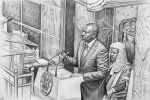
Parliament should scrutinise whether the annual budgets align with the commitments made under the framework, while county governments and health facilities should be able to report where financing or operational gaps are emerging.
The broader principle is straightforward: domestic ownership of a health system is not demonstrated by transferring responsibility on paper. It is demonstrated by the ability to finance and deliver services reliably.
Kenya has a legitimate interest in reducing dependence on external funding and in building a health system sustained by its own institutions and resources. But the transition must not become an accounting exercise in which donor commitments decline faster than domestic capacity grows.
The real measure of success will be whether patients experience continuity of care, whether health workers have the resources to do their jobs, and whether essential services remain available throughout the transition.