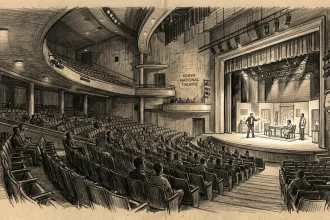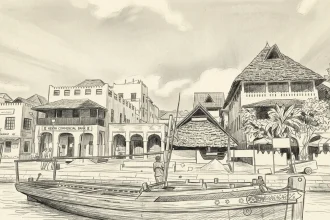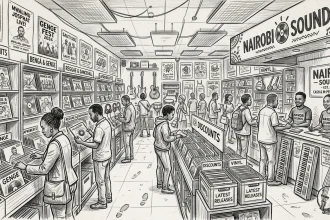





Some places rarely feature in discussions of economic growth, urban development or living costs, yet shape everyday life. Parks, football grounds, libraries, community halls, markets and other gathering spots bring neighbours together, let friends meet without hosting, give children places to play, and help strangers become familiar. Sociologists call them “third places.”
Popularised by sociologist Ray Oldenburg, the concept describes informal social settings beyond home (the first place) and work (the second). They allow people to meet and build relationships without home or work obligations.
Third places have long been part of Kenyan communities, from public gardens and trading centres to sports grounds, halls, places of worship and roadside meeting points.
As towns and cities change, their availability and accessibility matter. The question is not just whether people have somewhere to go, but whether they can belong without paying for the privilege.
When Socialising Becomes A Purchase
For many urban Kenyans, meeting friends increasingly means entering a commercial space. Restaurants, coffee shops, malls and entertainment venues offer convenience, security and amenities, especially for young professionals and the growing middle class.
Commercial spaces create jobs, support businesses and bring people together, but problems arise when they replace public spaces. Coffee shops require purchases, and mall visits add transport, food and shopping costs, making even modest leisure difficult for households on tight budgets.
When people are managing rent, transport and food, meeting friends becomes another expense to weigh. Those who can afford commercial venues have more social options; others may lack comfortable alternatives. Socialising continues, but purchasing power increasingly shapes where it happens.
Public spaces offer a shared place where no one has to be a customer. Parks, community fields and libraries let people spend time together for free, a vital benefit as living costs rise.
Nairobi’s Public Space Question
Nairobi illustrates the challenge. Its image as the Green City in the Sun is tied to parks and open spaces, but urbanisation, changing land use and competition for land increasingly pressure the public realm.
A 2020 UN-Habitat inventory identified 826 public open spaces across Nairobi, covering about 3,106.4 hectares. They included 99 playgrounds, 51 sports fields, 15 parks and 19 gardens, together accounting for about 5.32 per cent of the built-up area; below the 15–20 per cent often cited as a benchmark for successful cities.
The inventory also found gaps in the distribution, access, quality, management, and maintenance of public spaces.
The issue is not simply how many spaces exist, but whether residents can reach and use them safely, find adequate facilities and access them across neighbourhoods.
This matters in a city marked by inequalities in income, density, and private amenities: well-serviced areas offer private recreation and commercial venues, while dense informal settlements rely on public grounds and shared facilities.
A 2025 study of 417 children, parents, and other users in Loresho, Nairobi West, and Kibera found unequal access to public spaces, which were unsafe or hard to use.
All three neighbourhoods had less than the WHO benchmark of nine square metres per person, especially Kibera and Nairobi West. Problems included overcrowding, poor lighting, traffic, inadequate maintenance, and facilities that excluded children.
Access to shared social spaces is therefore an urban-inequality issue. Neighbourhood quality should be measured not only by housing, roads and commercial development, but also by opportunities to interact, exercise, relax and participate in community life.
The Places We Are Not Counting
Public-space discussions often focus on parks, but third places are broader. Markets, libraries, sports grounds, community halls, religious institutions, neighbourhood centres and informal gathering points all contribute to community life.
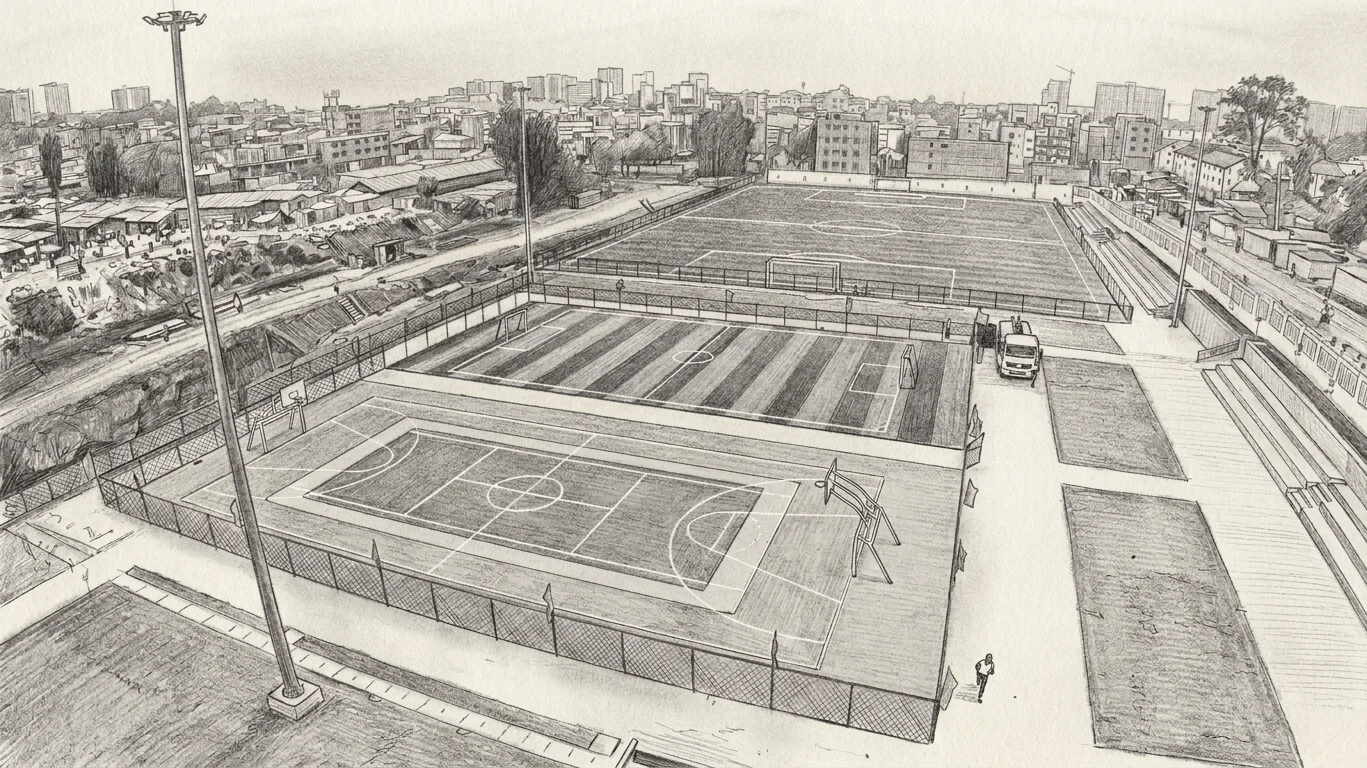
In lower-income neighbourhoods, public spaces serve many purposes. A community ground may host football, meetings and cultural events, while markets support commerce, information-sharing, relationships and belonging.
The Kibera Public Space Project shows the value of resident-led design: through the Kounkuey Design Initiative, residents turned vulnerable, underused areas into productive spaces combining recreation, sanitation, water, laundry, flood protection, and community enterprise.
This approach treats public space as essential social, environmental, and economic infrastructure, not decoration. Residents must help design and manage shared places, since impressive plans can produce unused spaces that fail to meet everyday needs.
County governments and planners beyond Nairobi should recognise public spaces as basic infrastructure, not optional amenities considered after roads, buildings and commercial developments.
The Cost Of Losing Shared Spaces
Losing accessible gathering places harms more than recreation: public spaces promote physical and mental well-being, social cohesion and participation, while giving children places to play, young people chances to build skills, and older residents ways to stay connected.
A December 2024 study, Cities, assessed Nairobi’s green spaces’ socioeconomic value by interviewing 1,465 people at seven sites: Uhuru Park, Jeevanjee Gardens, City Park, Karura Forest, and community grounds in Kamukunji, Kasarani, and Korogocho.
Green spaces promote health, well-being and social cohesion, but safety, quality, leisure time and gender influence their use. Despite their public value, conventional market measures often overlook it.
This explains why commercial development displaces public spaces: shopping centres generate measurable returns, while parks improve health and strengthen communities. Their lack of conventional revenue doesn’t diminish their economic or social value.
Shared spaces also bring people from different backgrounds together, helping communities organise, discuss local issues and build collective identity. When spaces become inaccessible, neglected or overly commercialised, communities lose more than a place to spend an afternoon.
Designing Cities for People, Not Just Property
Kenya’s urban debate focuses on housing, roads, transport, commerce and residential growth, but infrastructure alone doesn’t determine quality of life.
Article 42 recognises the right to a clean, healthy environment; Article 69 requires the State to ensure its sustainable use and conservation. The Fourth Schedule assigns counties responsibility for parks, recreation facilities and public amenities.
The challenge is creating accessible, well-maintained neighbourhood spaces. Counties should protect public land, improve parks and community grounds, provide lighting and sanitation, and ensure access for children, women, older adults and people with disabilities—not just upgrade major parks occasionally.
Without security, cleaning, landscaping and repairs, renovated parks quickly deteriorate. Businesses, community groups and resident associations can help maintain them, as long as partnerships preserve public access and don’t reserve shared spaces for paying customers.
Planners should prioritise streets and small neighbourhood spaces. Not every community needs a large park or costly facility; a safe, shaded square, maintained playground, or community hall can encourage everyday interaction close to home.
Reclaiming The Space Between Home And Work
The third-place concept reflects Kenya’s vision for cities and towns: places that attract investment, businesses, and housing while helping people live meaningful lives beyond work. Leisure, social interaction and community participation are essential, not luxuries.
As neighbourhoods densify and land grows more valuable, pressure to develop every parcel commercially or residentially will persist. Yet a place’s worth is not always measured by its earning potential.
Parks, playgrounds, libraries and community halls are public assets. Their value may not appear in county revenue statements, but it is reflected in residents’ quality of life. Counties, planners and communities must protect these spaces, create more and keep them accessible.
Kenyans value shared experiences, but cities need more spaces where people can gather as a community—not just live and work.