



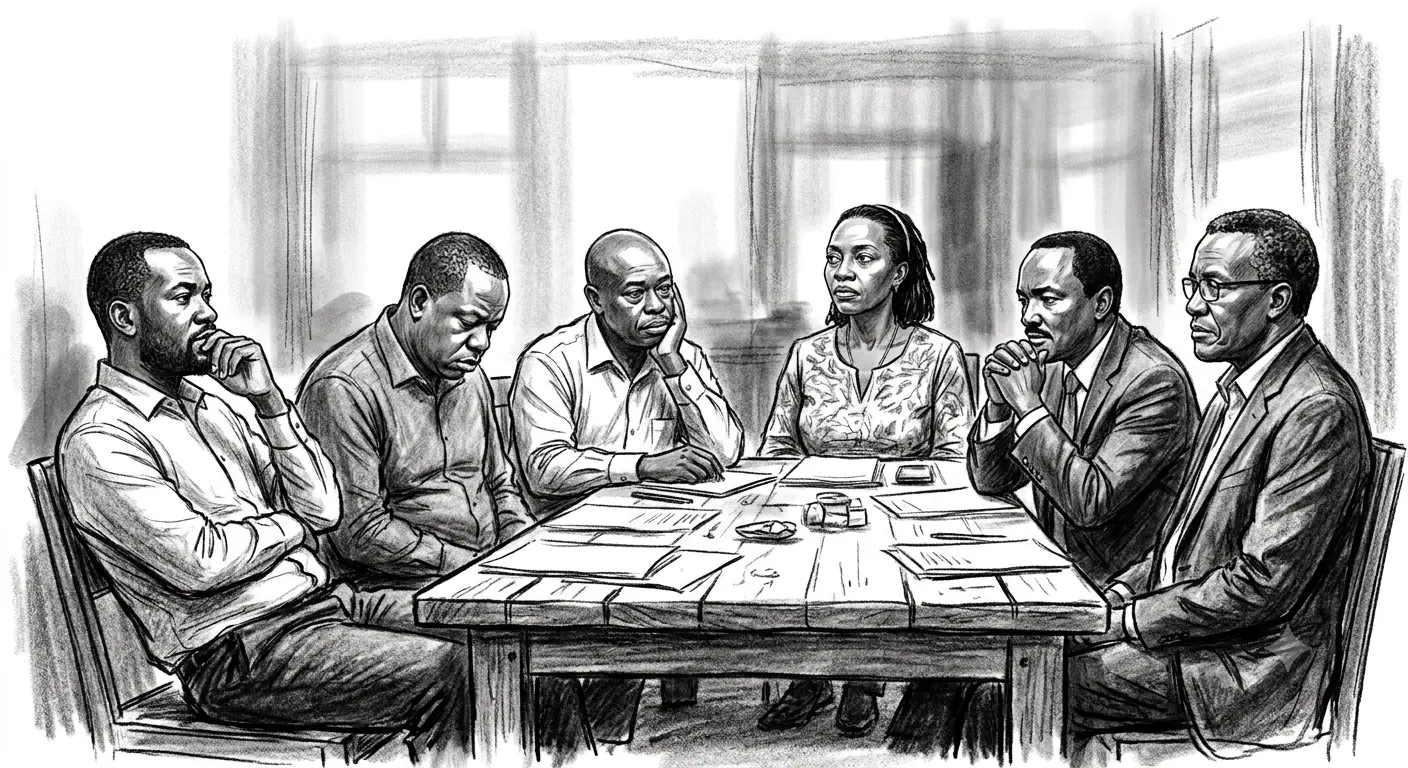
Kenya’s opposition has spent much of 2026 trying to solve an unending problem: how to turn several presidential ambitions into one electoral vehicle.
There have been meetings, retreats, unity pledges and negotiations over political parties and coalition structures. The latest step came on September 21, when the Azimio la Umoja One Kenya Coalition was rebranded as the Ukombozi Alliance.
Wiper leader Kalonzo Musyoka described the new formation through the formula of “One Term, One Team, One Coalition”, capturing the central proposition around which much of the opposition’s politics has so far been organised: the need to unite behind a single candidate to challenge President William Ruto in 2027.
The opposition wants to look less like a collection of individual presidential projects and more like a single political organisation. But a coalition is a structure. It is not, by itself, a governing proposition.
The Opposition Has Solved Part of the Problem
Progress toward a common opposition platform should not be dismissed as another round of political meetings.
On August 24, leaders associated with the United Alternative Government signed a Personal Unity Pledge and Coalition Unity Agreement, committing themselves to a process that would produce one presidential candidate and to supporting whoever emerged from that process.
The agreement was an attempt to address the most obvious weakness in opposition politics: several leaders can agree that they want a change of government while remaining unwilling to surrender their own ambitions. That problem has not disappeared.
Rigathi Gachagua’s Democratic Congress Party has said it will not join the Ukombozi Alliance for now and instead intends to work with Edwin Sifuna’s Linda Mwananchi movement before engaging with the wider opposition.
At the same time, Kalonzo’s side is building the Ukombozi Alliance around the existing Azimio structure. The developments illustrate the central tension in the opposition.
There is broad agreement on the need for cooperation, but no settled agreement on the vehicle through which that cooperation should happen, who should lead it, or the terms on which the different political interests will share power.
Even the language of “Ukombozi” has become contested political territory, with competing camps disputing the name.
That may appear like a minor organisational disagreement, but it reflects a larger problem. The competition to define the opposition’s political identity is happening at the same time the opposition is trying to present itself as united.
The question that follows is therefore bigger than whether the coalition can agree on a candidate. It is what the coalition is asking Kenyans to agree to.
What Is the Opposition Offering?
The opposition’s public proposition is currently easier to describe in terms of what it opposes than what it intends to build.
Its language is familiar: unity, liberation, restoring hope, changing the government and defeating the incumbent. Those are political messages, but they are not yet a governing programme.
The distinction matters because the Kenya that the next government would inherit is considerably more complicated than the Kenya that can be described through opposition-versus-government politics.
The next administration will inherit heavy public debt, persistent pressure on household incomes, a large informal economy, a growing population of young people entering the labour market, major infrastructure commitments and a state increasingly dependent on digital systems.
It will inherit the health financing problems exposed by the transition to the Social Health Authority, the housing programme, the infrastructure pipeline and the fiscal pressures that have defined much of the Ruto presidency.
It will also inherit an economy that is changing in ways that do not fit neatly into the political language of either side.
The opposition therefore has to answer a question beyond why Ruto must go. It has to explain what it would do differently.
The Economy Is the Real Test
It is relatively easy to attack the government over the cost of living. It is much harder to explain how a new government would reduce the burden on households without creating another fiscal problem.
It is easy to promise jobs, but considerably harder to explain where millions of productive jobs will come from. It is easy to oppose taxes, but harder to explain how government would finance healthcare, education, security, infrastructure, and county governments with less revenue.
The same tension applies to promises of cheaper credit, lower prices and greater public spending. Every commitment has to fit somewhere within the country’s fiscal reality, and every proposal to reduce revenue or expenditure has consequences for what government can subsequently afford to do.
That means the opposition’s economic argument cannot remain at the level of dissatisfaction with the present.
It needs to answer practical questions about the tax system, public debt, healthcare, housing, procurement, education, agriculture and employment, while explaining which programmes it would retain, which it would change and which it would abandon.
The most consequential question may be the simplest: where would the jobs come from?
Kenya’s economy can grow without creating enough secure, productive employment for the people entering the labour market. A credible opposition programme therefore needs to say more than that young people are unemployed.
It needs to identify the sectors it believes can absorb workers, the investments required to expand those sectors and the role government would play in making that happen.
Youth Question Bigger Than Vote
The opposition also faces a generational challenge that cannot be solved simply by putting younger politicians on campaign stages.
For many younger Kenyans, politics is encountered through a smartphone before it is encountered through a party branch.
Government is experienced through eCitizen, mobile money, digital payments, social media and online services, while the economy is experienced through formal employment where it is available, informal work where it is not, side hustles, small businesses and an increasingly important digital economy.
Their political questions are therefore often more immediate than the traditional language of coalition politics.
Can I find work? Can I afford housing? Can I start a business without spending months navigating government?
Can I access healthcare without being pushed from one system to another? Can I build a life in Kenya without having to leave?
An opposition coalition that answers those questions in concrete terms will have moved beyond being an alliance formed primarily to remove an incumbent. One that does not risks reproducing the same personality-driven electoral politics that has characterised previous Kenyan elections.
This matters because the coalition’s eventual presidential candidate will inherit an electorate that is more politically connected, more digitally informed and, in many cases, more sceptical of traditional political promises than previous generations.
The Candidate Is Not the Programme
The opposition now contains several politicians with presidential ambitions, including Gachagua, Kalonzo, Fred Matiang’i and Martha Karua, alongside newer political formations and figures such as Sifuna positioning themselves within the wider opposition conversation.
The negotiations have consequently focused heavily on who should carry the ticket. That is understandable because a presidential election eventually requires one name on the ballot. But the order in which the opposition resolves these questions matters.
If the coalition settles on a candidate before settling on a credible governing proposition, it risks becoming another personality-based electoral arrangement. If it first agrees on the broad programme it wants to take to the country, the presidential candidate becomes the person entrusted with carrying it out.
That would make the coalition more than an agreement to share a ballot. It would turn it into an agreement about what power is for.
Such an arrangement is also considerably harder to negotiate because political parties and presidential candidates have different interests, constituencies and expectations about what comes after an election.
A coalition agreement can determine how leaders share positions. A governing programme must explain what happens to the country once those positions are filled.
From Anti-Ruto to Post-Ruto
The opposition’s strongest common denominator remains its opposition to the Ruto administration. That provides political glue, particularly at a time when the government’s record on the cost of living, taxation, healthcare and other issues gives its opponents considerable material with which to campaign.
But opposition to an incumbent does not automatically amount to a governing philosophy.
That distinction will become increasingly important as 2027 approaches because a campaign can be organised around dissatisfaction with the government, while an administration has to make difficult decisions every day after the election.
It has to decide whether to borrow or cut spending, whether to raise taxes or reduce programmes, whether to subsidise or regulate, whether to expand the public service or make it smaller, whether to prioritise roads or classrooms and whether to pursue industrialisation, agriculture, services or digital exports as the main engines of employment.
Those choices will eventually reveal what the opposition actually believes. For now, the coalition’s public message is still being built.
The Ukombozi rebranding is an important organisational development, but it does not resolve the larger question of what the coalition represents beyond a common desire for political change.
The next stage of opposition politics therefore needs to move from the arithmetic of bringing leaders together to the harder work of bringing ideas together. That means answering questions that a coalition agreement cannot settle.
What kind of economy should Kenya build? What should the state do better? What should it stop doing? How should the country manage its debt?
What should happen to healthcare? Where should the next generation of jobs come from? How should government become more effective without simply becoming larger?
These questions matter because the opposition will eventually have to persuade voters not simply that the current government should leave, but that the people seeking to replace it understand the country they would inherit.
The first question is who will lead? The more consequential question is what they will lead the country toward.
Kenya has heard many promises of political change. The opposition’s next task is to explain what that change would actually mean.