


Kenya’s proposed alcohol-regulation overhaul has sparked debate about public health, business, taxation and government responsibility.
But the key question is not simply whether the legal drinking age should rise from 18 to 21; it is whether the country can build a system that addresses the problems it aims to solve.
Introduced in the National Assembly on November 5, the 2026 Alcoholic Drinks and Drugs Control Laws (Amendment) Bill would expand regulations on alcohol production, distribution, licensing and sales.
It proposes raising the minimum drinking age, adding licensing and registration requirements, restricting retail and online sales, tightening transport controls and imposing a levy on manufacturers and importers.
These substantial changes would reshape the formal alcohol industry and establish new national and county regulatory structures.
The Alcoholic Beverages Association of Kenya (ABAK) has called for the Bill’s withdrawal, warning it could threaten jobs, investment and government revenue while strengthening illicit alcohol markets.
As an industry lobby, ABAK has clear interests, and its projections warrant independent scrutiny. Still, dismissing its objections as mere commercial self- protection would overlook broader policy concerns.
Kenya faces serious alcohol-control challenges. The Bill should be judged by whether it reduces harmful consumption, disrupts illegal production and distribution, protects consumers and strengthens enforcement. More restrictions do not automatically mean better regulation.
The Illicit Market Is The Real Test
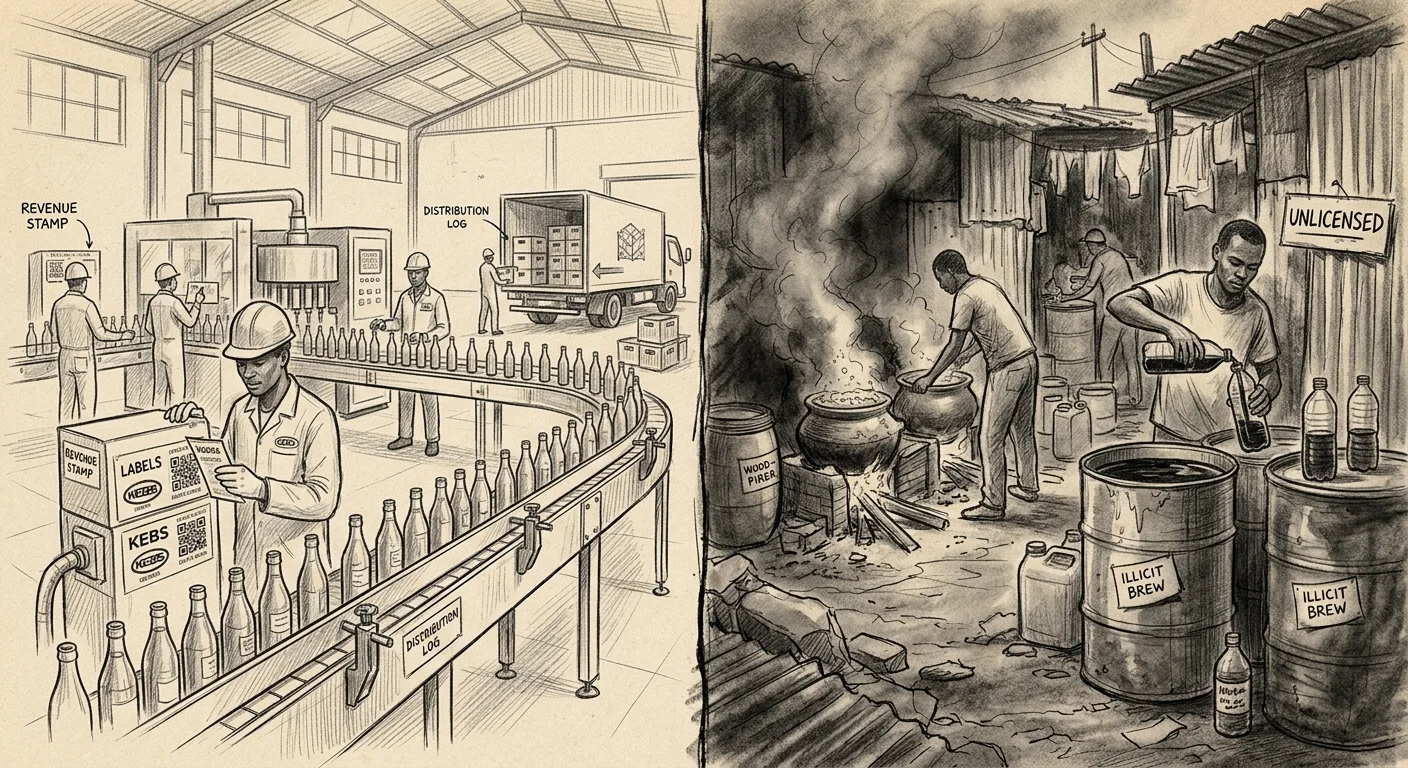
ABAK estimates that illicit alcohol makes up about 60 per cent of Kenya’s alcohol market by litres of alcohol equivalent. ABAK also reports that illicit volumes have risen 27 per cent since 2022, outpacing the legitimate market.
These figures highlight a central policy challenge: much of the market may already lie beyond conventional licensing and regulatory controls.
This should shape assessment of the proposed legislation, which adds controls for legitimate manufacturers, importers, distributors and retailers, and proposes digital tracking of licensed products, stronger national oversight of registration, inspections and compliance.
These measures could improve visibility in the formal supply chain and hinder counterfeit or adulterated products from entering legitimate channels. But tracking legal products will not eliminate illegal production.
Illicit manufacturers may lack licences, approved labels and formal distribution networks. Authorities must locate production sites, trace unsafe-product networks and raw-material sources, and secure prosecutions — not just conduct periodic raids that leave the business model intact.
Kenya’s rules often outpace enforcement, and alcohol is no exception. New laws can expand regulators’ powers but cannot replace intelligence-led action, inter-agency coordination, effective prosecution, or accountability for those enabling illegal trade.
The government must explain how the framework will close these gaps. What enforcement resources will it add, how will national and county agencies coordinate, and what measurable reduction in illicit production and distribution does it expect and by when?
Without clear answers, Kenya risks building a more elaborate system to supervise businesses already visible to authorities while the less visible market continues to grow.
The Price Of Formal Compliance
The Bill proposes a Sh2-per-litre levy on manufactured and imported alcoholic drinks. Though modest per product, its combined impact could be substantial.
ABAK estimates the levy would add Sh1.3 billion annually to legitimate manufacturers’ costs, widening the price gap with illicit products. The impact depends on whether manufacturers pass on costs, consumer price sensitivity, market structure and enforcement.
Taxation and regulation interact with market conditions. When consumers are price-sensitive, and illicit alternatives are readily available, added costs for formal businesses may create unintended incentives.
The government should disclose the levy’s economic assumptions: expected revenue, projected sales volumes, and assessments of effects on prices, jobs, investment and formal producers’ competitiveness.
The Bill also establishes an Alcoholic Drinks Control Fund. At least half its annual income would fund the National Alcoholic Drinks Control Committee, and at least 15 per cent would support civil society programmes preventing and managing alcohol and drug abuse.
Dedicated funding for prevention, rehabilitation, research and enforcement can be valuable. But how will the public know whether the Fund improves health and enforcement? Its success should be measured by outcomes—not revenue collected or institutional growth—including less alcohol-related harm, reduced access by minors, safer products, stronger enforcement and declining illicit trade.
The Question Of Who Regulates
The Bill’s most consequential institutional question is how to divide responsibilities between national and county governments.
It proposes a National Alcoholic Drinks Control Committee to license manufacturers and importers, oversee product registration, coordinate inspections and administer national regulatory systems. County licensing committees would oversee alcohol outlets.
The Constitution assigns liquor licensing to counties, while national government has legitimate roles in policy, public health, standards and law enforcement within its mandate. Overlapping approvals, inspections and rules could raise costs without improving enforcement or accountability.
Parliament should assess the proposal against the constitutional division of functions and existing county regulations, and hear the Council of Governors on implementation. It should determine whether existing institutions can be strengthened before creating new ones and identify the enforcement gaps the proposed powers would close.
Public Health And The Modern Economy
The proposed alcohol-sales restrictions warrant closer examination. The Bill would limit licensing at supermarkets, restaurants and other specified premises; ban online sales, courier services and home delivery; and restrict transport hours, potentially disrupting legitimate supply chains.
Some controls may be justified on public-health grounds, such as preventing sales to minors, irresponsible promotions and access in inappropriate settings. But blanket restrictions need to identify the harms they address and provide evidence they will reduce them.
Banning online sales and delivery might limit access but could drive consumers to unregulated sellers. If licensed businesses cannot meet demand, what stops it from shifting to less accountable suppliers? Rules for supermarkets and other outlets should distinguish businesses with safeguards from those without, rather than assume venue type determines responsible sales.
Restrictions could also affect connected hospitality, tourism, retail and logistics businesses, reducing revenue, jobs, procurement and investment — not just manufacturing.
ABAK estimates that raising the minimum drinking age could risk Sh3.3 billion in annual retail and hospitality revenue, Sh1.8 billion in tax revenue, 8,896 jobs and 11,792 licensed outlets. It says about three million Kenyans aged 18–21 would be affected.
These preliminary estimates are unverified. Parliament should scrutinise their methodology and require government evidence for the restrictions.
The debate should not pit business against public health. Regulation must protect both, ensuring business interests do not outweigh the public good.
Regulation Must Produce Results
Kenya’s proposed legislation comes amid efforts to grow the economy, attract investment and increase revenue, alongside persistent concerns about illicit alcohol and harmful consumption. These aims should reinforce each other.
The government is right to strengthen consumer protections, but success should be measured by outcomes, not the number of restrictions, licences or institutions.
The Bill must explain how it will curb illegal production and distribution, enforce the proposed age threshold and address licensing gaps. Parliament should require transparent assessments of economic, constitutional, and public-health effects. County governments, businesses, health experts, civil society and consumers should help shape policy.