





Kenya’s business costs stem from more than taxation. For companies operating, expanding or launching products, institutional quality, regulatory predictability and the integrity of government systems also shape the cost of doing business.
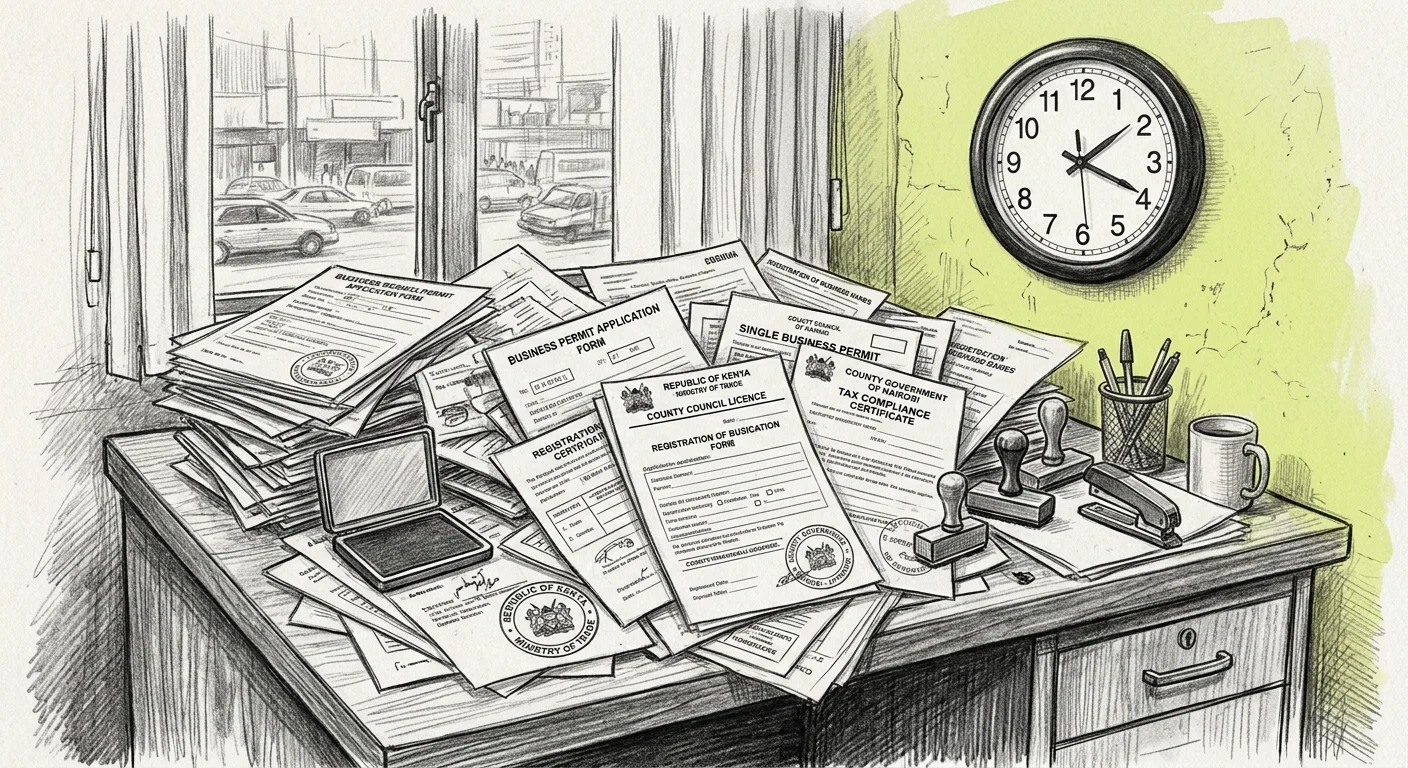
Some costs appear on balance sheets; others include approval delays, uncertain regulatory decisions, advance payments, multiple inspections, and the financial impact of policies introduced without adequate consultation or implementation plans.
Individually, these may seem like administrative hassles; together, they undermine competitiveness.
The World Bank’s Kenya Economic Update, released November 4, reinforces this concern. Its governance analysis finds that weak public institutions raise the cost of essential business inputs, discourage investment and constrain productive job creation.
The report estimates that governance failures, including corruption, collusion and inefficiencies in public spending and revenue collection, could add up to 2 per cent of GDP to annual fiscal deficits. It also identifies power, logistics and land as essential services where weak governance increases business costs and uncertainty.
The effects reach beyond businesses. Higher transport costs eventually raise consumer prices; delays in obtaining electricity connections or construction approvals slow investment.
When firms spend on administrative obstacles rather than production, they have fewer resources for jobs, innovation, and growth.
The key question is not just whether Kenya is expensive for business, but how much of that cost is unavoidable — and how much results from the way public institutions operate.
Cost That Does Not Appear On The Tax Invoice
One of the World Bank’s most revealing findings is that corruption has become a business constraint: 39 per cent of firms call it a major obstacle, while 48 per cent of medium-sized firms say they must give gifts to get things done.
Medium-sized firms are crucial to the economy. Beyond the survival stage, they can drive formal employment, investment and domestic value creation, but often lack the financial strength, market power and institutional access of larger corporations. Informal payments and administrative uncertainty make expansion costlier and riskier.
Unpredictable licensing timelines, inspections and enforcement can cause businesses to delay investment, hire fewer people or avoid markets.
Smaller firms are especially vulnerable: unlike larger companies with compliance teams and consultants, they must divert owners’ time and working capital from production to navigate regulations.
The result is an uneven business environment where success depends not only on product quality, but also on navigating institutions. Competition should reward efficiency, better products and customer service — not the ability to overcome administrative obstacles.
When Regulation Adds Business Costs
The dispute over new electronic cargo tracking seals illustrates the link between policy implementation and business costs.
The Kenya Revenue Authority’s multi-vendor, user- owned tracking framework became fully operational on October 26. Businesses moving goods under customs control must use seals from approved private providers.
The system aims to improve monitoring, expand provider access, and strengthen customs enforcement-goals that protect transit cargo, collect revenue, and reinforce Kenya’s regional logistics role. But its rollout raises a key question: who pays for mandatory monitoring?
On November 5, the Kenya Transporters Association suspended cargo loading with the seals, saying transporters had absorbed compliance costs without a reasonable way to recover them. Reported charges are $350–$450 per seal (about Sh 45,483–58,478).
More than 5,000 transporters reportedly joined the protest. At least 3,500 trucks collect containers from Mombasa Port daily, so prolonged disruption could affect domestic supply chains and regional trade.
The dispute concerns seal costs, but the broader issue is how mandatory compliance rules are designed, explained and funded.
A policy may be justified yet poorly implemented if it ignores costs, who bears them, and the time and information businesses need to adapt.
A multi-vendor framework may promote competition, but cannot ensure affordability when businesses have little choice of provider.
Nor does it clarify whether transporters, cargo owners or the State should pay.
The effects may reach beyond the immediate dispute. Mombasa delays could raise storage, transport and inventory costs, disrupt deliveries, slow manufacturers awaiting raw materials, and force traders to reconsider prices.
For landlocked economies dependent on the Northern Corridor, impacts cross borders. Port competitiveness depends on both efficient cargo handling and predictable, affordable transport to final destinations.
Regulatory efficiency should be judged by outcomes, not system sophistication.
Power, Land & Logistics: Cost of Weak Institutions
The World Bank’s identification of power, logistics and land as areas where weak governance raises business costs is significant: these are essential inputs to nearly all productive activity.
Electricity costs affect manufacturers, commercial buildings, agricultural processors, hospitality businesses and small enterprises. Businesses need affordable, reliable power, predictable tariffs and transparent cost-setting.
The World Bank identifies opaque contracts and governance weaknesses in backbone industries as cost drivers, shifting the energy debate beyond generation capacity to electricity procurement, transmission and distribution.
Kenya Power’s reported Sh24.99 billion profit for 2025/26 signals financial improvement, but raises a key question: are the gains making electricity more affordable?
A healthier utility can strengthen energy-sector competitiveness, but institutional finances mean little if electricity remains costly.
Investment also requires secure land access, reliable records and registration, and timely dispute resolution. Unclear ownership and approval delays can tie up capital in factories, warehouses, hotels and commercial developments, increase legal and financing costs, and postpone opportunities.
Kenya’s role as East and Central Africa’s gateway depends on efficient ports, roads, customs and predictable administration. Regulatory friction raises costs and delays shipments, hindering its ambitions as a regional manufacturing and distribution hub.
High electricity costs, inefficient logistics and uncertain land administration discourage investment in productive assets and weaken competitiveness.
The Price Is Ultimately Paid In Jobs and Growth
Poor governance is often measured by corruption losses or failed projects. The World Bank’s analysis highlights a broader cost: governance shapes how many productive businesses emerge, how quickly firms grow and how many people find decent work.
This is urgent in Kenya, where 83.8 per cent of jobs remain informal, often with lower pay and productivity.
Creating jobs takes more than promoting entrepreneurship or attracting investors; businesses must be able to grow, formalise and compete without needless institutional costs.
The World Bank estimates ambitious reforms could create 7.7 million better-quality jobs and raise GDP by up to 20 per cent by 2035. These projections are not guarantees, but show the potential of addressing constraints within policymakers’ reach.
Priorities include fiscal discipline, transparent procurement, beneficial ownership disclosure, predictable regulation, and better tax and customs administration. Together, these should drive competitiveness, not remain isolated administrative tasks.
Competitive procurement can improve infrastructure, reduce costs and reward merit — not just prevent theft. Better tax and customs systems can raise revenue without burdening compliant firms.
Regulatory safeguards for property, workers, consumers and the environment remain essential. Rules should be clear, proportionate, consistent and honestly administered, distinguishing public value from bureaucracy that enables rent-seeking.
Kenya needs a private sector able to invest, innovate and create jobs. Firms cannot do so at scale when institutional inefficiency, not production or competition, drives costs.
A more competitive environment can broaden the tax base, attract investment, create jobs and ease pressure to raise revenue.