




Kenya has never lacked sporting talent, but it has struggled to build systems that turn talent into lasting opportunity. That makes the Rising Lionesses’ historic victory at the Dakar 2026 Youth Olympic Games especially significant.
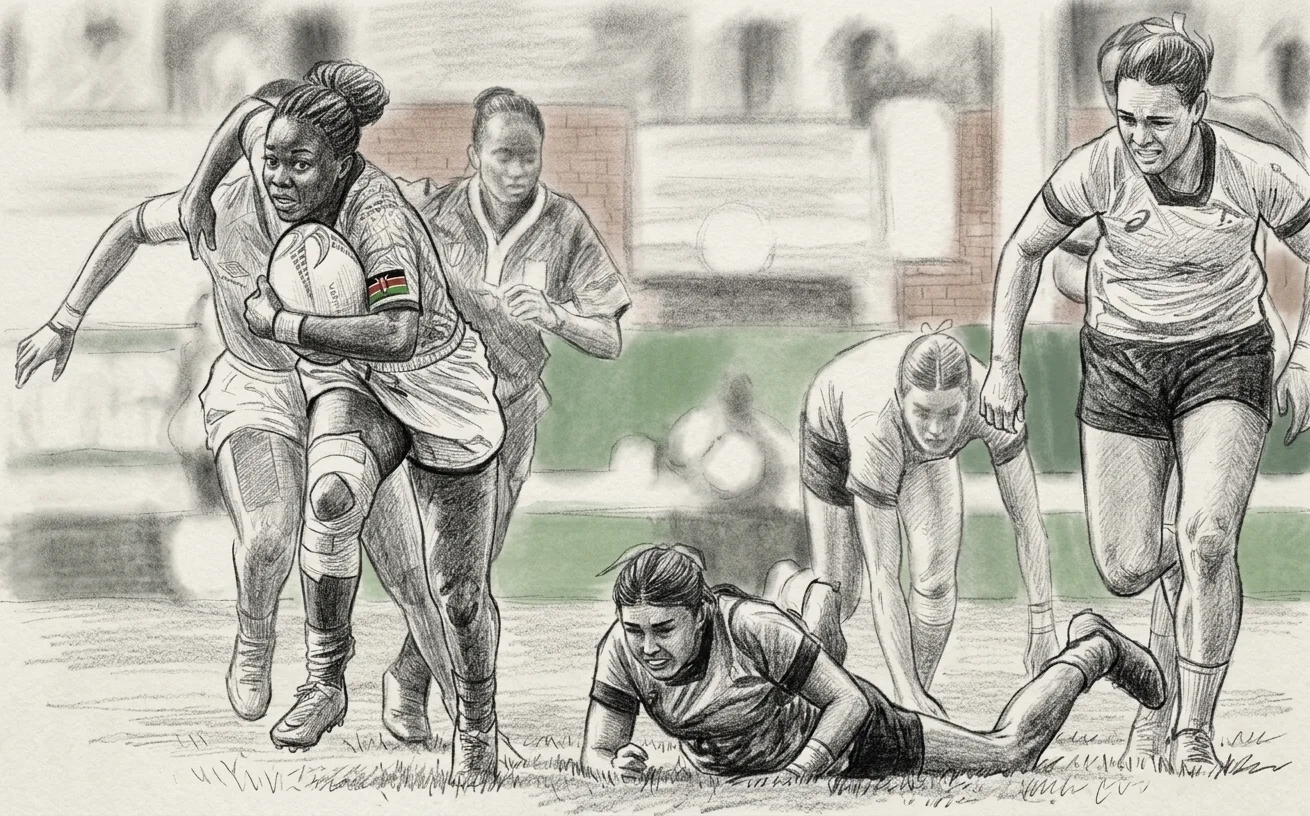
On November 3, Kenya’s under-18 women’s rugby sevens team beat Australia 17–12 in a golden-point finish, becoming the first African nation to win Olympic or Youth Olympic rugby sevens gold — and Kenya’s first Youth Olympic gold in a team sport.
Mitchelle Chemtai scored the decisive extra-time try, completing a comeback. After Kenya fell behind, Josephine Kerubo levelled the score, and Diana Wanjiku converted to force extra time.
The win showed the team could recover and compete under pressure: Australia had beaten Kenya 17–5 earlier in the tournament. Even more striking, World Rugby reported that several players had taken up rugby only about a year earlier.
In a country known for athletics and men’s rugby, this achievement shows talent can emerge anywhere when young people have opportunities to participate and grow. It also raises an urgent question: what happens next?
From A Historic Medal To A Sustainable Pathway
Kenya’s sporting reputation has largely been built on individual achievement.
Kenya’s distance runners have made it an athletics powerhouse, while Shujaa, the men’s rugby sevens team, has raised Kenyan rugby’s international profile.
For girls, moving into organised sport can be difficult because of financial pressures, poor facilities, social expectations, and limited competition.
This challenge spans Kenyan sport: talented young women compete in athletics, football, basketball, volleyball, hockey and other disciplines, but visibility and commercial support remain uneven.
Celebrating medal winners without supporting their continued development risks making achievement a one-off moment.
The Rising Lionesses show that young Kenyan women can succeed in international youth sport, even against nations with stronger rugby systems. But one tournament victory does not prove the structures for sustained success are in place.
The real test is moving from junior to senior competition.
Athletes need regular competition, qualified coaches, suitable facilities, medical and sports- science support, financial assistance, and pathways that let them train while continuing their education or livelihoods.
The Opportunity Beyond Rugby
Dakar’s victory came as women’s rugby gains momentum in Kenya. Nairobi hosted the 2026 Rugby Africa Women’s Sevens Championship at the RFUEA Grounds on November 7–8, featuring 11 nations. The Kenya Lionesses are also seeking a return to the HSBC SVNS 3 pathway.
The junior and senior teams are distinct, and junior success will endure only if players have a clear progression route.
This requires more than national selection: domestic competitions, school and university participation, club structures, coach development and sustainable funding.
The challenge extends beyond rugby. Kenyan women’s sports have often lacked investment and commercial attention commensurate with their achievements.
Women’s football, for example, faces inconsistent domestic structures and limited resources to develop and retain players. Across other disciplines, professional opportunities remain scarce relative to participation.
Visibility also matters. Media coverage, broadcasting and sponsorship shape which sports attract investment and make athletes commercially attractive.
Limited coverage of women’s competitions can hinder their ability to build audiences and attract partners.
This creates a cycle that sporting institutions, sponsors, and broadcasters must confront: limited investment weakens competition quality and visibility, while low visibility is used to justify withholding investment.
Building a System Around the Girls
Dakar’s success should prompt a wider examination of how Kenya identifies and develops female sporting talent.
Schools are a key entry point to organised sport, especially for children without access to private academies or specialised facilities. But participation alone is not enough. Schools need qualified coaches, safe facilities, equipment, and competitions that help talented athletes advance beyond occasional inter-school tournaments.
National federations must establish clear pathways by identifying promising athletes early, investing in coaching and technical expertise, holding regular competitions and supporting players’ transition to senior sport.
Financial support is just as vital. Training, travel, nutrition, equipment and medical care cost money. Without scholarships, stipends or institutional backing, athletes from low-income households may struggle to continue.
Sponsors can look beyond short-term partnerships with successful national teams. Investing in grassroots programmes, girls’ leagues, school competitions and athlete development would build a stronger foundation for success.
Government also has a role. Sporting infrastructure should be judged not just by stadiums built or international events hosted, but by young people’s access to facilities, the availability of qualified coaches, and whether investment sustains participation and competition.
Progress should be measured by the strength of the pathway, not just medals.
The Next Generation Needs More Than Applause
The Rising Lionesses have returned to a hero’s welcome, rightly celebrating a major achievement for Kenyan sport and inspiring girls to consider rugby and other competitive sports.
But inspiration begins the work; it does not finish it. Kenya can build on the team’s success to strengthen women’s rugby and to rethink girls’ and women’s place in sport.
That requires confronting questions of funding, facilities, coaching, access, professional opportunities and institutional support for women’s competitions.
It also means looking beyond national-team athletes to the many girls who could participate if opportunities were available.
Kenya’s sporting future depends not only on celebrating champions but on creating pathways for young people to develop, compete and earn a sustainable living through sport.
The girls who transformed Kenyan rugby in Dakar showed what is possible.
Now institutions, federations, schools, sponsors and government must ensure their achievement becomes a foundation, not an exception.