

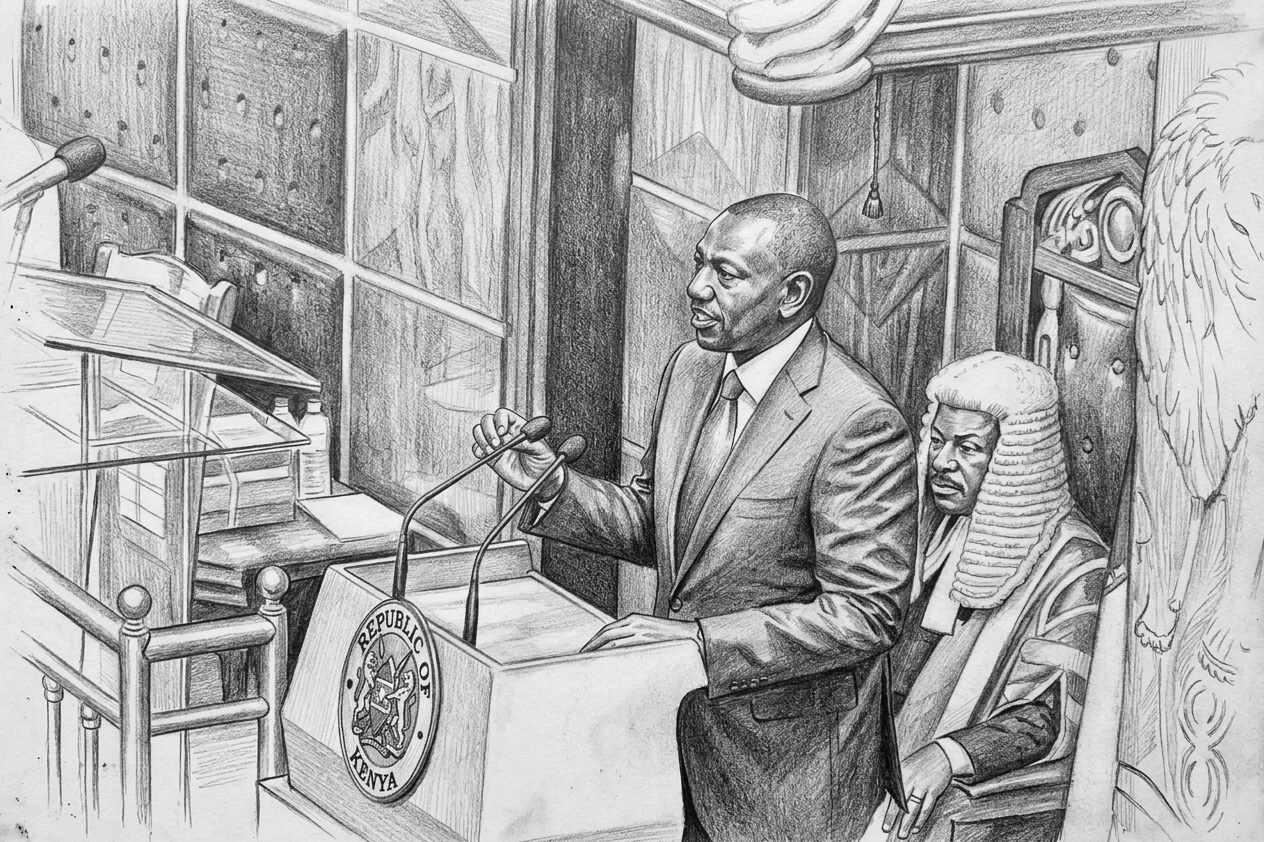
When President William Ruto stands before a joint sitting of Parliament on November 18, he will be doing more than meeting an annual constitutional duty. He will be making his closing argument to the electorate in Parliament’s chamber, nine months before Kenyans vote.
He will have plenty to claim: reforms in education, health financing, agriculture, housing, energy and infrastructure, and a promise to turn Kenya into a more productive, industrialised economy. But the more useful test is simpler. What did he promise a year ago, and what can be shown?
In his November 20, 2025 address, Ruto named four priorities for the next phase: education, transport and logistics, energy, and irrigation. Several came with numbers. He said 2,500km of highway would be dualled and 28,000km of road tarmacked over ten years.
He promised the Standard Gauge Railway would be extended from Naivasha towards Kisumu and Malaba, and that 12.5 million bags of subsidised fertiliser would be distributed in 2026. He also pledged 2.5 million acres under irrigation within seven years, and 24,000 more teachers by January 2026.
The bill, by his own estimate, was at least Sh5 trillion. There is movement to point to. The National Infrastructure Fund is law, SGR construction has begun, fertiliser was released, and several dams have advanced.
But a law is not a road, and a launch is not a railway. Those gaps are what Wednesday’s speech should close.
The Four Priorities
Education: the money is up. Is the classroom?
Ruto reported that the education budget rose from Sh490 billion in 2021 to more than Sh700 billion in 2025. Last year he said 76,000 teachers had been hired, with 24,000 more to come by January 2026.
Parents will want to know whether those teachers are in classrooms, and on what terms. The sector still faces disputes over capitation, teacher shortages, the rollout of Competency-Based Education, and university financing, and the government has had to address concerns about teachers on internship contracts.
Listen for: what was actually spent rather than budgeted; how many of the promised 24,000 teachers were deployed; how many are permanent and pensionable; capitation disbursed to schools; university funding.
Transport: launches versus finished roads
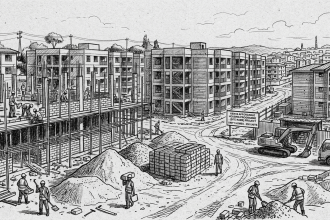
The SGR extension was launched in March 2026, and Kenya Railways says construction on the Naivasha–Kisumu section began in July. That is real progress, but it does not yet say how much track is laid or when trains will run.
The roads record is harder to read. The State Department for Roads reports 2,089.25km built across the three financial years from 2023/24 to 2025/26, with 189.83km rehabilitated and 48 bridges.
That shows activity, but the figures predate the 28,000km programme and cannot be counted against it without a breakdown.
Listen for: kilometres completed under the 28,000km programme, highways actually dualled, SGR physical progress, costs, financing and revised completion dates.
Agriculture and irrigation: from the harvest to the plate
Last year, Ruto cited maize output rising from 44 million bags in 2022 to a projected 70 million. The Treasury’s 2026/27 budget statement puts 2025 output at 67 million bags, with imports down to 3.3 million bags from 9.9 million in 2022. That is encouraging, but it falls short of the 70 million target.
On fertiliser, the Ministry of Agriculture said in January that the 12.5 million bags had been released for the long rains. Release is not receipt. The test is how many bags reached registered farmers in time for planting.
Irrigation is the longest bet: 50 mega dams and 200 medium and small ones. Thwake and Mwache have advanced, though the government concedes funding and resettlement problems. Dams under construction add no irrigated acres until they are finished.
Listen for: final 2025 and projected 2026 maize output, fertiliser actually collected, new irrigated acreage, dams completed and operating, and what food prices have done.
Energy: more capacity, but cheaper and more reliable power?
The regulator, EPRA, reports installed capacity of 3,987.2 MW as of June 2026, up 3.81 per cent in a year, with renewables supplying 81.13 per cent of generation. Capacity is not the same as supply, however. Manufacturers and small businesses care about price and outages, and households about connection costs.
Listen for: capacity commissioned since November 2025, transmission and distribution completed, new household connections, reliability, and tariffs.
The Reforms People Feel At Home
Health. The Ministry of Health says 31.39 million Kenyans have registered with the Social Health Authority (SHA), KSh147.37 billion has been paid in claims, and 11,034 facilities are contracted.
Registration is not treatment. Patients want to know whether hospitals are accepting their cover and being paid on time, whether medicines are in stock, and whether families still pay heavily out of pocket. Counties, which run most public facilities, are central to that answer.
Listen for: active membership, claims settled and arrears owed, medicine availability, and how many poor households have premiums paid for them.
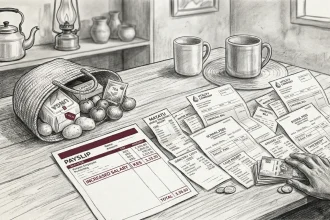
Jobs. The 2026 Economic Survey recorded 822,100 new jobs in 2025, taking recorded employment to 21.6 million. But 87.2 per cent of the new jobs were informal, meaning irregular income, little security, and no social protection for most.
Listen for: formal versus informal job numbers, wage growth, youth employment, and results from government job programmes.
The Money Behind The Promises
Ruto’s Sh5 trillion estimate rests on two vehicles: the Sovereign Wealth Fund and the National Infrastructure Fund. The NIF Act was signed in March 2026, and the fund holds Sh340 billion in seed capital.
In October, its chief executive said that the money is going first into domestic government bonds. By the fund’s own account, deployment of the full amount is expected to finish only by June 2027.
In practical terms, the NIF is unlikely to have built much by polling day, and its first act has been to lend to the same government whose borrowing it was meant to ease.
A parliamentary committee has also flagged gaps in its safeguards. The fund may well prove a sound instrument, but for now it is a promise.
The wider picture is sobering. The 2026/27 Budget Policy Statement projects a fiscal deficit of 5.3 per cent of GDP, financed by domestic and external borrowing.
Kenyans need to hear how infrastructure ambitions fit alongside debt service, pending bills and taxes.
Listen for: the latest fiscal outturn, debt and debt- service figures, pending bills, projects the NIF has actually financed, and the rules governing it.
Beyond The Projects
Article 132 requires the President to report on measures taken and progress made towards realising the national values and principles of governance, and on Kenya’s international obligations.
The address is therefore also an account of governance, integrity, security and public institutions. The President should say what has become of audit queries, investigations and the recommendations of oversight bodies.
Not everything will be finished, and no fair observer expects it before the August 10, 2027 election. The 28,000km road programme, the irrigation drive and the railway extension run well past one election cycle.
But progress can still be measured: financing in place, schedules published, milestones reached and honestly reported.
Three questions will do. What has been delivered since November 2025? What is unfinished, and why? And what can Kenyans realistically expect to see before they vote?
The commitments are on the record, the budgets are published, and the projects launched. Ruto will give his account on Wednesday. The country has the figures to test it.
The measure of this presidency will not be the promises made or the speeches given, but whether public services work better, businesses can grow, young people can find decent work, and households can afford more.
The question is no longer what the President intends to do. It is what he can prove he has done.