

The most important question in Kenya’s 2027 election may not be which candidate has the largest political following. It may be whether the candidates understand what voters expect them to do with the power they are seeking.
For many households, the election hinges on immediate economic concerns: food prices, jobs, education costs, taxes and healthcare. These longstanding issues carry particular weight as the incumbent seeks another term and the opposition offers an alternative.
The manifesto contest matters only if it connects political ambition to voters’ priorities. A list of promises is not an economic plan, and a slogan is not a delivery framework.
Economy Is Election’s Most Difficult Question
TIFA’s 2026 surveys offer the strongest evidence of public sentiment nationwide. A face-to-face survey of 2,013 adults across all 47 counties, conducted May 2–11, found 74 per cent believed Kenya was heading in the wrong direction.
In a June 13–22 survey of 2,048 adults, 44 per cent named unemployment and poverty as the country’s biggest problem, while 25 per cent cited inflation, high prices and taxes.
Economic concerns therefore accounted for 69 per cent of responses. Corruption was cited by 19 per cent, and poor leadership by 7 per cent.
These figures measure concerns, not voting intentions. They do not show that respondents will back the opposition, reject the government or support a particular candidate. Dissatisfied voters may remain undecided, or believe the administration deserves more time.
Political actors may interpret dissatisfaction as support for their own positions: the opposition could see its criticism gaining traction, while the ruling coalition could argue its economic programme needs continuity. The surveys establish neither claim.
They do suggest the economy will dominate political debate. Both blocs must explain what they would change or preserve, and how they would fund their proposals.
The June survey also found that 66 per cent felt worse off than before the 2022 election, down from 75 per cent in May. This shift suggests perceptions can change with economic conditions and warns against treating one survey as a lasting verdict on government performance.
The most important question in Kenya’s 2027 election may not be which candidate has the largest political following. It may be whether the candidates understand what voters expect them to do with the power they are seeking.
For many households, the election hinges on immediate economic concerns: food prices, jobs, education costs, taxes and healthcare. These longstanding issues carry particular weight as the incumbent seeks another term and the opposition offers an alternative.
The manifesto contest matters only if it connects political ambition to voters’ priorities. A list of promises is not an economic plan, and a slogan is not a delivery framework.
Economy Is Election’s Most Difficult Question
TIFA’s 2026 surveys offer the strongest evidence of public sentiment nationwide. A face-to-face survey of 2,013 adults across all 47 counties, conducted May 2–11, found 74 per cent believed Kenya was heading in the wrong direction.
In a June 13–22 survey of 2,048 adults, 44 per cent named unemployment and poverty as the country’s biggest problem, while 25 per cent cited inflation, high prices and taxes.
The incumbent must show that current economic policies are improving household lives. The opposition must explain how its alternative would deliver better results without merely reversing unpopular decisions.
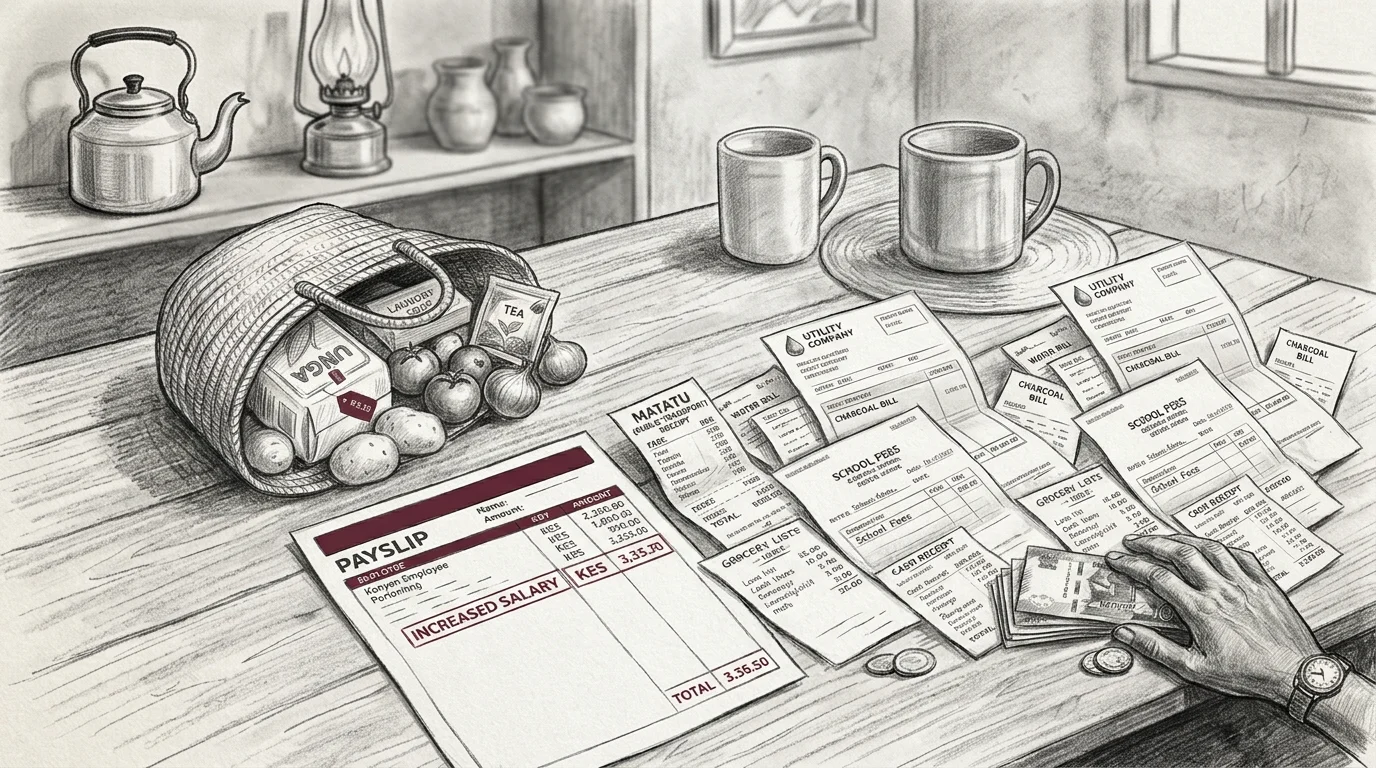
Unemployment and the cost of living are linked but distinct. For households without reliable income, lower inflation may not make rent, food, or school costs affordable.
For young people entering the labour market, finding work may matter more than national growth. According to Infotrak’s end-2025 findings, unemployment was the leading household financial burden (26 per cent), followed by high food prices (25 per cent).
Among respondents aged 18–26, 44 per cent cited unemployment as their main burden. For those over 55, school fees led at 26 per cent.
These differences matter: voters have varied economic priorities. A job-seeking young person, a parent paying school fees, a trader facing taxes and a farmer managing production costs may all be dissatisfied, but need different solutions.
Campaign promises on youth empowerment and job creation will face close scrutiny. Both sides are likely to court young voters, but job pledges must be specific: how many, in which sectors, and by when? How many will be formal and informal? What roles will procurement, industrial policy, investment, training and finance play?
Promising millions of jobs without explaining the assumptions sets a target, not a plan. Voters should be able to distinguish government-created jobs from those expected through private investment and livelihoods supported by training or enterprise programmes.
Entrepreneurship pledges also need scrutiny. Credit and training help, but do not guarantee customers. Small businesses also need predictable taxes, affordable energy, reliable infrastructure and consumers with spending power.
Young voters need more than assurances that candidates believe in their potential. They need to know how the economy will create opportunities beyond established businesses and well- connected individuals.
Taxes, Trust And The Cost Of Government
Taxation is an issue neither bloc can resolve with slogans alone. TIFA’s June 2026 findings gave taxation the lowest performance rating among sectors assessed under the broad-based government.
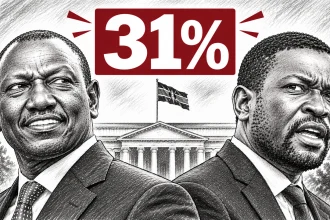
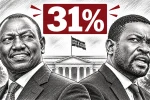
Infotrak’s end-of-2025 survey found corruption was the most cited driver of the cost of living (31 per cent), followed by taxes (26 per cent) and government policies (16 per cent).
These findings highlight two concerns: the burden of raising public revenue and how government uses the money it collects.
This is more complex than promising tax cuts. The government needs revenue for public services, infrastructure, healthcare, education, and security.
Parties promising cuts must specify which taxes they would change, what spending they would reduce and how they would fund remaining commitments.
Those advocating stable or higher revenue must show that funds are used efficiently and the burden is shared fairly.
Any tax proposal’s credibility depends on its spending plan. Tax cuts without replacement revenue or spending reductions are incomplete; so are higher-revenue plans that ignore waste, corruption and poor services.
The election should move beyond whether Kenyans pay too much tax. The key questions are what services citizens should receive, what they should cost, and how the next administration will show public money is spent as intended.
One National Election, Different Regional Pressures
National surveys offer a broad picture but can obscure regional differences. Infotrak’s supplied material shows cost of living ranked highly nationwide, with reported proportions ranging from 36 per cent in Nairobi to 46 per cent in Western Kenya in September 2025.
Economic pressures vary by location and livelihood. Urban households face housing, transport, food, and utility costs differently from rural households that rely on agriculture or informal trade.
Insecurity and access to markets, health facilities, schools and infrastructure also shape views of government performance.
Political blocs cannot rely on a single national manifesto to resonate equally across regions. A credible programme must address local conditions without making competing regional promises, and it must clarify county governments’ role.
Since devolved institutions deliver many everyday services, national candidates should not claim sole credit for local gains or blame counties for every failure.
Manifestos should specify national government commitments, county responsibilities and how the two levels will work together.
UDA and ODM have formed a ten-member team to draft a joint manifesto. The opposition calls itself an alternative government and promises a common political direction, but the available material does not detail either side’s policies or proposals.
It is therefore too early to judge whether they address voters’ top concerns; speeches and campaign statements cannot replace a published, scrutinizable programme.
The UDA–ODM manifesto must explain how the partners reconcile their interests and priorities, and whether their approach to jobs, taxes, public spending and services would change.
The opposition must likewise show that its parties can agree on priorities, identify necessary resources and explain how its proposals differ from the government’s.