




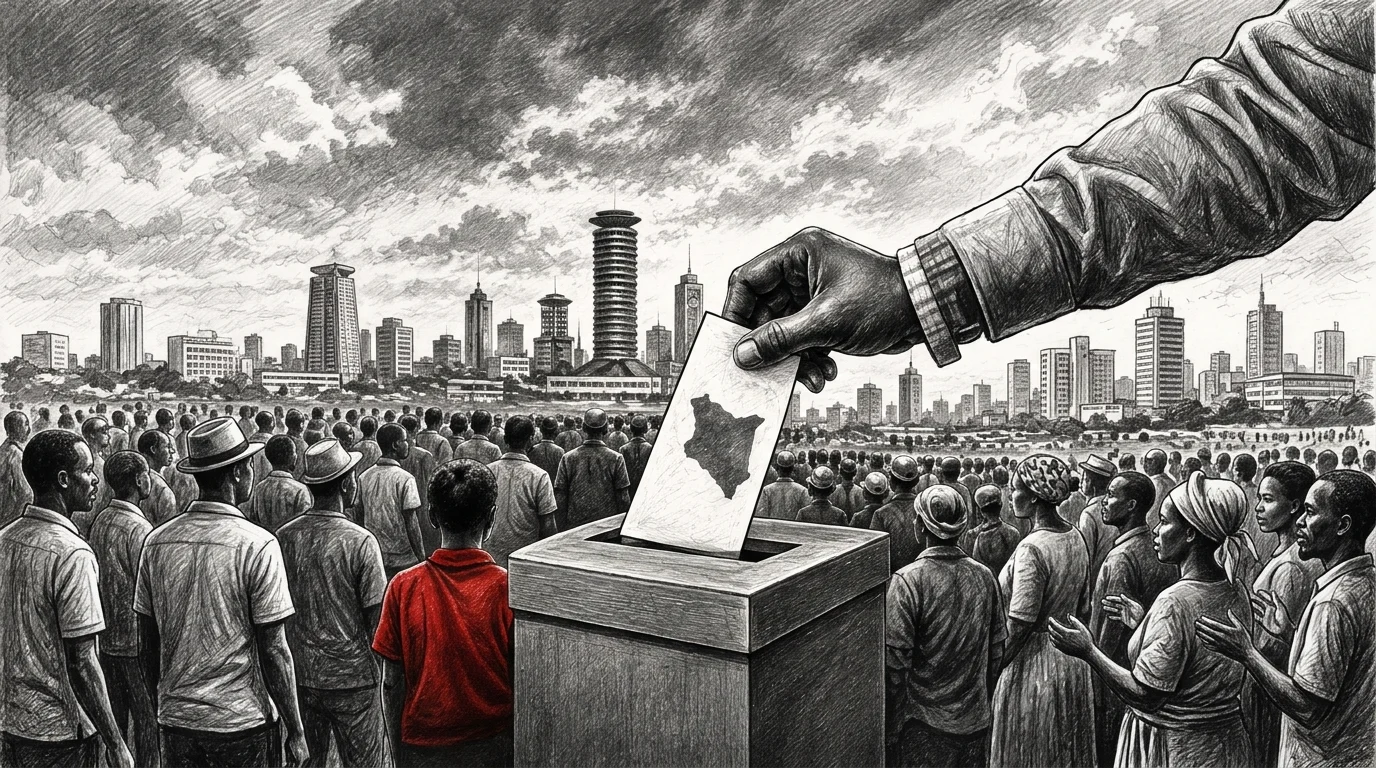
On August 10, 2027, Kenyans will head to the polls in Kenya’s next General Election. The Independent Electoral and Boundaries Commission (IEBC) has published the election timetable, setting in motion a process that will shape political parties, candidates and public institutions over the months ahead.
The contest is already taking form, even before the formal campaign period. Parties are negotiating alliances, politicians are positioning themselves for nominations, potential candidates are weighing their options, and the commission is working towards a constitutional deadline that leaves little room for administrative failure.
Yet the election is often discussed as though it were a single contest for the presidency. That view misses much of what will be decided on polling day.
On August 10, Kenyans will elect a President, governors, senators, members of the National Assembly, county women representatives and members of county assemblies.
These are six different contests, involving distinct offices, responsibilities and political calculations. Together, they will determine who exercises public authority at national and county levels, who controls legislative institutions and how competing political interests are represented.
The presidential contest may command the largest crowds and the most attention, but it will not, on its own, determine how the country is governed.
Six Elections, Different Consequences
The President and the national executive set national policy, direct government priorities and oversee the implementation of national programmes.
The outcome of the presidential race therefore has significant implications for the direction of the economy, public spending, national security and the relationship between government and citizens. But the President does not govern alone.
The National Assembly, including Woman Reps, legislates, approves national spending, and exercises oversight over the national executive. Its composition will influence the government’s ability to pass legislation, approve budgets and defend its decisions before Parliament.
The Senate has a different but equally important responsibility. Senators represent counties at the national level, participate in allocating revenue among counties, and exercise oversight over county governments.
Their role makes the Senate a significant arena in the contest over devolution and the distribution of public resources.
At the county level, governors lead county executives and are responsible for delivering devolved services. County assembly members legislate, approve county budgets and oversee county executives.
The distinction matters because voters may elect a President whose party does not command equivalent support in Parliament or in key counties.
A national victory does not automatically translate into control of the institutions required to implement a political programme. The election will therefore produce more than one measure of political strength.
It will establish who occupies the presidency, who controls or influences Parliament, which parties lead county governments and how power is distributed across the country.
A party that performs strongly in the presidential contest may still face difficult negotiations in Parliament. A coalition that wins nationally may find that its partners have competing interests in county contests.
And a candidate who commands support among national political leaders may still struggle to secure the backing of local organisers and voters.
The structure of the election makes local politics consequential, even when the national campaign appears to revolve around a handful of prominent personalities.
The Politics Before the Campaign
The second major question concerns the political arrangements being built ahead of the election. Parties and political leaders are already considering how to combine their support, negotiate influence and present themselves to voters.
These discussions are not merely about endorsements or public declarations of unity. They involve decisions about leadership, candidate selection, the distribution of political opportunities and the terms on which parties will work together.
The ruling side is exploring a formal arrangement between the United Democratic Alliance (UDA) and the Orange Democratic Movement (ODM), including discussions around a coalition framework, power-sharing and a joint manifesto.
On the opposition side, leaders are seeking a common platform and a presidential candidate capable of holding together different political interests. Both efforts face a similar test: whether agreements among leaders can survive the practical demands of an election.
Political partnerships are easier to announce than to manage. Parties may agree on a national direction while competing for the same parliamentary seats.
Leaders may endorse a common candidate while their supporters favour different political figures. Negotiations over nominations, constituencies and influence can expose disagreements that public declarations of unity conceal.
The question is not simply how many parties join an alliance. It is whether the arrangement can organise candidates, mobilise voters and maintain discipline when political interests collide.
The presidential contest will provide the most visible test of these arrangements, but the parliamentary and county races will reveal whether they have developed into functioning electoral coalitions.
This is why the coming months matter. The decisions made during negotiations and party processes will shape the choices presented to voters long before the official campaign period reaches its peak.
The Clock Is Part of the Contest
The third test is institutional: whether the IEBC can deliver the election within the legal and operational timetable. The commission has gazetted August 10, 2027, as polling day and set deadlines that will shape the conduct of parties, candidates and public officers.
Milestones in the timetable include December 9, 2026, when restrictions on public fundraising during the pre-election period take effect, and February 10, 2027, the deadline for public officers seeking elective office to resign.
Party primaries, nominations, party lists and the official campaign period will follow. Each stage has consequences for the next. Delays in resolving disputes or settling nominations can compress the time available for parties and candidates to prepare for the final contest.
The commission’s task is considerably larger than announcing a polling date. It must coordinate procurement, technology, staffing, logistics, voter education, polling arrangements and results management across a nationwide exercise involving millions of voters and thousands of polling stations.
These activities are interdependent. Technology must be tested before it is needed. Election officials must be recruited and trained in time. Materials must reach polling stations.
Procedures must be understood by officials, candidates and voters. Results management must be sufficiently transparent to withstand scrutiny.
Disputes over election technology, procurement or the administration of the process can create uncertainty and undermine confidence if they are not addressed early.
The commission must demonstrate not only that it is working towards the deadline, but that the systems required for a credible election are being prepared, tested and explained.
The timetable must also be understood within the legal framework governing elections. Constitutional and appellate processes may affect particular decisions, and IEBC must be prepared to respond without compromising the preparations.
The credibility of an election is not established on polling day alone. It is built through the decisions, procedures and safeguards that precede it.
What Voters Should Be Watching
For voters, the months ahead should be about more than tracking political movements and predicting the eventual winner.
The first question is what each candidate is seeking authority to do. A presidential manifesto should be judged alongside the legislative and budgetary support required to implement it.
Candidates for Parliament should explain how they intend to legislate and exercise oversight, rather than treating their campaigns as extensions of the presidential race.
Governors and county assembly candidates should be assessed against the responsibilities of devolved government. Their promises should reflect what counties can deliver, what resources are available and how they intend to account for public money.
Voters should also watch how parties choose their candidates, how they resolve internal disagreements and whether their alliances offer a coherent programme beyond the arithmetic of political support.
The IEBC, meanwhile, must provide regular, credible information about its preparations and demonstrate that the election can be conducted lawfully, transparently and within the prescribed timetable.
The 2027 General Election will be a contest for political power, but its consequences will extend well beyond the identity of the next President.
It will determine the composition of institutions, the balance between national and county leadership and the political relationships through which government is exercised.
The campaign may eventually be reduced to personalities, rallies and competing predictions. The election itself will be more complicated.
Understanding what is at stake requires looking beyond the presidential race to the institutions, candidates and decisions that will shape the next five years.