



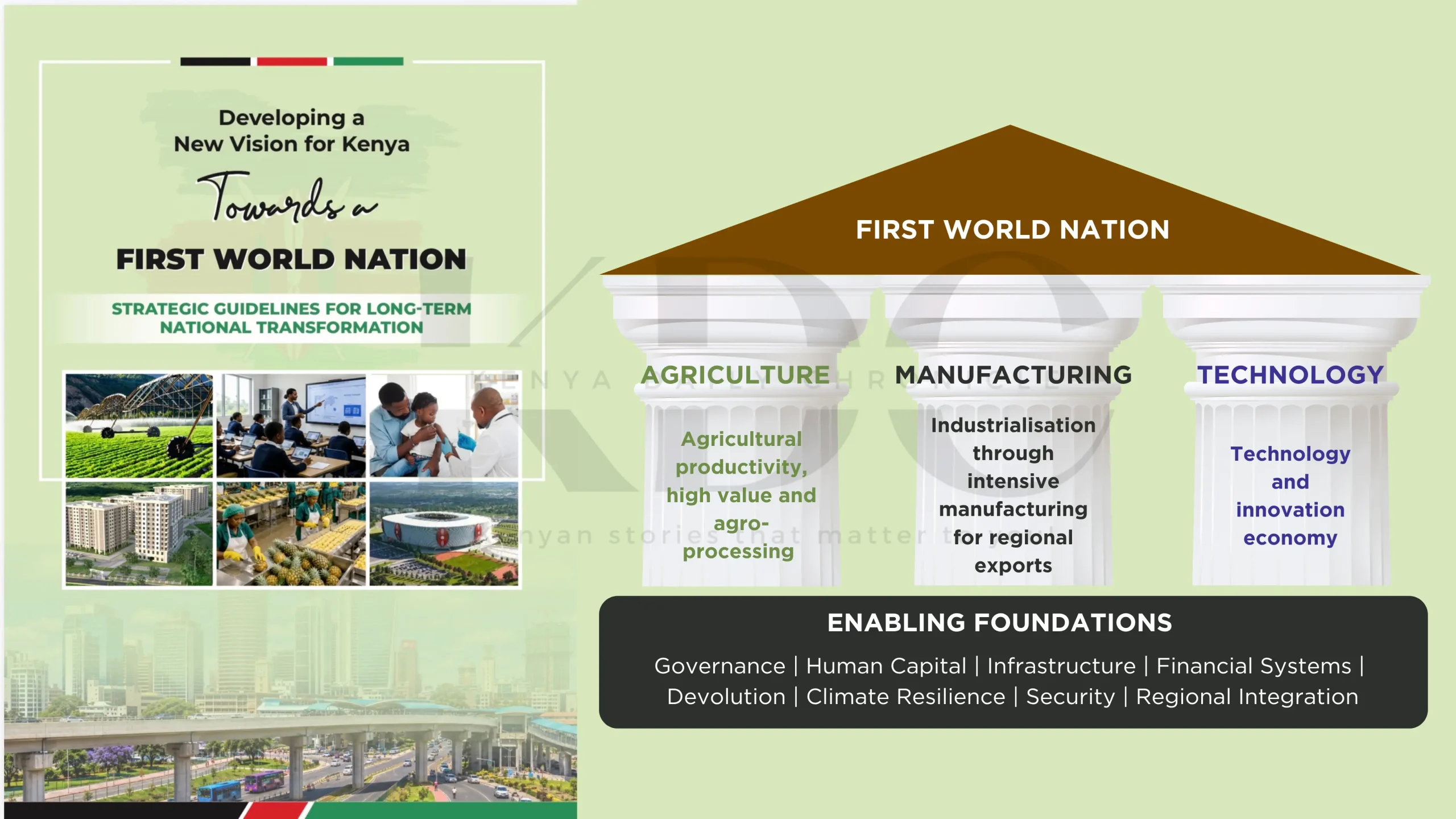
President William Ruto received a proposal for Kenya’s next long-term development strategy at State House on Tuesday, describing the document as a valuable contribution to national debate while committing to study its recommendations.
The report, Developing a New Vision for Kenya: Towards a First World Nation, was presented by a working group chaired by Prof. Peter Anyang’ Nyong’o and is pitched as a successor to Kenya Vision 2030, which concludes in 2030.
It sets a 30- to 40-year horizon for Kenya to transition from a lower-middle-income to a high-income, industrialised status; roughly the same timeframe that South Korea, Singapore, and Malaysia took to complete comparable transitions.
In essence, as Vision 2030 approaches its final years, Kenyans are being invited to imagine something bigger: a transition from a lower-middle-income economy to a high-income, industrialised, and globally competitive nation within a generation.
It is an enormous ambition and is also familiar. For more than six decades, Kenya has produced development plans, launched ambitious programmes and declared new beginnings.
It has built roads, expanded electricity access, grown its digital economy and established itself as one of Africa’s more diversified economies. Yet it has struggled to sustain the momentum required to turn periods of progress into lasting structural transformation.
The document is not simply a blueprint for what Kenya wants to become; in places, it reads like an admission of why Kenya has not yet become it.
The report identifies what it calls Kenya’s development paradox: the country has repeatedly made significant gains, only to lose momentum through political crises, governance failures, policy shifts and institutional weakness.
Development initiatives are launched with enthusiasm, but are not always sustained with new governments introducing new priorities once elected. Development programmes become associated with individual administrations rather than being treated as enduring national commitments.
Kenya’s problem, in other words, has never been a shortage of vision; it has been the gap between vision and execution.
Starting Over, On Repeat
The new vision is built around a simple proposition: Kenya can become a prosperous, industrialised, innovative and globally competitive country within the lifetime of many of its citizens.
The report points to South Korea, Singapore, Malaysia, China and Vietnam as evidence that countries can transform themselves within a generation or two through deliberate policy choices, capable institutions, political commitment and long-term consistency.
The comparison is seductive, and it is also where the hardest question begins. Can Kenya replicate the discipline of countries that transformed themselves while retaining a political and institutional system that has historically struggled to maintain policy continuity?
The proposed answer is to build continuity into the architecture of the state. The report calls for a national development law that would bind future medium-term plans, county development strategies, sector programmes and annual budgets to the new national vision.
It goes further, proposing that future political parties and presidential manifestos should be consistent with the national development framework. The logic is straightforward that elections should change governments, not the country’s fundamental development direction.
President William Ruto made the same argument when he received the report, saying development should not be the project of one administration and that every election should not require Kenya to abandon one national vision and begin another.
“Development cannot be the project of one administration, nor should every election require us to abandon one national vision and begin another. Nations that achieve lasting prosperity succeed because they sustain a common purpose across decades, even as governments change,” Ruto said.
He added, “Kenya must cultivate that same discipline. We must think beyond electoral cycles, sustain what works, improve what can be made better, and build a broad national consensus around our long- term aspirations.”
But this is where the promise collides with Kenya’s political reality. A five-year electoral system rewards visible, immediate and politically attributable achievements. Long-term development requires patience, institutional memory and a willingness to invest today for benefits that may arrive under a future administration.
Kenya’s political economy has often favoured the opposite, as governments want projects they can claim. Politicians want achievements that can be pointed to before the next election, while new administrations want to distinguish themselves from their predecessors.
The result is a country that repeatedly changes the labels on its development ambitions, even when the underlying problems remain the same.
The new vision is, therefore, attempting something more difficult than writing another development plan; to change the relationship between politics and development.
Whether it can do so will determine whether this becomes another grand document in Kenya’s long history of plans, or the beginning of a genuine national project.
Price Of Becoming First World
The scale of the ambition is matched by the scale of the problems Kenya must overcome, and the report’s own assessment is sobering.
Manufacturing contributes about 7.6 per cent of GDP, far below the 15 per cent target envisioned under Vision 2030. More than four in five workers are in the informal economy, where productivity, social protection and access to finance remain limited. More than 800,000 young people enter the labour market every year, many finding themselves absorbed into low-productivity jobs.
Then there is the fiscal problem. Kenya’s public debt and the cost of servicing it have narrowed the government’s room to spend on development. Weak public financial management and accountability have contributed to resource leakages. Climate shocks continue to damage agriculture and impose a high economic cost.
This is the contradiction at the heart of the First World promise. The country is being asked to finance an extraordinary expansion of infrastructure, manufacturing, agricultural productivity, technology, education, healthcare, housing and climate resilience at precisely the moment when its fiscal space is under pressure.
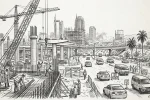
The answer cannot simply be more government spending, and the blueprint recognises this. It calls for financial systems that mobilise capital towards productive sectors while maintaining fiscal sustainability. It envisages a stronger role for the private sector, targeted development finance and infrastructure designed not merely as construction projects but as platforms for production.
The question is no longer simply how many kilometres of roads Kenya can build or how many megawatts of electricity it can generate. It is whether infrastructure can make the economy more productive.
Can roads connect farmers to markets? Can electricity reduce the cost of manufacturing? Can digital connectivity create new industries? Can irrigation raise agricultural productivity? Can industrial policy turn Kenya from an exporter of raw or lightly processed commodities into a producer of higher-value goods?
A First World Kenya cannot be built by infrastructure alone and has to be built by an economy capable of generating the incomes, jobs and productivity that make such infrastructure worthwhile.
The State Is The Real Test
The most consequential part of the proposal may therefore have little to do with roads, factories or technology; it is about the state itself.
The report argues that successful transforming countries had capable public institutions, disciplined bureaucracies and governments able to coordinate policy over long periods.
It proposes a stronger and more professional public service, a National Economic and Social Council and a dedicated delivery secretariat to coordinate implementation.
The proposal effectively argues that Kenya’s problem has never been simply that it did not know what to do, but the state’s capacity to consistently do it.
The proposed National Economic and Social Council is intended to become the institutional bridge between political leaders, technical experts, the private sector, counties, academia and civil society. Its purpose would be to protect long-term priorities from short-term political pressures and provide continuity across administrations.
On paper, that is precisely the kind of institutional mechanism Kenya has often lacked, but institutions are only as strong as the political culture surrounding them.
Kenya has created commissions, authorities, councils and development agencies before. It has written ambitious laws and established elaborate frameworks. The harder challenge has always been ensuring that institutions remain independent, competent and focused when political interests collide with national priorities.
A First World transformation will therefore require something deeper than a new council or a new law; a different relationship between political power and public institutions.
It will require governments to accept that not every successful project must carry the name of the administration that delivered it. It will require political leaders to defend policies they inherited and improve programmes they did not initiate. It will require the bureaucracy to become more professional and less vulnerable to political interference.
And it will require citizens to judge governments not only by what they announce, but by whether they deliver, which is a much harder political bargain.
The Promise and The Test
There is a certain irony in Kenya beginning to imagine its post-2030 future while still struggling with many of the problems that Vision 2030 was meant to solve.
Poverty remains a major concern. Manufacturing remains relatively small. Youth unemployment and underemployment remain structural problems. Public debt constrains the state. Healthcare and education systems remain uneven. Housing remains out of reach for many. The informal economy continues to absorb the majority of workers.
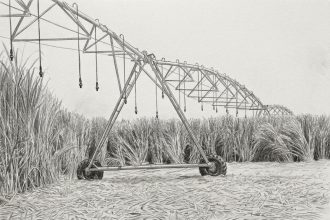
The new vision does not ignore these realities. In fact, its strength lies partly in acknowledging them. Its central argument is that Kenya’s transformation requires a deliberate focus on three engines: agricultural productivity and agro-processing; manufacturing and industrialisation; and technology and innovation.
Around these must sit the foundations of a capable state, strong human capital, infrastructure, financial systems, effective devolution, environmental resilience and social cohesion.
The First World promise will ultimately be judged not by the elegance of its language or the ambition of its targets, but by whether Kenya can finally break the cycle identified in its own report: progress, interruption, stagnation and starting again.
That is why the most important deadline in this new vision is not 2050; it is the next election.
If Kenya can maintain its development priorities through another political transition, protect institutions from political disruption and continue investing in productive sectors regardless of who occupies State House, then the new vision will have passed its first real test.
If, instead, the next government arrives with another set of priorities, another vocabulary and another promise of a new beginning, then the First World dream will join the long shelf of Kenyan development plans that were ambitious in conception but unfinished in execution.
Kenya does not need another vision simply because Vision 2030 is ending; it needs a vision that can survive the politics of the country that is supposed to implement it.