



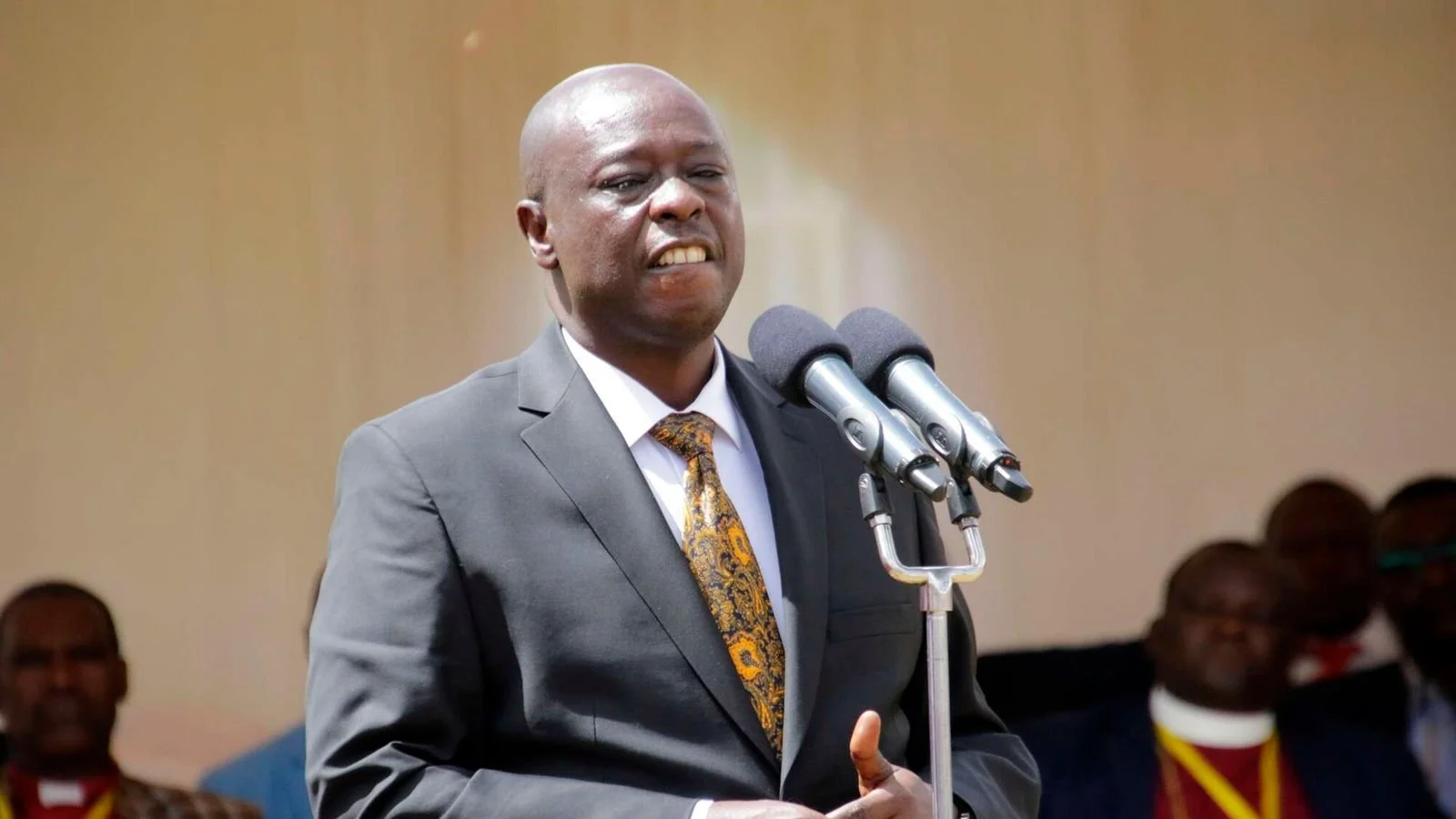
Former Kenyan Deputy President Rigathi Gachagua has publicly claimed that his life is in danger, alleging state-orchestrated violence in a detailed letter addressed to the Inspector General of Police and President William Ruto.
The statement, on Tuesday, has reignited concerns over political violence in Kenya, a country with a fraught history of targeted assassinations and ethnic tensions.
Gachagua, who was impeached in October 2024 after a fallout with President Ruto, outlined a series of incidents in his letter that he claims demonstrate a pattern of threats against him.
He specifically pointed to a December 2024 event where his state-provided security was withdrawn, leaving him vulnerable. During this period, Gachagua alleges that his convoy was attacked by armed assailants in what he describes as a clear assassination attempt.
He further detailed other instances of harassment, including a January 2025 incident in Kajiado where his convoy was again targeted, this time with petrol bombs, and a February 2025 event in Narok where he claims his vehicle was shot at.
The former deputy president drew historical parallels to bolster his case, referencing the 1975 assassination of Josiah Mwangi Kariuki, a popular Kenyan MP and critic of then-President Jomo Kenyatta.
Gachagua had previously accused Kenyatta of orchestrating Kariuki’s murder during his 2022 election campaign, a claim that stirred controversy at the time.
In his letter, Gachagua suggested that the same political forces that silenced Kariuki may now be targeting him, stating, “The matter will live on within the memory of the Republic of Kenya, and history will judge us all.”
Gachagua’s allegations come against the backdrop of Kenya’s turbulent political climate. His impeachment, the first of a deputy president under the 2010 Constitution, followed a fallout with President Ruto, his former ally.
The Senate upheld five of 11 charges against Gachagua, including inciting ethnic violence and undermining the government, though he has consistently denied the accusations as politically motivated.
Since his removal, Gachagua has emerged as a vocal critic of Ruto’s administration, which has faced its own challenges, including widespread protests in 2024 over a controversial finance bill. Those protests saw at least 40 deaths due to police violence, according to human rights groups, further highlighting the country’s struggles with governance and stability.
Gachagua’s letter also called for the reinstatement of his security detail, arguing that its withdrawal has left him and his family vulnerable. He urged the Inspector General of Police to act swiftly, warning that failure to do so could have dire consequences for the country’s stability.
As of now, neither the Inspector General of Police nor President Ruto’s office has issued an official response to Gachagua’s allegations. However, the claims are likely to intensify scrutiny on Ruto’s administration, which has already been criticised for its handling of dissent and public unrest.
For Gachagua, a multimillionaire politician from central Kenya who once wielded significant influence in Mt Kenya—this latest chapter underscores the precarious nature of political life in a nation still grappling with its past.