




Kenya’s inflation reaching 6.8 per cent in September underscores the urgency for policymakers and analysts to monitor economic stability closely, as it marks a critical point since January 2024.
The number matters not simply because 6.8 is higher than 6.6, but because it reflects the inflation shock that began with the surge in energy and transport costs earlier in the year, highlighting underlying economic pressures.
In August, the Central Bank of Kenya projected that inflation would peak at 6.8 per cent in January 2027, before easing, under a baseline scenario that assumed crude oil at about $90 a barrel and a de-escalation of the Middle East conflict. Instead, Kenya reached that level in September, four months earlier than the central bank’s forecast.
Brent crude moved above $100 a barrel in September, reaching $101.21 on September 9, as the conflict disrupted expectations around Middle East energy supplies.
The more important question now is whether the shock remains temporary, or whether part of it has already worked its way into prices that are less directly connected to the fuel pump.
Where The 6.8 Comes From
The September inflation number was still heavily influenced by food and transport. Food and non-alcoholic beverages contributed 2.8 percentage points to the overall rate, while transport contributed 1.6 points.
Annual food inflation reached 9.5 per cent and transport inflation 15.6 per cent. But the more revealing number is core inflation.
With core inflation rising from 2.1 per cent in March to 4.0 per cent in September, this trend should alert policymakers and analysts to persistent underlying economic pressures. That is almost a doubling in six months.
Non-core inflation, meanwhile, was 14.0 per cent in September, down from 16.0 per cent in May. KNBS calculates that core inflation contributed 4.2 percentage points to September’s headline inflation, compared with 2.6 points from non-core inflation.
The argument is not that fuel has somehow moved into the core basket; fuel remains among the volatile items excluded from the core measure. The concern is that a shock that began with volatile items can generate second-round price increases elsewhere.
Transport provides one of the clearest examples. KNBS recorded a 20 per cent increase in a selected city matatu fare between March and April, followed by a 25 per cent increase in a selected city route between April and May.
In June, one selected city route recorded a further 42.9 per cent increase. These are individual price observations rather than a national fare index, but they show how quickly the fuel shock was reflected in some commuter prices.
The question now is whether those increases unwind when the original cost pressure does.
The decline in fuel prices suggests easing inflationary pressures, but the minimal response in fares indicates delayed or limited transmission to consumers, affecting policy effectiveness.
The fuel side of the equation has already changed. Diesel in Nairobi reached Sh242.92 a litre in the May-June pricing cycle after EPRA raised it by Sh46.29. By the September-October cycle, the maximum retail price had fallen to Sh217.86, down about 10.3 per cent from the May peak.
The fare response has been much less dramatic.
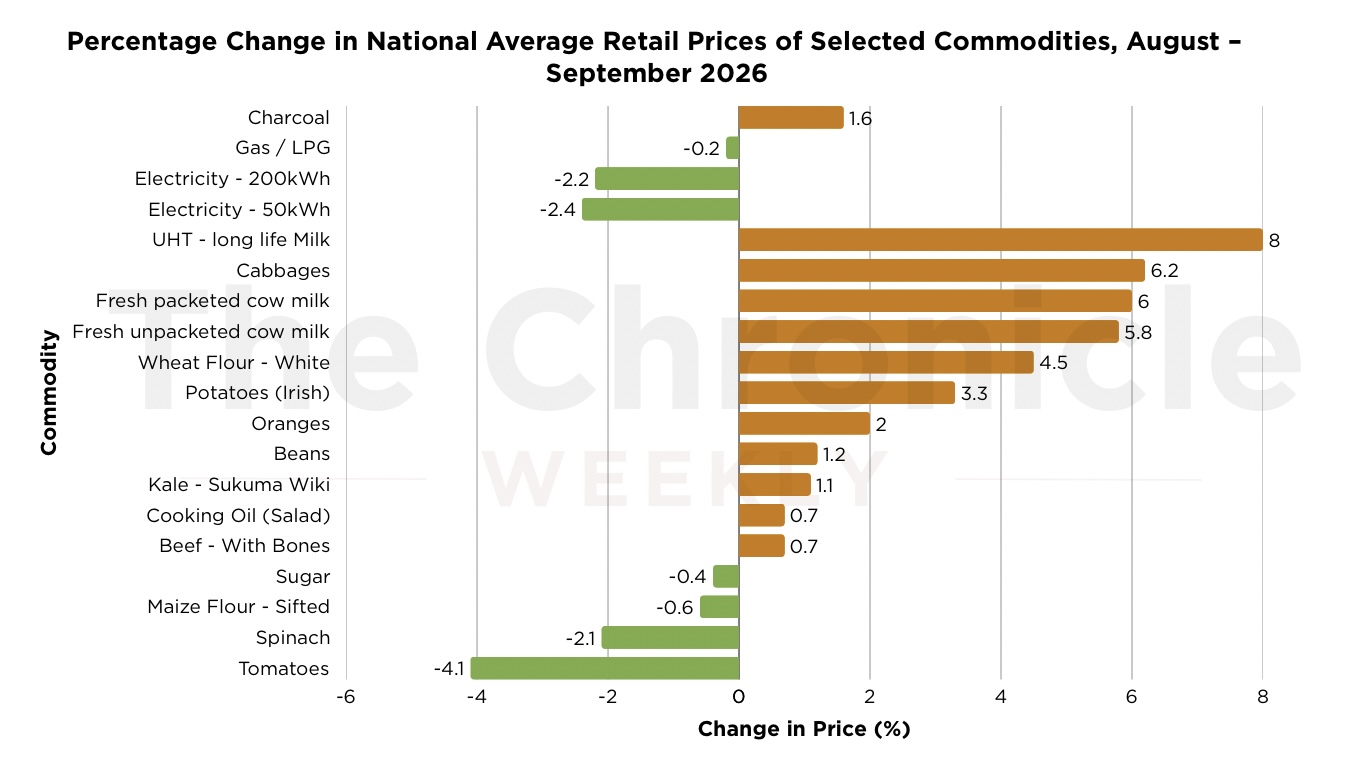
KNBS recorded a 0.3 per cent decline in city bus and matatu fares between August and September, and a 1.0 per cent decline in inter-town fares. The transport division as a whole fell 0.4 per cent during the month, largely because fares eased even as international air travel became more expensive.
That is not evidence that operators have refused to reduce fares everywhere, nor does it establish that every route has behaved in the same way. It does show something more modest and more measurable: the reversal in fuel prices has so far produced only small movements in the recorded fare basket.
The asymmetry is therefore worth watching. A fuel shock can be passed through to commuters almost immediately, as the fare increases in April and May demonstrated. A fall in fuel prices does not necessarily produce an equivalent reversal. That is the ratchet that the inflation data cannot yet settle.
The October 14 Cliff
The next test is fiscal, not monetary. The reduced 8 per cent VAT rate on petroleum products is scheduled to run until October 14.
The government extended the measure in July as global oil prices remained volatile, and Treasury Cabinet Secretary John Mbadi said in August that the government would assess international oil conditions before deciding whether to extend it further.
At the current Nairobi pump price of Sh217.86 for diesel, the 8 per cent VAT component is about Sh16.14 a litre. For petrol at Sh214.03, it is about Sh15.85.
If the tax rate returned to 16 per cent without any offsetting change in the underlying pre-tax price, the VAT component would roughly double.
That does not mean the pump price would automatically rise by exactly that amount. EPRA’s monthly formula incorporates several other components, and international landed costs could move in either direction before the October review. But it establishes the scale of the fiscal exposure.
October 14, when EPRA reviews fuel taxes and prices, is a pivotal date for policymakers and analysts, as it could influence inflation and economic stability in the near term.
If the 8 per cent rate is extended, the immediate tax shock would be avoided, but the Treasury would continue carrying the cost of the relief. If it expires, households and transport operators could face another increase at the pump even before considering how quickly that increase might feed into fares and other prices.
What CBK Can, And Can’t, Do
The Monetary Policy Committee meets on October 7. The Central Bank Rate has been held at 8.75 per cent since February, after ten consecutive cuts brought it down from 13 per cent. The problem for monetary policy is that the current inflation pressure has several sources that an interest-rate decision cannot directly remove.
A higher policy rate cannot lower the price of imported crude. It cannot decide whether the 8 per cent fuel VAT survives October 14. It cannot instruct matatu operators to reverse a fare increase. What it can do is influence demand, inflation expectations, exchange-rate conditions and the cost of credit.
The other side of that equation is already visible. The average commercial lending rate was 14.34 per cent in August, compared with the 8.75 per cent CBR. A further tightening would therefore come at a time when the economy is still carrying the effects of the earlier cost shock. In contrast, a further easing would have to contend with core inflation at 4 per cent and headline inflation moving towards the top half of the CBK’s target range.
The important question on October 7 is therefore less about whether the CBK can make the 6.8 per cent disappear and more about what it believes the September number says about inflation’s persistence.
The Test
There are two dates to watch. The first is October 7, when the MPC will decide whether the existing monetary-policy stance remains appropriate.
The second is October 14, when the fuel VAT relief ends as scheduled, and EPRA’s next pricing cycle begins.
The evidence to date points in two directions. Non-core inflation remains exceptionally high but has eased from its May peak, suggesting that part of the original fuel and food shock is losing intensity. Core inflation, however, has moved steadily higher and reached 4 per cent in September.
That is the real 6.8 per cent problem. If fuel prices rise again and transport fares follow, the September inflation number will look less like a peak and more like another step in a new cost cycle.
If the VAT relief is extended, fuel prices stabilise, and core inflation begins to fall, the case for the September spike being largely shock-driven becomes stronger.
The next few weeks will tell us which of those two stories Kenya is actually living through.