





Kenya has been engulfed in waves of violent protests over the past weeks, with citizens taking to the streets to voice their frustrations over economic hardship, government policies, and perceived political arrogance.
However, what began as peaceful demonstrations has descended into bloodshed, with reports of multiple deaths, injuries, and widespread chaos—largely blamed on excessive police force and the failure of the political class to address public grievances.
The protests that shook Kenya were no mere outbursts. They were a collective roar, led largely by the nation’s youth, against a proposed Finance Bill and the deeper wounds of soaring living costs, unemployment, and perceived government overreach.
From the streets of Nairobi to the towns beyond, citizens demanded accountability for police violence, fair economic policies, and a voice in governance.
The Spark: Why Are Kenyans Protesting?
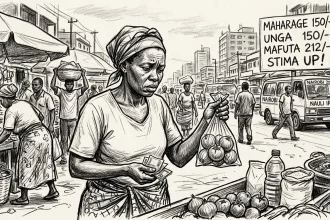
The recent protests were initially triggered by the controversial Finance Bill 2024, which proposed new taxes that many Kenyans viewed as punitive amid already high living costs. Youth-led movements, particularly under the hashtag #RejectFinanceBill2024, mobilised thousands online and offline, demanding that the government withdraw the bill.
Despite President William Ruto’s eventual decision to drop the bill after parliamentary chaos and public pressure, the protests evolved into a broader outcry against police brutality, unemployment, corruption, and the disconnect between the political elite and ordinary citizens.
The Bloodshed: Police Crackdown Turns Deadly
What should have been a democratic expression of dissent has turned fatal. Human rights groups, including Amnesty International Kenya and the Kenya National Commission on Human Rights (KNCHR), and the media report that close to 100 people have been killed in the protests, with hundreds injured and dozens missing.
Eyewitness accounts and viral videos show police firing live ammunition at protesters, using tear gas in confined spaces, and beating unarmed demonstrators.
In one of the most shocking incidents, a hawker selling masks, Boniface Kariuki, was shot dead at close range by an officer in Nairobi, sparking nationwide outrage.
The police have defended their actions, claiming they were responding to “violent rioters” who looted businesses and attacked officers.
However, evidence suggests that many victims were peaceful protesters or bystanders, raising serious questions about the proportionality of police force.
In a span of two weeks, following the June 25 remembrance and July 7 Saba Saba protests, close to 40 people – including a 12-year-old girl who was killed by a stray bullet – have been killed.
The Political Class: A Leadership in Denial
While the protests were largely youth-driven and decentralised, Kenya’s political leaders have been accused of downplaying the crisis and failing to engage in meaningful dialogue.
President Ruto initially dismissed the demonstrators as “criminals” before softening his stance after international condemnation.
Opposition leaders, while condemning police brutality, have also been criticised for exploiting the chaos for political gain rather than offering concrete solutions.
The lack of accountability for past incidents of police violence, such as the 2017 post-election crackdowns and the 2023 anti-government protests, has only deepened public mistrust.
What Next for Kenya?
The protests have exposed deep fractures in Kenya’s democracy.
There is an urgent need for police reforms in Kenya to ensure that the repeated unaccountability is dealt with once and for all. The repeated use of lethal force against protesters demands an independent investigation and accountability for officers involved.
Kenya has a deficiency of political accountability and therefore leaders must move beyond rhetoric and address the root causes of anger: unemployment, corruption, and economic inequality.
To secure its future, Kenya needs to come up with a structured mechanism for youth engagement. The Gen Z-led protests show a new wave of political consciousness; ignoring them risks further instability.
The focus on constitutional rights, youth inclusion, and public participation resonates with the demands of a restive population.
Yet, Kenya’s history of stalled reforms casts a long shadow. Bureaucratic inertia, political infighting, and resource constraints have derailed past promises, and the motion’s broad scope risks overwhelming institutional capacity.
It is therefore clear that Kenya stands at a crossroads. The deaths of young protesters at the hands of police are not just a law enforcement issue but a failure of governance.
If the political class continues to ignore the people’s cries, the current unrest may only be a precursor to deeper turmoil.
The world is watching—will Kenya’s leaders act before it’s too late?