




Since the violent aftermath of Kenyas 2007 general elections the issue of police impunity has remained a persistent stain on the country’s governance undermining public trust and perpetuating a cycle of unchecked abuses.
Despite numerous reports including the landmark Waki Report and subsequent investigations like the 2009 Alston Report documenting systemic police misconduct the lack of meaningful consequences for offending officers has entrenched a culture of impunity.
Failure to implement reforms and hold police accountable has enabled ongoing abuses.
The Waki Report: A Damning Indictment Ignored
The 2007/08 post-election violence which claimed over 1,133 lives and displaced more than 300,000 people exposed the Kenyan police forces complicity in human rights violations.
The Commission of Inquiry into Post-Election Violence CIPEV chaired by Justice Philip Waki published a 529-page report in October 2008 that detailed the polices role in exacerbating the crisis.
The Waki Report found that police were responsible for 405 unlawful killings including extrajudicial executions rape and looting often targeting opposition supporters.
It described the police as having failed institutionally to prevent violence and accused them of acting with partisanship fuelling ethnic tensions.
The report proposed the establishment of a Special Tribunal for Kenya (STK) a hybrid court with Kenyan and international judges to prosecute those most responsible for the violence. It also recommended sweeping police reforms including civilian oversight to address systemic failures.
To ensure accountability the Waki Commission handed a confidential list of suspects to mediator Kofi Annan with instructions to forward it to the International Criminal Court ICC if the Kenyan government failed to act.
However the Kenyan governments response was marked by inaction. Political elites, many implicated in the violence, resisted the STK’s formation fearing prosecution.
By 2009, no tribunal had been established and the governments preference for a Truth Justice and Reconciliation Commission TJRC emphasised reconciliation over criminal accountability allowing perpetrators to evade justice.
The Waki Report’s recommendations were largely shelved setting a precedent for ignoring calls for police accountability.
The then head of the police force Hussein Ali found himself at the International Criminal Court alongside Uhuru Kenyatta Francis Muthaura William Ruto Joshua Sang and Henry Kosgey. The cases eventually collapsed and yet again the police remained unpunished and the impunity continued.
The Alston Report Exposing Systemic Extrajudicial Killings
In 2009, Philip Alston the UN Special Rapporteur on extrajudicial summary or arbitrary executions conducted a 10day investigation in Kenya building on the Waki Reports findings.
His report published in May 2009 was a scathing critique of the Kenyan police concluding that they operated with near-total impunity and were complicit in systematic extrajudicial killings.
Alston highlighted the existence of police death squads allegedly operating under orders from senior officials tasked with eliminating suspected criminals particularly members of the Mungiki gang.
He documented over 1,000 such killings since 2007 alongside police brutality during the post-election violence and a counter-insurgency in Western Kenya.
Alston’s report called for the dismissal of the Police Commissioner Hussein Ali and Attorney General Amos Wako, describing the latter as the “embodiment of impunity” for failing to prosecute police abuses over decades.
It also urged the creation of robust internal and external oversight mechanisms and a functional witness protection program.
Yet these recommendations met the same fate as the Waki Reports no senior officials were sacked and no meaningful investigations into police death squads were conducted.
The absence of consequences reinforced the polices sense of untouchability.
Persistent Patterns of Impunity
The failure to act on these reports has allowed police impunity to persist with recurring abuses documented in subsequent years.
Human Rights Watch’s 2011 report ‘Turning Pebbles Evading Accountability for Post-Election Violence in Kenya’ found that of the 1133 killings during the 2007/08 violence only two resulted in murder convictions.
The report noted that backroom deals between political factions and shoddy police investigations led to case withdrawals or acquittals leaving victims without justice.
For instance, a gang-rape victim identified her attacker to police but the case collapsed due to the polices failure to organise a lineup.
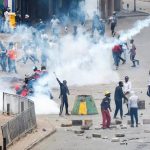
The 2017 elections further highlighted the entrenched impunity. Human Rights Watch documented 104 killings mostly by police targeting opposition supporters in Nairobi and Kisumu.
The Independent Policing Oversight Authority IPOA established in 2011 to address police misconduct following the 2007 violence investigated only two high-profile cases including the death of six-month-old Samantha Pendo killed by police in Kisumu.
No charges were brought and police cooperation with IPOA remained poor with officers failing to provide evidence or deleting it outright as seen in the 2025 case of blogger Albert Ojwang whose death in custody sparked protests.
A 2014 Associated Press investigation revealed that police killings had become the norm rather than the exception with nearly two-thirds of 1,873 gun shot related deaths between 2009 and 2014 attributed to police many suspected to be assassinations.
Senior officers admitted to the AP that such killings were common and often ordered by superiors yet no systemic reforms followed.
Systemic Failures and Stalled Reforms
The persistence of police impunity stems from systemic issues rooted in Kenyas colonial legacy and exacerbated by political interference.
The police force originally designed as an instrument of colonial oppression has been used by successive governments to suppress dissent from Daniel arap Moi’s regime to recent crackdowns on protests in 2023 and 2024.
The 2010 Constitution established the National Police Service Commission and IPOA to enhance accountability but both bodies have been undermined by underfunding understaffing and lack of independence IPOA for instance has recommended thousands of prosecutions but low conviction rates due to judicial delays and police noncooperation have rendered it toothless.
Political will to end impunity remains absent. The reinstatement of vetted officers sacked for abuses and the halting of police vetting in 2014 demonstrate the governments reluctance to reform.
Budgetary dependence on the executive further compromises the police and IPOAs independence allowing political elites to shield officers from prosecution.
The lack of consequences has eroded public confidence in Kenyas justice system fuelling protests and deepening mistrust.
The 2025 killing of Albert Ojwang whose death was falsely attributed to hitting his head against a cell wall echoed apartheid-era coverups and sparked nationwide outrage.
Without accountability the police continue to act as a tool of state repression rather than public protection.
The Waki and Alston Reports among others provided clear roadmaps for reform yet their recommendations remain unimplemented. Ending impunity requires judicial independence vigorous prosecution and political will, none of which have materialised.
Kenya stands at a crossroads. The failure to hold police accountable for abuses since 2007 has perpetuated a cycle of violence from the post-election killings to recent protest crackdowns.
Reports like Waki and Alston have exposed the depth of impunity but without consequences they are mere documentation of a broken system.
For Kenya to break this cycle the government must prioritise judicial reforms empower IPOA with adequate resources and authority and demonstrate zero tolerance for police brutality.
Until then the promise of justice for victims like Samantha Pendo and Albert Ojwang remains unfulfilled and the spectre of police impunity will continue to haunt Kenyas democracy.