



In a decisive push to shore up its financial regulatory framework, President William Ruto assented to the Anti-Money Laundering and Combating of Terrorism Financing (Amendment) Bill on Tuesday.
The legislation comes at a critical moment, just days after the European Commission added Kenya to its list of high-risk countries requiring enhanced due diligence, a move that underscored lingering concerns over money laundering and terrorism financing vulnerabilities.
President Ruto initially returned the Bill to Parliament in April after expressing reservations on some of its provisions. Parliament accommodated rhetoric President’s reservations aligning it with both domestic priorities and international standards.
Last week, the European Commission flagged Kenya as one of several jurisdictions needing stricter oversight, citing gaps in anti-money laundering (AML) and counter-terrorism financing (CFT) controls.
While not as severe as an outright blacklist, the designation signals to banks and investors that transactions involving Kenya warrant extra scrutiny—a potential drag on trade and investment.
Kenya’s inclusion on the Financial Action Task Force (FATF) grey list in 2024 underscored the urgency of addressing gaps in its AML/CFT regime.
The FATF, alongside the Eastern and Southern Africa Anti-Money Laundering Group (ESAAMLG), identified technical compliance issues that exposed Kenya to risks of money laundering, terrorism financing, and proliferation financing.
The Bill amends ten key Acts of Parliament, including the Proceeds of Crime and Anti-Money Laundering Act, the Prevention of Terrorism Act, and sector-specific laws governing real estate, mining, gaming, and public benefit organizations (PBOs).
The amendments build on prior reforms, such as the 2023 inclusion of advocates under AML/CFT oversight by the Law Society of Kenya. By extending regulatory scrutiny to accountants, real estate agents, casino operators, and dealers in precious metals and stones, the Bill seals loopholes that previously enabled illicit financial flows through shell companies and property transactions.
Key Provisions and Sectoral Impact
The Bill introduces robust oversight mechanisms across high-risk sectors. Notably, it empowers the Retirement Benefits Authority and the Sacco Societies Regulatory Authority to supervise and sanction entities failing to comply with AML/CFT obligations.
Professional bodies, such as those regulating accountants and certified public secretaries, are now mandated to conduct risk-based supervision, issue guidelines, and impose sanctions for non-compliance.
In the real estate and mining sectors, enhanced regulatory clarity is expected to boost investor confidence and attract foreign direct investment (FDI).
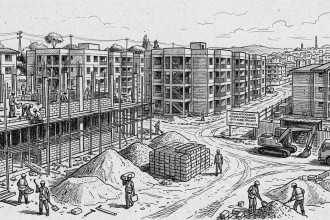
The government’s affordable housing program, a national priority, stands to benefit significantly from increased capital inflows, creating jobs and engaging Kenya’s youthful workforce.
Similarly, stricter oversight of casino operators and PBOs at risk of terrorism financing aims to curb vulnerabilities that could undermine national security.
The Financial Reporting Centre (FRC), Kenya’s cornerstone institution for combating financial crimes, also sees its mandate strengthened.
The Bill streamlines the Director General’s term to a single six-year tenure, aligning it with comparable roles like the Director of Public Prosecutions.
This move ensures institutional stability and reinforces the FRC’s independence in supporting law enforcement efforts.
Economic and Global Implications
The reforms are expected to yield far-reaching economic benefits. By formalizing more actors in high-risk sectors, the Bill supports domestic revenue mobilization and expands Kenya’s tax base.
Internationally, the strengthened AML/CFT framework is likely to improve Kenya’s credit ratings by agencies such as Moody’s, Fitch, and Standard & Poor’s.
A reduced risk perception could lower borrowing costs, enhance access to global capital markets, and unlock long-term development financing.
Kenya’s proactive stance also positions it as a market leader in financial integrity within the region.
The Bill’s alignment with global standards signals to the international community that Kenya is committed to combating financial crimes, potentially accelerating its removal from the FATF grey list.
While the Bill marks a milestone, its success hinges on effective implementation. Regulatory bodies will need adequate resources and capacity to enforce the new measures.
Public awareness campaigns will also be critical to ensure compliance, particularly among small-scale actors in sectors like real estate and mining.
Moreover, Kenya must sustain its reform momentum to meet FATF’s rigorous standards and secure its exit from the grey list.
The Anti-Money Laundering and Combating of Terrorism Financing Laws (Amendment) Bill, represents a bold stride toward a more transparent and resilient financial ecosystem.
By addressing systemic vulnerabilities, Kenya is not only safeguarding its economy but also reinforcing its role as a regional hub for investment and innovation.