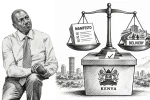


There is a single political truth President William Ruto cannot escape: the arithmetic of 2027 no longer adds up the way it did in 2022.
The October 2024 impeachment of Deputy President Rigathi Gachagua, widely seen in Mt. Kenya as political betrayal, has forced Ruto to recalibrate his re-election strategy more fundamentally than anything since his first victory.
Having won largely on the back of Mt. Kenya’s nearly three million votes and North Rift support, he now faces the prospect of defending his presidency on a vastly widened map.
In 2022, the Ruto-Gachagua alliance was the backbone of Kenya Kwanza’s victory. The 10 Mt. Kenya counties and seven North Rift counties delivered approximately 4.5 million votes, roughly 63 per cent of Ruto’s 7.17 million total. He beat Raila Odinga by fewer than 233,000 votes; without Mt. Kenya, there was no victory.
Gachagua’s impeachment, orchestrated by Ruto’s allies via a parliamentary supermajority, was felt in the region as a collective affront. He has since quit UDA, launched the Democracy for Citizens Party, and is aggressively positioning himself as Mt. Kenya’s political champion with a singular mission: to ensure Ruto’s defeat.
The result is a dynamic with no modern Kenyan precedent, an incumbent fighting a guerrilla war inside his own base. As a result, Ruto is employing what has been described as the ‘tyranny of small numbers’ to build a fuller basket for 2027.
Expanding the Map
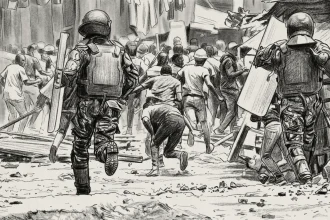
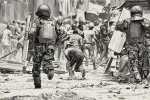
Ruto’s response has been a geographic pivot of remarkable breadth and frequency. Since the broad-based government pact with Raila Odinga in July 2024, itself born of the Gen Z anti-Finance Bill protests that nearly toppled his government, Ruto has made at least 38 trips to Luo Nyanza alone.
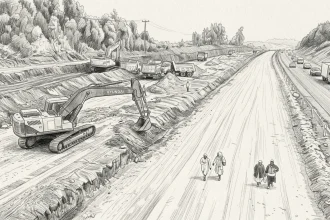
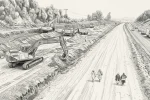
The visits blend infrastructure launches with political outreach: road commissioning, housing projects and railway groundbreakings in communities that had never seen a sitting president campaign for their support.
In March 2026, Ruto embarked on a five-day Western Kenya tour through Busia, Bungoma, Kakamega and Vihiga, framing it as a repudiation of ethnic politics: “I have vowed to end the politics of ethnicity and discrimination and ensure that no part of Kenya is left behind.”
The tour was partly defensive; the ODM Linda Mwananchi faction, led by Edwin Sifuna and James Orengo, had been running counter-tours through the same counties, urging residents not to give Ruto a second term.
He also invested in the Coast, with a four-day tour across Mombasa, Lamu, Kilifi and Kwale, and in the Gusii region, where the United Opposition had been actively campaigning against him.
Each visit follows the same template: bundled project launches, direct community engagement, and a message that development, not ethnicity, should determine the vote.
Cultivating the Next Electorate
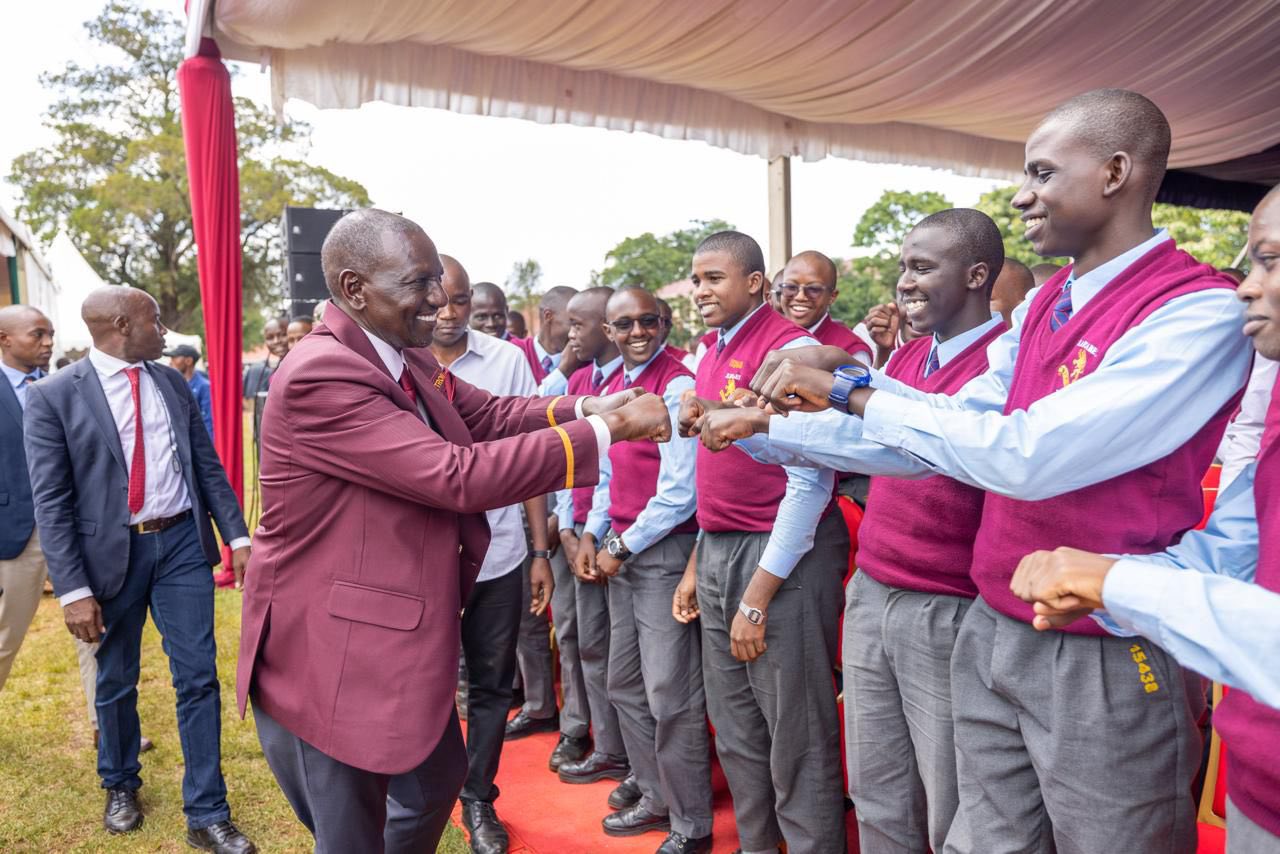
Among the least analysed elements of Ruto’s 2026 calendar is his systematic attendance at high school anniversaries, a quiet but potentially consequential voter cultivation exercise.
Students currently in Form 4 will be voters next year. For a president facing a serious youth credibility problem after the 2024 protests, these events offer direct, positive impressions on first-time voters.
In March, Ruto attended the Alliance High School centenary in Kikuyu, pledging Sh550 million for infrastructure. He then returned to his own former school, Kapsabet High, for its centenary: “Kapsabet made me what I am today.”
In May, he spoke at Thika High School’s 70th anniversary, calling students “heirs to a proud legacy” and framing education spending as “an investment in the future workforce, future leadership, and future prosperity.”
These events also serve a secondary function: school anniversaries are neutral, community-respected venues that allow Ruto to appear in politically contested areas without the adversarial atmosphere of a campaign rally.
Ruto has not abandoned Mt. Kenya. In January, he visited Mathira, Gachagua’s own constituency, and declared, “I am here to pay my debt,” launching housing projects and the Nyota youth programme targeting 6,000 youth from four Mt. Kenya counties as he directly dismissed Gachagua’s narrative: “Nobody brought me here.”
UDA has simultaneously been rebuilding its grassroots machinery, electing officials at polling centre level across 20 counties as the foundation of a 2027 network.
Deputy President Kithure Kindiki has been making the ‘patient capital’ argument to regional audiences: back Ruto in 2027, and Mt. Kenya gets its own shot at the presidency in 2032.
Can the Numbers Work?
Some argue that if Gachagua converts a large fraction of Mt. Kenya’s base to the opposition, Ruto will need to enhance his offensive in other regions to compensate. The counter-argument is that ethnic loyalty is not monolithic, and that the youth vote, estimated at 15 per cent undecided, is genuinely up for grabs.
The ‘Niko Kadi’ voter registration surge of early 2026 added hundreds of thousands of new young voters whose concerns revolve around jobs, opportunity and affordability, not the coalition politics of 2022.
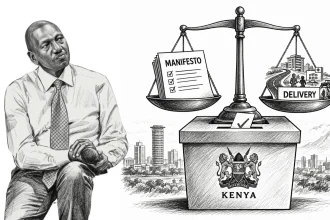
What is beyond dispute is that the William Ruto of 2027 is running a structurally different campaign from the one that won him power. The hustler narrative has evolved into a development delivery argument. The Mountain-Valley Alliance has become a national coalition under construction.
And a president once tagged tanga tanga for his relentless grassroots movement now finds that the same restless, high-frequency political style, redeployed across a much wider map, may still be his most durable political asset.