





On May 27, Nairobi streets were transformed into a sea of red and white as thousands of Arsenal fans poured into the CBD, painting the capital in the club’s colours after a 22-year wait for an EPL title.
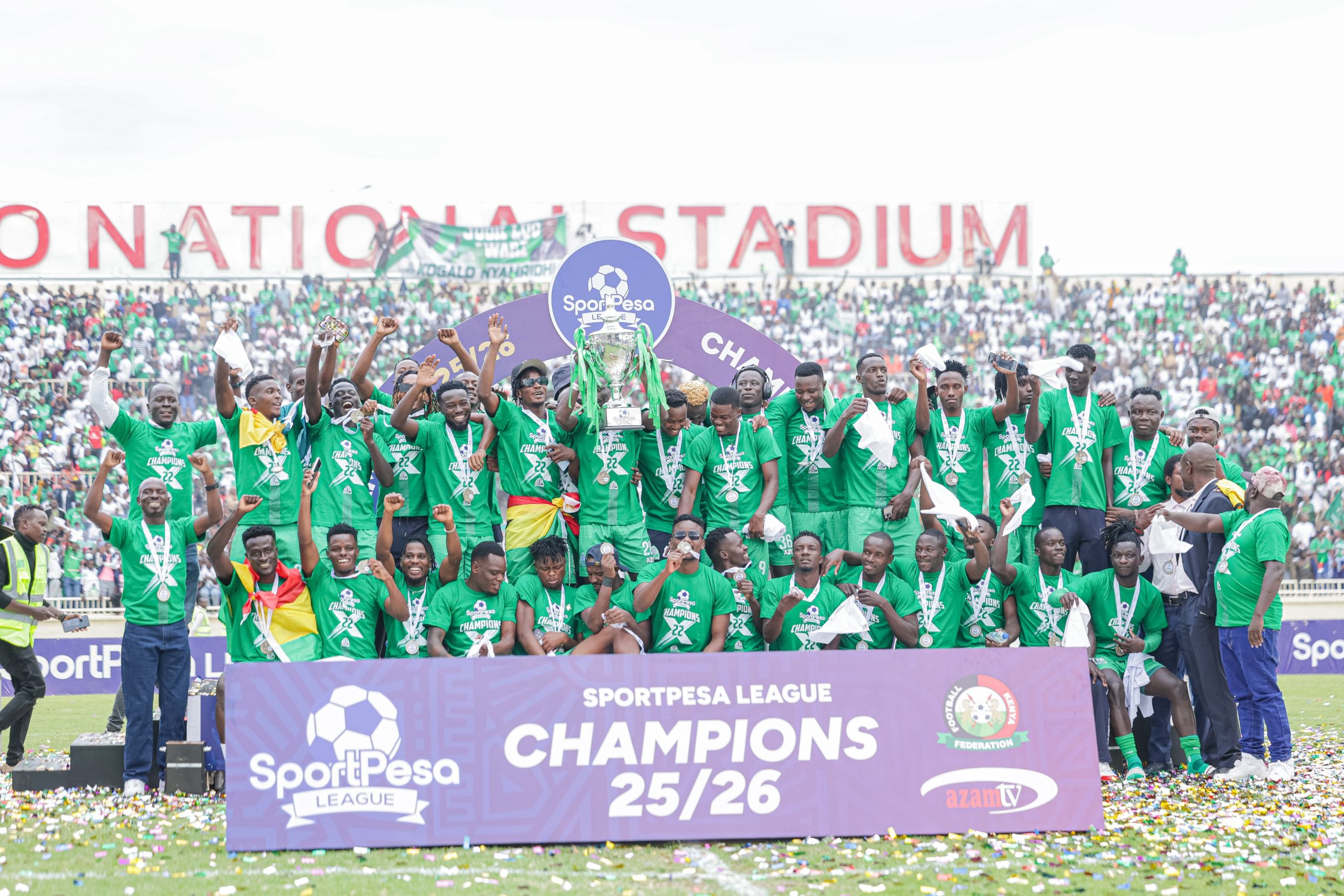
Then, on May 31, the same city turned green. Chants of “Gor Biro!” echoed through the CBD, accompanied by vuvuzelas, whistles and drums as thousands of Gor Mahia fans marched through major streets, danced atop vehicles and celebrated the 22nd title.
The two celebrations were equally passionate, though not equally sized. And that gap, between the energy Kenyans invest in English football and the energy they extend to their own, is the most important question in Kenyan sport.
Millions of Kenyans follow the English Premier League. They know their club’s starting eleven, their expected goals statistics, injury news, name it. They stream matches at midnight. They organise supporters’ chapters with constitutions and chairpersons. They mourn and celebrate with a sincerity that any local club chairman would sell a kidney to inspire.
Meanwhile, outside of high-profile fixtures such as the Mashemeji derby involving Gor Mahia and AFC Leopards, many games struggle to attract strong crowds, limiting their commercial appeal.
This is not a moral failure. It is not evidence that Kenyan fans are disloyal or fickle. It is a market signal, and like all market signals, it is telling us something specific about what the product is and is not delivering.
The Uncomfortable Truth
The first problem is visibility. The Ministry of Sports declined to fund the FKF-KBC broadcasting partnership, leading to KBC’s cessation of FKF Premier League match broadcasts for the 2024/25 season.
In contrast, Azam TV continued to air FKF Premier League matches under a separate seven-year deal, broadcasting four matches per round on pay-TV and digital platforms.
You cannot love what you cannot see. While Arsenal’s every fixture is available on SuperSport and streamed freely on dozens of pirate platforms, a midweek FKF match in Kisumu may not be broadcast anywhere at all.
The second problem is infrastructure. Many FKF Premier League clubs rent stadiums, meaning home matches are sometimes played in distant venues far from training grounds or fan bases. Some clubs do not even have their own training facilities.
When Arsenal play at the Emirates, the experience: the sound, the sight lines, the food, the ritual, is part of the product. When a Kenyan league match is played in a half-empty ground with broken seats and no match-day programme, attending requires love, not just interest. Most people, given the choice between that and watching Arsenal in HD at a warm sports bar, will choose comfort.
The third problem is governance. Prolonged institutional turmoil has scared away investors, stifling the growth of Kenyan football. Hooliganism has driven away spectators who associate football with crime and vandalism, leading to dwindling attendance. Governance and financial accountability remain central concerns for sponsors.
Until clubs can demonstrate basic financial discipline, paying players on time, publishing accounts, and operating transparently, the corporate money that funds the fan experience at the elite level will continue to stay away.
What Is Already Working
It would be unfair to catalogue the problems without acknowledging the momentum. SportPesa’s landmark ten-year sponsorship agreement with FKF, valued at Sh1.12 billion, was launched with the 2025/26 season specifically to improve the structure, competitiveness and financial resilience of Kenyan football.
A recent stakeholder dialogue brought together clubs, broadcasters, media, match officials and safety officers to align on a shared roadmap, with discussions centring on expanding broadcast reach, commercialisation, fan engagement, safety and infrastructure upgrades.
The title race itself this season was evidence that the league, when it runs well, delivers drama. Gor Mahia’s championship came down to a rival result, APS Bomet beating AFC Leopards 2-1 in Kericho on the penultimate weekend, with the two giants separated by just five points at the top after 34 rounds. That is compelling football. It simply was not watched by enough people.
As champions, Gor Mahia take home Sh15 million in prize money and a place in next season’s CAF Champions League. For context, Arsenal’s title- winning players share a bonus pool that runs into the tens of millions of pounds. The economics are not comparable, but the passion of the fan is. The task is to close the gap between that passion and the product.
What The Celebrations Mean
The back-to-back eruptions in Nairobi’s CBD – red one week, green the next – actually make a hopeful argument if you read them correctly.
They are evidence of something the football industry too often takes for granted: that Kenyans love football, deeply, structurally, as a primary cultural activity. They do not need to be taught to care. They need to be given a local product worthy of the care they already have in abundance.
Gor Mahia’s 22nd title should not have been celebrated by fewer people than Arsenal’s fourth. Both are extraordinary achievements. Both belong to communities with deep, multigenerational roots in this city. One of them just has a better television deal.
That is fixable. The passion is already there.