





If you tune into any major radio station in Nairobi today, the sonic landscape feels predictable. High-octane Nigerian Afrobeats, sleek South African Amapiano, and the hyper-commercialised remnants of local Gengetone dominate the airwaves.
It is a formula designed for programmatic advertising and corporate sponsorship. But step off the corporate airwaves and into the digital ether, and you will find that Kenya’s real musical revolution is happening in the margins.
Across SoundCloud sub-communities, private Discord servers, and packed underground gigs in industrial-area warehouses, an entirely separate ecosystem has matured.
In 2026, a bold generation of Kenyan indie artists, bedroom producers, spoken-word experimentalists, and ambient jazz-fusion acts is bypassing the traditional music industry completely. They do not have major label backing, they do not get daytime radio play, and frankly, they do not want it.
A Scene That Built Itself
This movement is not just a change in genre; it is a structural shift in how art is made and consumed in East Africa. For decades, breaking into the Kenyan music industry required navigating a tight network of gatekeepers: club DJs, radio presenters, and talent managers who favoured safe, formulaic hits.
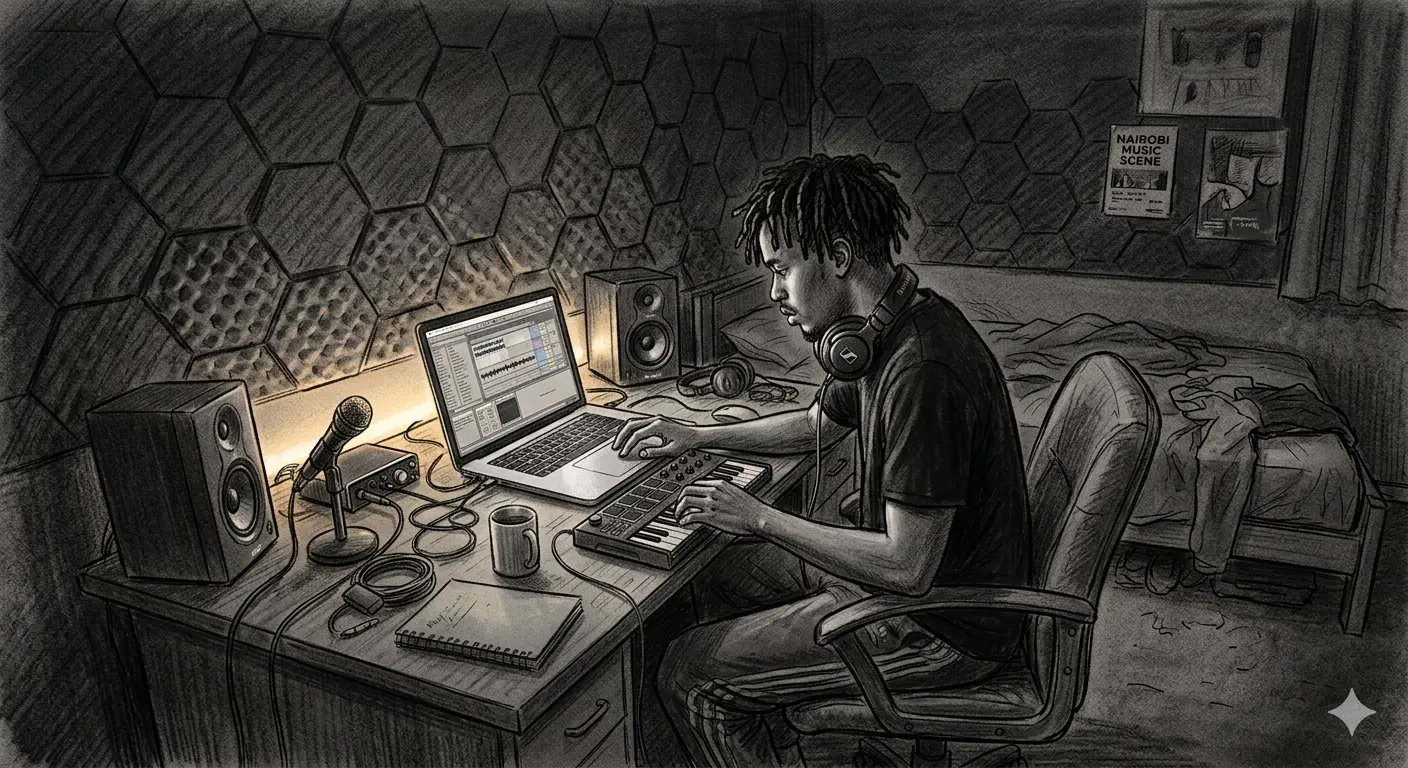
Today’s indie scene has built its own parallel infrastructure. The rise of affordable home studio setups and sophisticated mobile production suites has democratised the recording process.
A teenager in Eldoret or a university student in Kahawa Sukari can now compose, mix, and master an entire ambient- soul EP from their bedroom laptop. Platforms like SoundCloud and Bandcamp serve as their global distribution networks, while TikTok and Instagram Reels handle targeted, organic discovery.
Crucially, this digital autonomy is paired with a fierce dedication to physical spaces. Venues like the Alchemist Bar in Westlands, pop-up warehouses in the Industrial Area, and secret garden sessions in Karen have become holy ground for alternative music.
What Does the Revolution Sound Like?
Stylistically, the scene defies easy categorisation, and that is entirely the point. If there is a unifying thread, it is a radical rejection of creative homogenization. Artists are sampling vintage Swahili rhumba and warping it with lo-fi hip-hop beats; others are pairing heavy electronic sub-bass with traditional coastal Mwanzele rhythms.
Take the burgeoning “Nairobi Chill” movement, a micro-genre characterised by its melancholic chords, atmospheric field recordings of Nairobi traffic, and deeply introspective lyrics delivered in a mix of soft Sheng and English.
It stands in stark contrast to the relentless optimism and club-ready energy of mainstream pop. It is music for the anxious, hyper-connected youth navigating an uncertain economic landscape.
Then there is the jazz-fusion revival. Young collectives are stripping away the academic rigidity often associated with the genre, blending live saxophones and improvisational keys with spoken word poetry that tackles everything from mental health to political disillusionment. It is raw, intellectually demanding, and intoxicatingly fresh.
Why It Matters
What this scene reveals about creative independence in 2026 is profound. In the past, “independent” was often a polite euphemism for “unsuccessful”, a temporary state an artist endured until a label signed them. Today, independence is an aggressive, intentional choice.
By relying on direct-to-fan monetisation, limited-run merchandise, and intimate live ticketing, these creators maintain absolute ownership of their masters and their identities.
They are building sustainable, modest livelihoods based on hyper-loyal communities of a few thousand fans, rather than chasing millions of passive streams that yield fractions of a cent.
As the mainstream industry worries about algorithmic optimisation and streaming manipulation, Kenya’s indie pioneers are doing something far more radical: they are making music that sounds like home, entirely on their own terms.
The industry might not be talking about them yet, but the future is already listening.