




There is something seductive about stadiums. They are visible symbols of national ambition. They dominate skylines, feature prominently in political speeches and provide tangible evidence that governments are investing in sport.
Few infrastructure projects photograph better than a stadium rising from an empty field. Across Kenya, construction is accelerating. Talanta Sports City is taking shape.
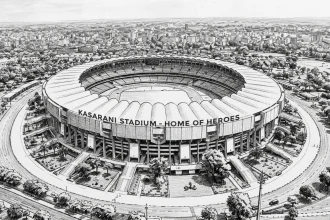
Kasarani and Nyayo National Stadiums are undergoing major renovations, and regional facilities are also receiving attention as the country prepares to co-host the 2027 Africa Cup of Nations with Uganda and Tanzania.
Government officials speak confidently about meeting international standards and positioning Kenya as a continental sporting destination. Those ambitions are welcome, but they also raise an uncomfortable question. Are we building stadiums, or are we building a sports economy?
History is full of countries that built impressive venues only to discover that concrete alone does not create an industry.
Sport is often discussed as entertainment, while in reality, it is one of the world’s largest industries. Globally, sport generates trillions of dollars through broadcasting rights, sponsorships, merchandising, tourism, ticket sales, licensing, betting, hospitality and digital media.
The stadium is only one part of a much larger value chain. A successful sports industry begins long before fans enter a venue and continues long after the final whistle.
It includes youth academies, coaching systems, sports medicine, athlete management, event production, data analytics, media rights, sports marketing and private investment.
Without these supporting ecosystems, even the most modern stadium risks becoming an expensive monument used only occasionally. Kenya’s challenge is therefore not merely to complete construction projects. It is to create sustainable economic activity around them.
The Legacy Problem
The world has countless examples of what economists call “white elephants.” Olympic venues that rarely host major events. World Cup stadiums that struggle to attract spectators. Multi-billion- dollar facilities that consume public money while generating limited commercial returns.
The problem is rarely construction quality but utilisation. A stadium used for ten football matches each year cannot sustain itself, nor can one that depends entirely on government funding for maintenance.
Successful venues operate almost continuously. They host football, athletics, concerts, religious gatherings, corporate events, exhibitions, conferences and community programmes.
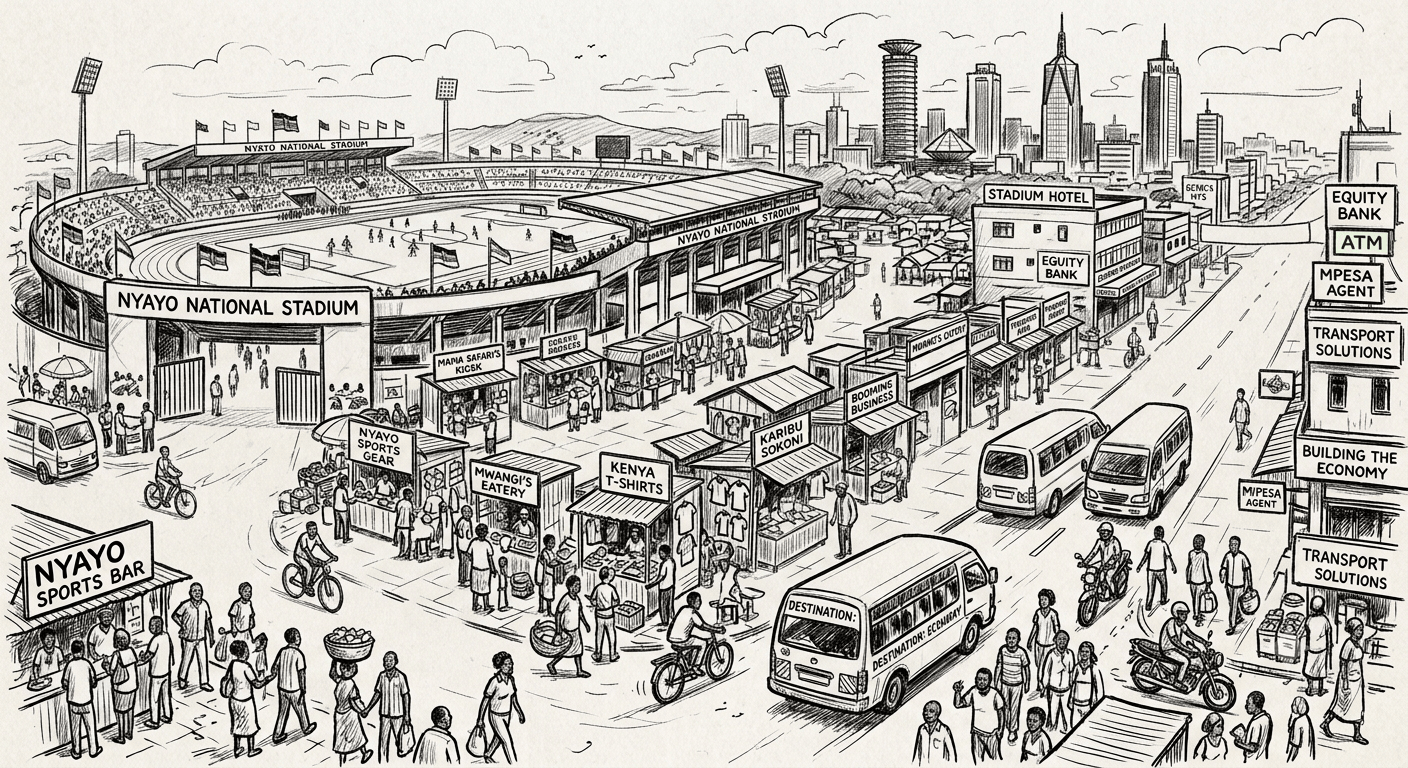
They become commercial districts rather than sports facilities, and this is where Kenya’s real test begins. Most Kenyan stadiums are designed around events, while international examples are designed around business.
Visit the best-performing stadiums in Europe, North America or parts of Asia, and one quickly notices that football is only part of the enterprise. Restaurants operate daily, retail outlets remain open throughout the week, museums attract tourists, office space generates rental income, and hotels serve travelling supporters and conference delegates.
The stadium functions as an economic hub, and match day is simply its busiest day. Kenya has traditionally approached stadiums as public infrastructure rather than commercial assets, and that mindset limits their economic potential.
The Television Economy
The largest revenues in modern sports rarely come from turnstiles, but through television and digital broadcasting. The English Premier League earns billions because broadcasters compete for exclusive rights.
The National Basketball Association has become a global media business. Even smaller leagues increasingly depend upon streaming platforms and digital subscriptions. Kenya has not unlocked that opportunity, with domestic football still struggling to generate consistent broadcast value.
Governments often justify stadium construction by pointing to employment. Construction certainly creates jobs, but those jobs are temporary. The more significant question concerns what happens after.
A thriving sports industry creates permanent employment for groundskeepers, broadcast technicians, sports marketers, nutritionists, physiotherapists, data analysts, security personnel, hospitality workers, event managers, sports lawyers and many others.
Around the world, these occupations support thousands of livelihoods. Kenya has the opportunity to expand this ecosystem if infrastructure is accompanied by deliberate investment in skills and enterprise.
Can Private Capital Play?
One of the weaknesses of Kenya’s sports sector has been its heavy dependence on public funding. Internationally, successful stadiums often rely on mixed financing models.
Private operators manage facilities, corporate sponsors purchase naming rights, businesses lease commercial space, clubs share revenue with venue managers and entertainment companies book concerts years in advance.
This diversification reduces pressure on taxpayers while encouraging innovation. Kenya’s new generation of stadiums presents an opportunity to rethink governance.
If they remain purely public assets, their commercial potential may remain underdeveloped. If they attract private participation without compromising public access, they could become genuine economic anchors.
Kenya already exports sporting excellence. Its athletes dominate global distance running, and that success has created international recognition but relatively limited domestic economic spillovers. Too often, Kenyan talent leaves the country to train, compete and commercialise elsewhere.
A mature sports economy would capture more value locally through international training camps, sports science centres, regional competitions, sports tourism, merchandising and high-performance academies. These industries are less visible than stadiums but potentially more transformative.
Hosting AFCON will bring visitors, television audiences and international attention. Those benefits matter, but mega-events are fleeting. The more important question is what remains after the tournament ends.
Will Kenya possess better sporting institutions? More commercially viable clubs? Stronger youth development pathways? Greater private investment? More sustainable employment?
If the answer is yes, then the stadiums will have justified their cost. If not, they risk becoming impressive reminders of opportunities only partially realised.
The Real Scoreboard
Politicians naturally celebrate ribbon-cutting ceremonies, and citizens understandably admire modern infrastructure, but concrete is only the beginning.
The success of Kenya’s stadium programme should ultimately be measured not by the number of seats installed or roofs completed, but by the industries, businesses and careers that grow around them.
A stadium should not simply host sports. It should generate commerce, attract investment, and create jobs. It should anchor neighbourhood economies, and most importantly, it should continue earning long after the applause fades.
That is the difference between building a stadium and building a sports industry. Kenya has begun the first task, and the second will determine whether these billion-shilling investments become national assets or merely expensive landmarks.