



Only 38 per cent of Kenyan adults say they trust their government to do what is right, according to the Edelman Trust Institute’s 2025 Trust Barometer – a four-percentage-point decline on the year before, and part of a longer downward slide Afrobarometer has been tracking since 2021.
Trust in specific institutions is worse still: just 36 per cent of Kenyans express confidence in the police, and trust in national government bodies runs lower, with rural Kenyans consistently more trusting than urban ones, and trust falling as education levels rise.
Therefore, every infrastructure announcement in this issue is not being made on neutral ground. A government asking Kenyans to see the SGR extension or the Rironi–Mau Summit road as evidence of economic transformation is asking a public that does not believe it to tell it the truth in the first place.
Afrobarometer’s most recent surveys find that management of the economy has topped Kenyans’ list of priority problems for the government to address since 2021, ahead of corruption, health, unemployment and security. Corruption has ranked among the top two for six consecutive years.
And on both fronts – the economy and corruption – most Kenyans rate government performance poorly. Only 17 per cent say the government is managing the economy fairly or very well, only 22 per cent give it credit for fighting corruption, and just 14 per cent rate it positively on job creation.
A January 2026 Afrobarometer dispatch adds a more specific charge: seven in ten Kenyans say the government is doing a poor job of fighting corruption in the awarding of tenders and contracts, and cite the manipulation of government tenders to favour politically connected “tenderpreneurs” as one of the central obstacles to effective public service delivery.
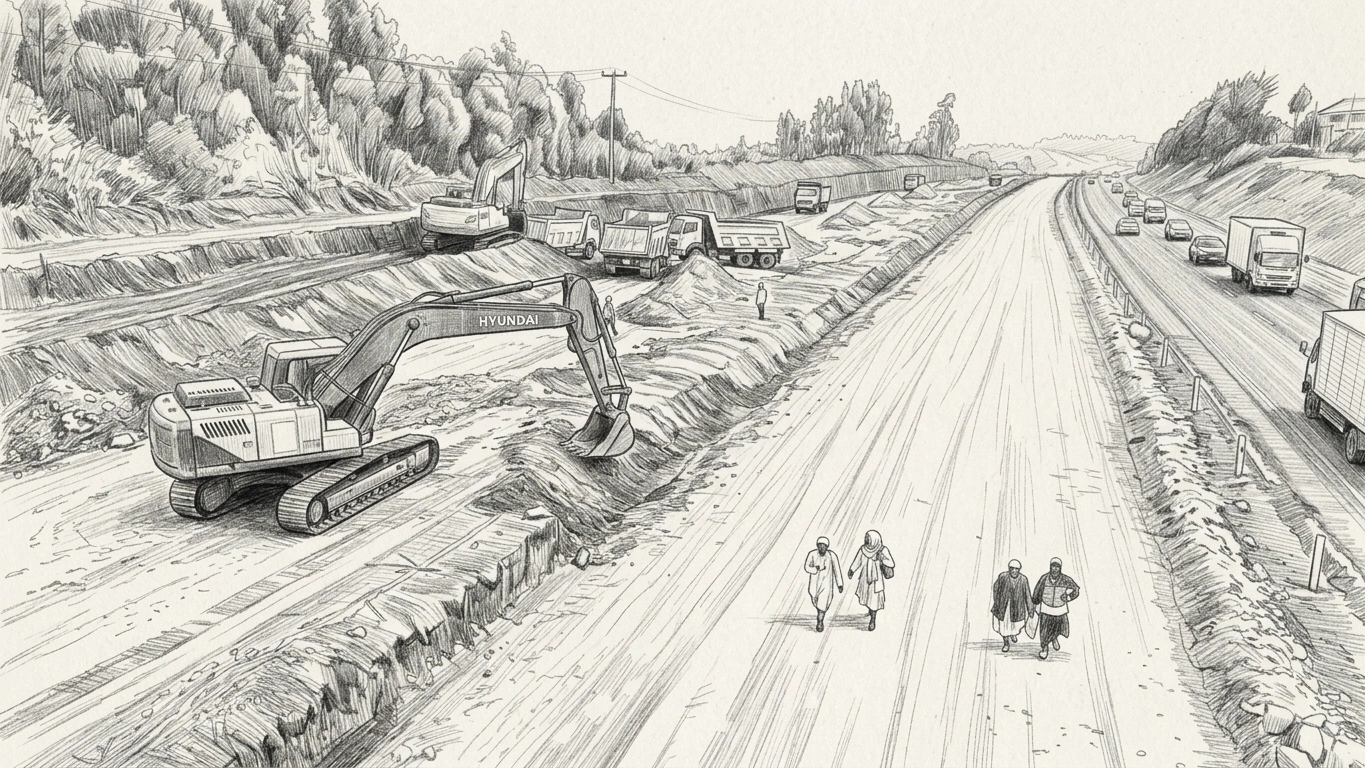
That is not an abstract governance complaint. It is precisely the terrain the SGR extension, the Rironi–Mau Summit road and the National Infrastructure Fund all sit on – multi-billion-shilling contracts, awarded through processes the public has already told pollsters it does not fully trust.
Why This Makes Economic Conversation Harder
It would be easy to read these numbers as simply confirming what Kenyan politics already looks like: an electorate sceptical of its government, discounting official claims accordingly. But the consequence runs deeper than scepticism about any one project.
When trust in institutions delivering infrastructure is this low, every claim about that infrastructure’s economic value becomes, in effect, contested territory before the facts are even examined.
Tell a citizen who does not trust the government’s tendering process that a railway extension will transform Western Kenya’s economy, and the most natural response is not to evaluate the freight economics – it is to ask the contract’s beneficiary.
Tell the same citizen that a toll road financed partly through their own pension fund will cut logistics costs, and the natural response is not to model the savings; it is to ask why their retirement savings were put at risk to build it.
Neither response is irrational. Both are exactly what six consecutive years of Afrobarometer data would predict from a public that ranks corruption as a top-two national problem and gives government a failing grade on managing it.
This is the deeper version of the argument this issue has made from its cover story onward: politics is not simply distracting Kenyans from an economic conversation about infrastructure. In a low-trust environment, the political question – who benefits, who is connected, who is skimming – is often the more rational question to ask first, because Kenyans have been shown that it is frequently the right one.
All Institutions Struggling
Kenya has not been without institutional efforts to shift this conversation onto firmer ground. The 2010 Constitution’s creation of county governments was partly meant to bring accountability for public spending closer to citizens; the national Open Government Partnership action plan running through 2027 explicitly targets more accessible budgetary data as a trust-building measure.
Neither has yet moved the underlying numbers. Trust in county-level service delivery remains mixed at best, and the specific institutions meant to police major contracts – procurement oversight, anti-corruption bodies – are themselves rated poorly by the same surveys that show declining trust in government overall.
The economic case for the SGR extension and the Rironi–Mau Summit corridor depends on independent, credible information reaching the public about freight volumes, contract terms, toll structures and financing risk. This is the kind of information Kenyans currently have the least reason to trust when it comes from government sources.
Media coverage, when it engages with these projects at all, tends to default to the political register – who launched and who criticised it – partly because that is the register in which official information is most readily supplied, and partly because it is the register audiences have learned to expect.
What Better Conversation Requires
None of this means the economic conversation this week’s issue of The Chronicle Weekly is trying to have is impossible. It means it has to be built deliberately, against the grain of six years of declining trust data, rather than assumed to follow naturally once the concrete is poured.
That likely means independent, disaggregated data – freight volumes by route, toll revenue against projected debt service, county-level uptake of industrial land – published on a cadence that lets journalists and citizens check government claims against outcomes, rather than against announcements.
It also means being honest that scepticism about who benefits from a Sh900 billion corridor investment is not a distraction from Kenya’s development story. Given what Kenyans say they believe about their government’s institutions, it may be the most economically literate question available to them – right up until better information gives them a different one to ask instead.