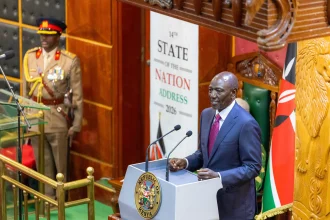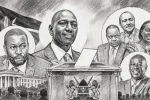

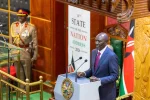



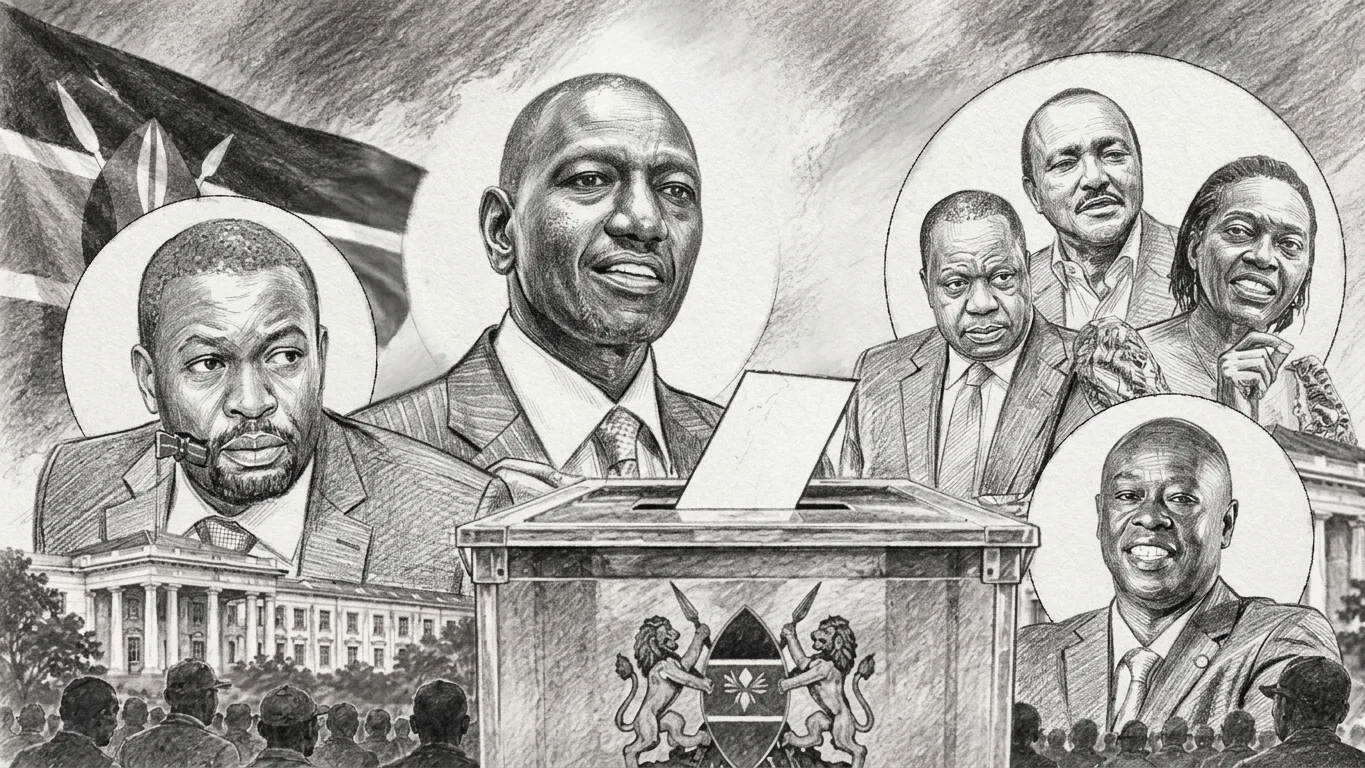
Kenya’s 2027 presidential contest is taking shape around four political forces. President William Ruto has incumbency and the UDA–ODM partnership.
Senator Edwin Sifuna is seeking to turn Linda Mwananchi into a political force. Kalonzo Musyoka, Martha Karua and Fred Matiang’i are building an opposition platform, while former Deputy President Rigathi Gachagua’s ambitions and Mount Kenya influence could reshape coalition calculations.
Though the election is months away, leaders are already reorganising parties, negotiating alliances and testing regional loyalties. The race will hinge as much on coalition-building as on individual popularity.
The four formations offer different routes to power. Ruto aims to strengthen his re-election prospects through a formal UDA–ODM partnership. Sifuna and Linda Mwananchi are testing whether opposition to government policies can become a credible national alternative.
Kalonzo, Karua and Matiang’i are organising a broader opposition through the Ukombozi Alliance. Gachagua remains a wildcard who could strengthen or complicate their plans.
These are not yet settled presidential tickets, nor are the groups entirely separate. Some leaders share platforms; others pursue parallel alliances. Their relationships and ambitions remain fluid, and the eventual line-up may differ considerably.
Ruto’s Advantage: Incumbency Machinery
Ruto’s re-election bid has a key advantage his challengers may struggle to match: control of the national political establishment and a governing party with nationwide networks.
His most consequential move is turning the broad-based government arrangement into a formal electoral partnership with ODM.
Announced in August 2026, the agreement commits ODM to support his re-election instead of fielding its own presidential candidate, significantly reshaping the political landscape.
The partnership unites parties with distinct histories, regional constituencies and networks. UDA provides the incumbent’s political machinery and support structures; ODM brings a longstanding organisation influential in Nyanza and beyond.
The deal could expand Ruto’s coalition beyond the constituencies that secured his 2022 victory and reduce the chance that a strong opposition candidate benefits from fragmented support in ODM’s traditional strongholds.
However, a presidential agreement does not automatically ensure harmony at every other electoral level. The two parties still have to manage competing interests in parliamentary, gubernatorial and county assembly contests, where their members may be seeking the same positions.
The question of how power will be distributed within a future administration will also test the durability of the partnership.
The political bargain is therefore larger than endorsing one presidential candidate. It involves party structures, campaign financing, political appointments, policy priorities and the management of competing ambitions.
Ruto’s challenge will be to demonstrate that the partnership is more than an agreement among political leaders. He must translate it into grassroots mobilisation while convincing voters that the coalition offers a credible response to the country’s economic and governance challenges.
His incumbency remains an important political asset, but it also places his administration’s record at the centre of the election. The cost of living, taxation, public debt, employment and the government’s delivery record will shape how voters assess his claim to another term.
The same machinery that can help him organise a national campaign also makes it difficult to separate his re-election pitch from public judgement of his presidency.
Sifuna’s Challenge: Turning A Movement Into A Political Machine
Linda Mwananchi is reshaping the opposition landscape. Unlike established parties built around long-standing leadership, it draws support from calls for accountability, generational change and dissatisfaction with the government’s direction.
Sifuna, Nairobi senator and former ODM secretary-general, is among its most prominent figures. His stance increasingly conflicted with parts of ODM’s leadership, particularly over cooperation with Ruto’s administration and the electoral partnership with UDA.
The movement seeks to mobilise voters who feel poorly represented by existing political arrangements. Its appeal extends beyond opposition to Ruto, reflecting frustration with transactional politics, where alliances shift without clear explanations of what changes mean for voters.
Its challenge is turning that sentiment into an election-ready organisation. Rallies, social media and messaging can raise its profile, but a national campaign also needs party structures, registered members, candidates, funding, polling agents and sustained organisation across all 47 counties.
Linda Mwananchi must also define its purpose: an independent political vehicle, a platform for a wider opposition coalition, or the start of a Sifuna-led presidential campaign?
Prominent figures such as Embakasi East MP Babu Owino give it visibility, but ongoing wrangles between the various teams could puncture the momentum.
The movement must preserve its grassroots energy while building ties with established politicians who offer resources, networks and electoral experience.
Such alliances, however, could bring the compromises supporters question in the existing establishment.
Ultimately, it must move beyond protest politics to build an electoral coalition and present a credible programme for government.
Ukombozi And The Search For An Alternative Coalition
While Linda Mwananchi tests a new political vehicle, the Ukombozi Alliance offers a more conventional effort to unite established opposition figures and organisations.
Kalonzo Musyoka, Martha Karua and Fred Matiang’i bring distinct strengths. Kalonzo has a strong political network and extensive experience in presidential and coalition politics.
Karua brings government, parliamentary, and constitutional reform experience, along with a reputation for institutional accountability. Matiang’i offers senior administrative experience and may appeal to voters seeking executive leadership.
James Orengo and other figures broaden the alliance, while appointing Matiang’i and Orengo co-chairs of its council suggests a structure more substantial than periodic meetings among opposition leaders.
But forming a coalition is easier than choosing its leader. Kalonzo has long pursued the presidency, arguing his experience and loyalty to past opposition alliances merit consideration.
The alliance must agree on a candidate without alienating the partners who give it value. It must also distinguish itself from other opposition initiatives. Defeating Ruto may unite leaders around an immediate goal, but cannot sustain a government after the poll.
Voters will expect plans for the economy, debt, corruption, devolution, healthcare, education and jobs, as well as clarity on power-sharing and resolving disputes.
A well-organised coalition with established networks, experienced leaders and a shared programme could offer a serious national alternative. But wrangling over the presidential ticket and political posts could drain the energy needed to build it.
Gachagua: Wild Card In The Coalition arithmetic
Gachagua’s political position makes him one of the most consequential figures in the emerging contest, even without a settled decision on whether he intends to pursue the presidency himself.
His departure from government and subsequent break with Ruto have fundamentally changed his political calculations.
Through the Democracy for the Citizens Party (DCP), he is attempting to establish an alternative political base, particularly in Mount Kenya, while presenting himself as a voice for voters who feel politically marginalised by the current administration.
His greatest potential asset is his understanding of the political networks and interests within the region that delivered substantial support to Ruto in 2022.
His ability to mobilise sections of that electorate could make him an important player in determining whether the incumbent retains the support that helped secure his victory.
But Mount Kenya is not a single political constituency whose votes can be transferred from one leader to another. The region has competing interests, multiple political personalities and an electorate whose preferences cannot be assumed to follow the positions of its most prominent politicians.
Deputy President Kithure Kindiki, Ndindi Nyoro, Justin Muturi and other leaders retain their own networks and ambitions.
The extent to which Gachagua can consolidate the region behind DCP will depend on his ability to build party structures, attract influential leaders and demonstrate that his political project can deliver tangible benefits.
His engagement with other opposition figures adds another layer to the calculations. His appearance alongside Sifuna and Kalonzo at a Linda Mwananchi event demonstrated that political boundaries between emerging opposition formations are not impermeable.
However, shared platforms do not necessarily mean agreement on leadership, strategy or the eventual presidential ticket.
Gachagua could emerge as a presidential candidate, a coalition partner or a kingmaker whose support determines the viability of another candidate. Each option carries different implications for the opposition.
The Coalition Arithmetic Will Determine The Race
Kenya’s emerging political contest is about more than popularity: it hinges on political networks, regional support, organisation, resources and a credible national message.
Ruto benefits from incumbency and a budding ODM partnership, but must defend his record and manage a broad coalition.
Sifuna can mobilise voters seeking a different politics, but must turn Linda Mwananchi into a functioning national organisation.
Ukombozi could unite experienced leaders as a credible alternative, but needs to settle its leadership.
Gachagua can shape the opposition’s regional arithmetic, but must choose whether to lead a coalition or help select its leader.
The alignments formed in coming months will matter as much as the candidates. Kenya’s history shows coalitions can win majorities, but their durability depends on shared interests and leaders’ willingness to compromise.
The 2027 race is not yet a settled contest among four presidential candidates. It is a struggle to build the machinery, alliances and national support needed to win.
Though one person will hold the presidency after August 2027, the battle for it is already unfolding across multiple centres of power.