



Download Your Copy: The Chronicle Weekly August 3, 2026
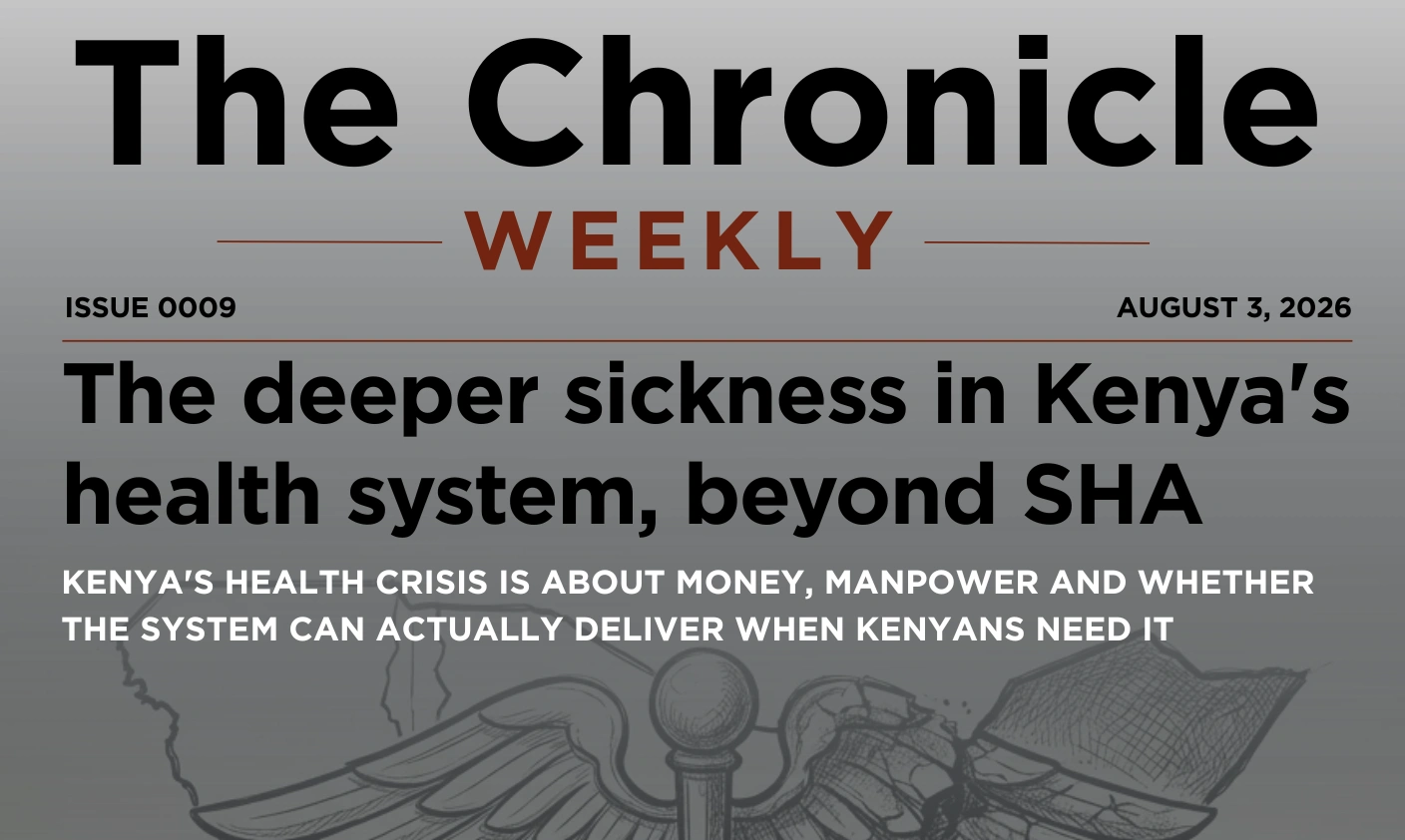
This week’s cover of The Chronicle Weekly asks a question Kenya has mostly stopped asking out loud: not “is SHA working,” but whether the thing underneath SHA; the doctors, the medicine, the beds, the counties that can and can’t pay for any of it, was ever built to work in the first place. It is a question that, in different clothes, runs through this whole issue.
Look at our data story on household economics. Inflation is down. The shilling has recovered. The government’s numbers are, by the government’s own telling, good.
And yet the real-wage index tells a colder story: the average formal-sector worker is worse off in real terms than a worker was seventeen years ago. Stability and prosperity are not the same thing, and Kenyans have become fluent in telling the two apart, whatever the macro indicators say.
In politics, there appears to be a disconnect between Kenyans’ ambition for good governance and attention to the politics that matter.
Everyone, including the media, is focused on the 2027 formations relating to the presidential elections. Yet, we all know that since devolution became part of the governance system, local elections have as much importance as the national elections.
Look at The Chronicle Weekly’s business piece on the proposed Nairobi Mass Rapid Transit System. This is at least the fourth serious attempt at urban rail this city has seen, and each one arrived with the same diagnosis, the same renderings, the same optimism, and none of them arrived at a train. The question worth asking of this attempt is not whether Nairobi needs it. Everyone agrees it does.
It is whether the government has learned to answer the boring institutional questions: financing, land, matatu integration, and political continuity, that killed the last three.
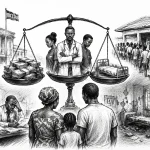
That is the pattern this issue keeps returning to: the distance between architecture and delivery. SHA registered 31 million Kenyans and owes hospitals Sh26.8 billion.
Community health promoters were recruited by the tens of thousands while the country trains a tenth of the health workers it needs. Kenya announces reform readily. It struggles to make reform reach the person waiting at the till, the bed, or the bus stop.
None of this is an argument for cynicism. Our health scorecard shows real gains, immunisation up, maternal mortality down, and per capita health spending more than tripled since 2022. Reform can and does produce results.
But results are earned in execution, not in press briefings, and this issue is, in its way, an argument for judging governments there.
Elsewhere this week, we look at why Kenyans are discovering their own continent before they discover anyone else’s, and at a High Court judge who found in a nightclub anthem more honest evidence of Kenya’s relationship with cannabis than in a decade of drug policy.
Both, in their own way, are about the gap between what the law and the architecture say, and what the country is actually doing.
As always, The Chronicle Weekly welcomes your views. The Chronicle Weekly is point of view journalism where we go beyond the headlines and uncover insights that newsrooms are missing each day.