




Kenya’s middle class has always been difficult to define, but the gap between appearance and financial reality has widened significantly in recent years, especially as household costs rise faster than incomes and formal employment becomes less sufficient as a standalone source of stability.
For years, the definition was straightforward: a salaried professional in an urban area, earning enough to afford private schooling, a car, supermarket shopping, occasional dining out and periodic travel.
This group was expected to expand steadily alongside Kenya’s GDP growth, which averaged about 4 to 6 per cent annually over the past decade, and the rise of formal employment in services, finance and public administration.
However, while Kenya’s GDP per capita has grown to roughly USD 2,000, household costs in key urban centres have risen sharply. Private school fees alone ranges from Sh50,000 to over Sh300,000 per term, and average urban rent consumes 25 to 40 per cent of household income for many middle-income earners.
As a result, the Kenyan middle class has not disappeared, but its financial foundations have become significantly more fragile. A household can appear stable while operating under heavy financial strain: a car financed through loans, school fees paid in instalments, and multiple credit facilities servicing monthly consumption.
The new middle class is therefore defined less by what it owns and more by how much effort is required to sustain its lifestyle.
Old Definition Built Around Ownership
Traditionally, middle-class status was measured through visible consumption and asset ownership. A stable formal job provided predictable income, mortgages or land ownership signalled long-term security, and private education indicated upward mobility.
Car ownership, in particular, became a key marker of success in urban Kenya, where vehicle imports have averaged over 90,000 units annually in recent years, reflecting strong demand among aspirational households.
However, ownership alone masks underlying financial differences. Two households may both own cars, live in similar estates and pay private school fees, yet one may have savings and investments while the other relies heavily on credit.
Kenya’s household debt has grown significantly, with private sector credit reaching over Sh4 trillion in recent years, much of it directed toward consumption rather than productive investment.
This divergence highlights a key shift: visible consumption no longer reliably reflects financial security, making resilience a more accurate measure of class position than ownership.
One of the clearest structural changes in Kenya’s middle class is the decline of the single-income household model. While formal employment remains important, it is increasingly insufficient on its own, especially as real wages have stagnated in many sectors despite rising living costs.
The average formal sector salary in Kenya remains highly uneven, with many professionals earning between Sh80,000 and Sh250,000 monthly, yet facing fixed obligations that consume a large share of income. As a result, households increasingly rely on supplementary income sources such as side businesses, consultancy, rental income, farming, or digital freelancing.
This mix is often framed as entrepreneurial growth, but in many cases it reflects necessity rather than choice. A household combining salary income with a side business may still be maintaining rather than expanding wealth, especially when additional income is used to service debt or cover rising costs.
The result is an economy of income stacking rather than income security, where financial stability depends on multiple fragile streams rather than one reliable base.
The Cost of Looking Middle Class
The financial pressure of maintaining a middle-class lifestyle becomes clearer when broken down into core expenses. In urban Kenya, private school fees can consume 20 to 40 per cent of household income for many families, while transport costs have risen significantly due to fuel prices, which have fluctuated between KSh 180 and KSh 210 per litre in recent years.
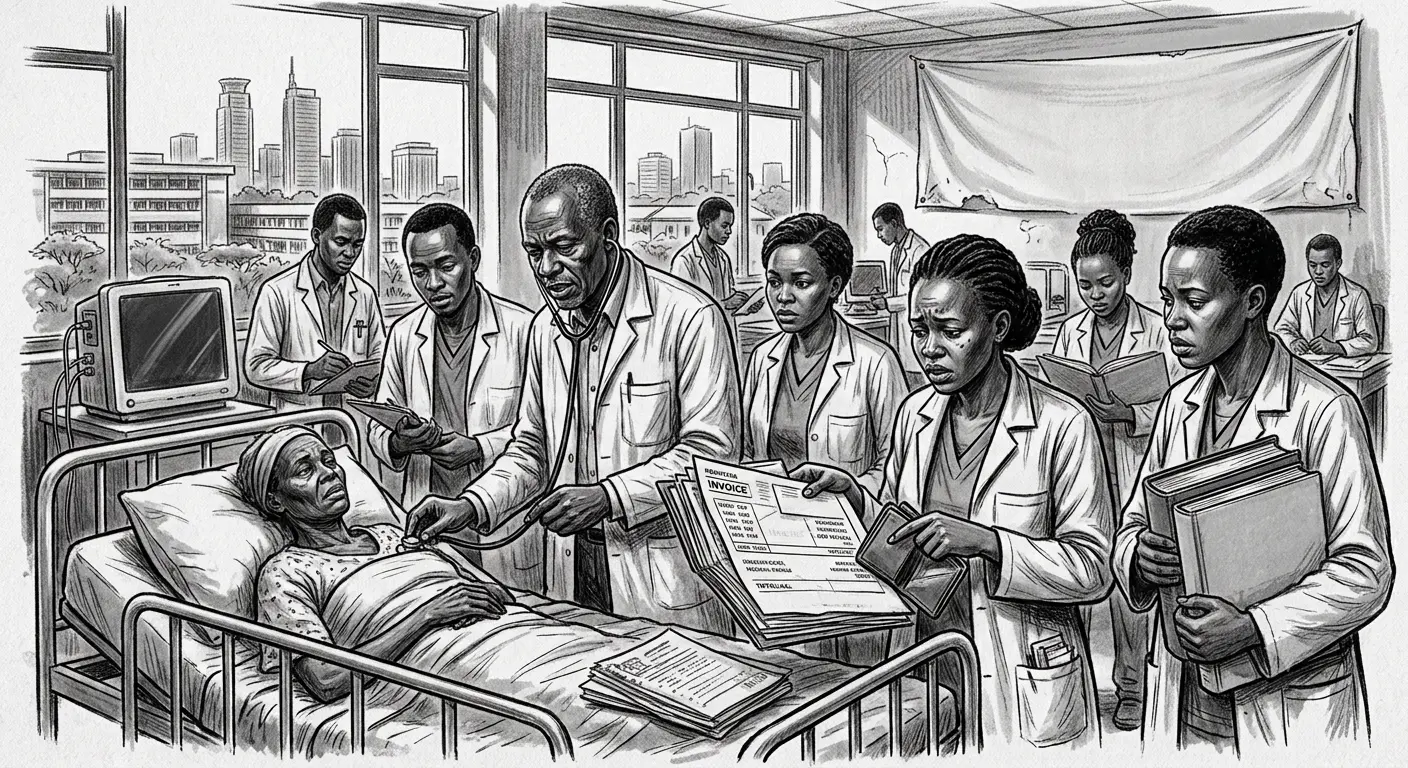
Housing remains another major burden, with rent in Nairobi’s middle-income areas ranging from Sh30,000 to over Sh150,000 per month. Healthcare costs are increasingly unpredictable, with out-of-pocket spending still accounting for a significant share of medical expenses despite insurance uptake.
Meanwhile, recurring costs such as internet, electricity, insurance, and subscriptions add further pressure. Beyond these visible expenses lies a less discussed layer of obligation: financial support for extended family, school fees for relatives, contributions to weddings and funerals, and emergency medical assistance.
In many Kenyan households, these obligations can account for 10–30 per cent of monthly income, significantly reducing disposable earnings. This creates a structural paradox: households earning well above the national average, where GDP per capita is roughly Sh250,000 annually, often have limited savings due to layered financial responsibilities.
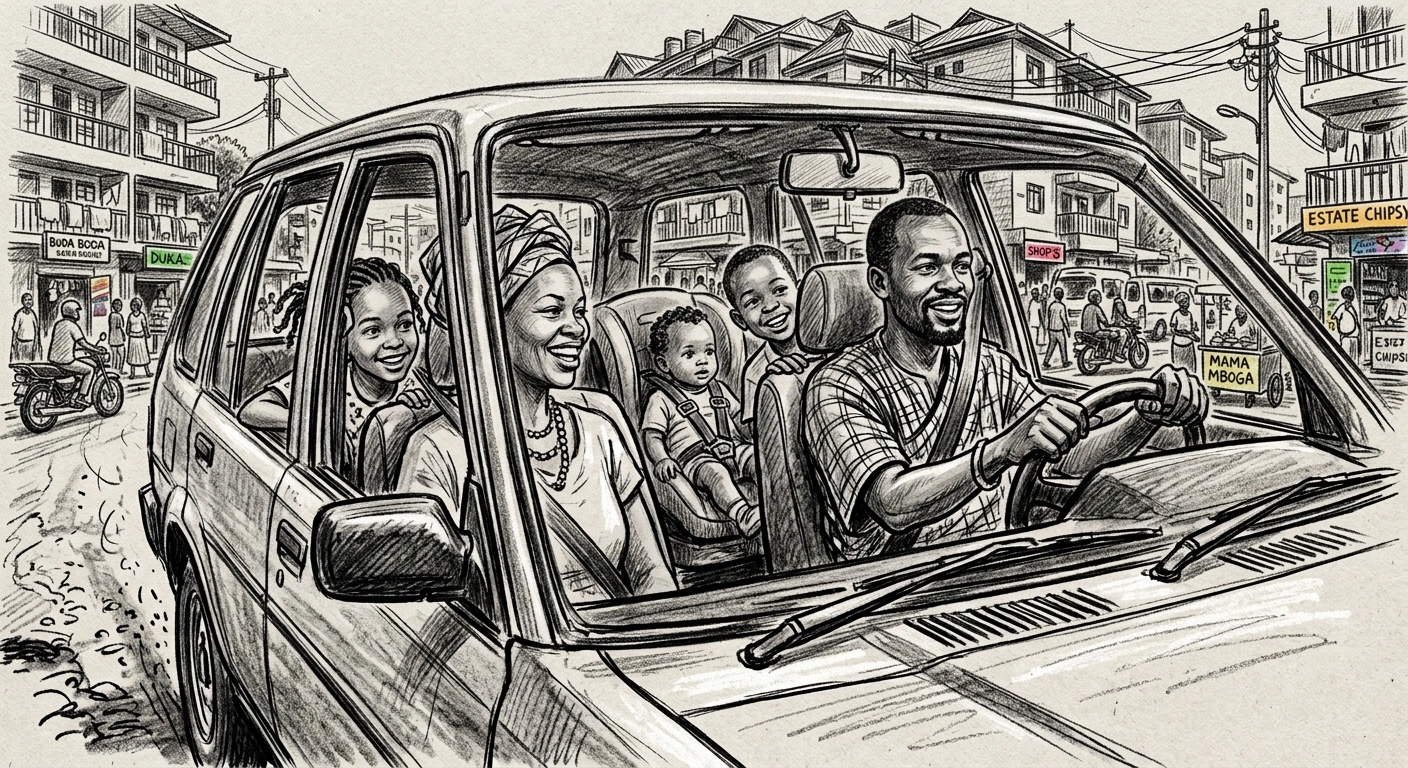
Car ownership remains one of the strongest symbols of middle-class status in Kenya, yet it is also one of the clearest examples of financial contradiction. A mid-range vehicle costing Sh1.5 to Sh3 million can require monthly repayments of Sh30,000 to 80,000, excluding fuel, insurance, maintenance and depreciation.
For many households, transport costs alone can exceed 15–25 per cent of monthly income. While home ownership is often viewed as a key milestone, mortgages and construction loans can lock households into 15–25 year repayment cycles, with interest rates typically ranging between 12 per cent and 18 per cent depending on the lender.

This reinforces a critical distinction between wealth and lifestyle. A household may maintain high consumption levels while accumulating limited net assets, creating the appearance of prosperity without corresponding financial depth.
Middle Class Learning to Downshift
In response, many urban households are adjusting consumption patterns in ways that reflect financial recalibration rather than downward mobility.
Some are relocating to more affordable areas to reduce rent and transport costs, while others are delaying car purchases, switching schools, or reducing discretionary spending such as dining out and travel. These adjustments are not necessarily signs of economic decline but of rational financial adaptation.
Surveys of urban consumers in Kenya have shown increasing sensitivity to price changes, with over 60 per cent of middle-income households reporting that they actively adjust spending based on inflationary pressures.
The emerging middle-class mindset is therefore shifting from status preservation to financial sustainability, prioritising long-term stability over visible consumption.
One of the most significant changes in Kenya’s class structure is the role of digital technology. Smartphone penetration in Kenya now exceeds 60 per cent, enabling access to banking, e-commerce, education, entertainment and remote work opportunities.
Mobile money platforms such as M-Pesa, which processes transactions equivalent to over 50 per cent of Kenya’s GDP annually, have further blurred class boundaries by allowing households across income levels to participate in similar financial ecosystems.
As a result, consumption has become increasingly democratised. A household earning Sh50,000 monthly can access many of the same services as one earning Sh200,000, from online shopping to digital entertainment and financial services.
However, this access does not translate into equal financial security, reinforcing the gap between consumption and wealth accumulation.
Credit has become a defining feature of the modern Kenyan middle class. Personal loans, mobile lending, salary advances, asset financing and buy-now-pay-later services have expanded rapidly, with digital credit alone disbursing billions of shillings annually.
While credit can support investment in education, housing or business growth, it is increasingly used to smooth consumption.
Many households now service multiple loans simultaneously, with debt repayments consuming 30–50 per cent of monthly income in some cases. This creates a situation where financial stability depends not only on income level but on debt load.
A household earning Sh 200,000 monthly may have significantly less flexibility than expected once obligations are accounted for, particularly when interest rates rise or income becomes irregular.
The definition of success is also becoming more global. Increasing numbers of Kenyan professionals are exploring opportunities abroad, particularly in the Gulf, Europe and North America, where salaries can be 2–5 times higher for comparable roles.
This shift is driven not only by income differentials but also by concerns over taxation, cost of living, education quality and long-term financial security.
Migration is increasingly viewed as a strategic economic decision rather than a last resort, reflecting a broader rethinking of what middle-class stability means.
The Real Divide: Financial Resillience
Ultimately, the most important distinction in Kenya’s middle class is no longer income level but financial resilience.
The key question is how long a household can maintain its standard of living in the face of shocks such as job loss, medical emergencies, business failure or rising interest rates.
Households with savings equivalent to 3–6 months of expenses, diversified income sources, manageable debt and insurance coverage are significantly more resilient than those relying entirely on monthly cash flow.
Yet surveys suggest that a large share of Kenyan households have limited emergency savings, with some estimates indicating that fewer than 20 per cent of urban households could sustain themselves for more than three months without income. This makes resilience a more accurate measure of class position than consumption or income alone.
The Kenyan middle class is not necessarily disappearing, but it is becoming more complex. It now includes high-income households with weak balance sheets, dual-income families with heavy debt burdens, entrepreneurs with volatile earnings, and blended-income households that rely on multiple unstable streams.
The old middle class was defined by stability; the new one is defined by adaptability. While this adaptability reflects resilience and ingenuity, it also signals underlying economic pressure. In this context, the central question is no longer whether households can maintain a middle-class lifestyle, but whether they can do so without financial strain.
The real ambition of Kenya’s emerging middle class is therefore shifting away from visible markers of success toward something more fundamental: the ability to withstand economic shocks without losing hard-won progress, and to build enough financial security to stop living in a permanent state of adjustment.