




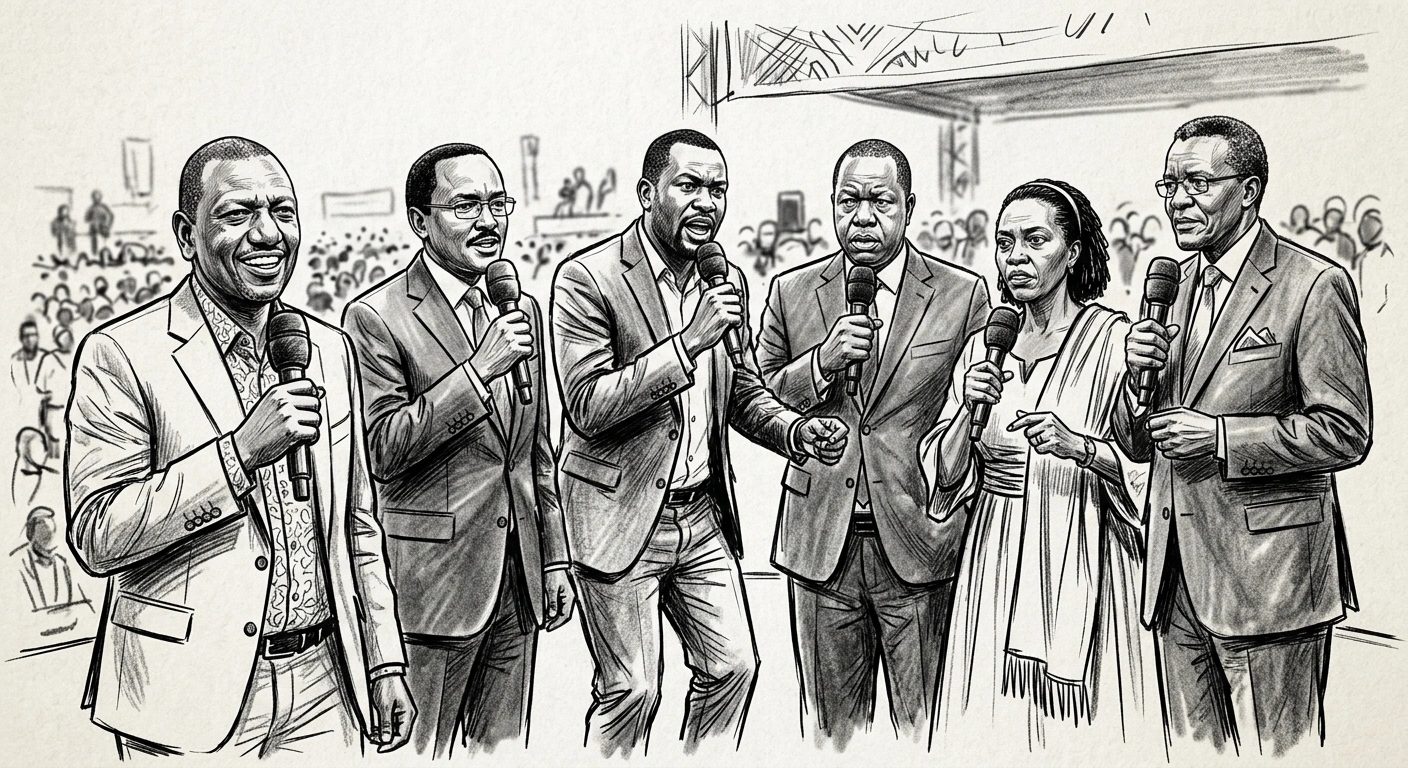
Ask a Kenyan politician what the 2027 election is about, and the answer comes quickly: who can beat William Ruto. Ask a trader in Kisumu, a boda rider in Eldoret, or a parent paying school fees in Mombasa, and the answer is different: who can fix things.
These are not the same question, and the distance between them is becoming the defining tension of the campaign now taking shape. The succession battle dominates headlines – coalition arithmetic, defections, the search for a running mate who can deliver a region. That contest produces alliances.
It does not, by itself, produce a government capable of paying debts, creating jobs, staffing hospitals, or explaining a tax increase to a household that has already run out of room to absorb one.
A coalition can win an election on slogans and regional math, but it cannot govern on them. Somewhere between the two lies the accountability gap Kenyan voters are now filling in themselves, whether or not the political class has noticed.
A List That Keeps Repeating
Rigathi Gachagua’s Wamounyoro consultations offer one data point on what voters are actually saying. After what he described as 55 days of engagement, he reported that Kenyans consistently raised education, healthcare, agriculture, employment, security and governance, alongside the cost of living and demands for accountability.
Gachagua has an obvious interest in how he frames those conversations, and the exercise was not a scientific survey. But the list is difficult to dismiss, because it matches the pressures households report living with daily – pressures that show up not in GDP tables but in school fee arrears, empty medicine cabinets at public clinics, and the monthly arithmetic of feeding a family.
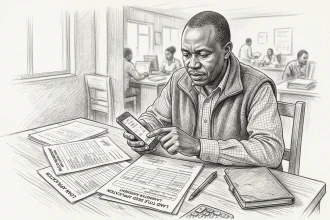
The cost of living remains the current unifier in Kenyan politics precisely because it does not require political sophistication to understand. A household rarely distinguishes between the effects of global commodity prices, domestic taxation, currency movements, debt servicing and supply disruptions.
It experiences all of them as one thing: a shrinking naira’s worth of ugali, transport and rent. The Kenya National Bureau of Statistics has repeatedly recorded food inflation levels that hit poorer households hardest. When fuel, flour, cooking oil and transport rise together, even a modest wage gain is erased before it reaches a household budget.
This is the trap facing both sides of the aisle. The government must show that the pain of fiscal adjustment has produced measurable gains.
The opposition must explain how it would deliver relief without widening the deficit or deepening Kenya’s debt problem, a harder question than it sounds, given how much of government revenue already goes to debt service rather than development or services.
Neither side has fully answered it. “Things will be cheaper” is not a fiscal plan; it is a promise waiting to be costed.
Employment as Dignity, Not Just Economics
For a country where more than a third of the population is under 35, the jobs question is not an economic footnote; it is the ballot question for an entire generation. A young Kenyan without steady income cannot leave the family home, or plan a future beyond the next month.
Official unemployment figures understate the problem, because most people cannot afford to stay formally unemployed; they take irregular or poorly paid work instead, technically employed but still unable to meet basic needs.
This is why announcements about jobs “created” tend to land flat with younger voters. They are less interested in totals than in durability – whether a job in manufacturing, agriculture, healthcare or tech offers a real path to independence, or simply another temporary placement dressed up as a programme.
Kenya’s digital economy has expanded what is possible, but it has not solved the underlying employment shortfall. Any candidate courting the youth vote will need more than the familiar vocabulary of innovation hubs and empowerment funds. Voters are asking for numbers: how many jobs, in which sectors, measured how.
When Reform Meets the Patient
The shift from NHIF to the Social Health Authority is among the most consequential changes of this administration, but its politics will be decided in clinics, not press briefings.
A patient wants to know whether the facility functions, whether medicine is on the shelf, whether a health worker has what they need, and whether getting treated will bankrupt the household.
Out-of-pocket health spending is a well documented driver of poverty where insurance coverage is incomplete and facilities lack essential medicines. Registration in a health scheme is not the same as receiving timely, affordable care, and that gap, more than any policy speech, is what voters will judge.
Education tells a similar story.
The government released Sh18.5 billion to schools as the term reopened, but reporting indicated basic-learning institutions had received only around 72 per cent of their annual capitation allocation. That shortfall matters because schools still owe money for operations, materials and maintenance regardless of when – or whether – government funding arrives in full.
Kenyans are not necessarily demanding a different education system. They are demanding the current one work consistently: predictable funding, adequate teachers, usable classrooms.
The Politics of Being Heard
Perhaps the least tangible shift is the most politically significant: citizens now expect government to listen before deciding, and to explain itself afterwards. The 2024 protests reset this relationship.
Young Kenyans organised outside conventional party structures, coordinated through digital platforms, and forced the withdrawal of the Finance Bill 2024 without the backing of an established political patron.
That memory has not faded. Citizens now know pressure can move policy and politicians know unpopular decisions can generate rapid, organised resistance.
Consultation has accordingly become fashionable political language – town halls, listening tours, meetings with professional groups.
The risk is that consultation becomes theatre: citizens invited to speak, with no visible link between what they said and what government did next. Listening that only produces speeches restating grievances is not listening; it’s rehearsal.
Security has entered this same conversation in a way it did not a decade ago.
What was once framed narrowly around terrorism, crime and policing now includes abductions, extrajudicial killings, and accountability for deaths during protests – issues that go to whether citizens believe the state protects them impartially or merely polices them.
Kenya’s Constitution guarantees protections around life, dignity and due process; the political question is whether citizens see those guarantees honoured in practice, particularly during arrests and protests.
A government asking for compliance on tax and development cannot simultaneously ask for trust in institutions that appear unaccountable when they exercise force.
Two Questions, One Election
The 2027 contest is increasingly organised around a single question: who can beat Ruto. Voters are quietly asking a different one: who can run the country better. The two overlap but are not identical.
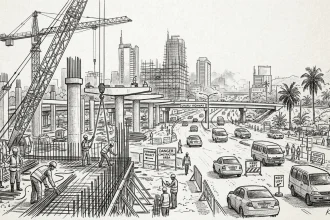
The first produces coalitions and regional arithmetic. The second demands programmes – how debts get paid, how jobs get created, how hospitals get stocked, how schools get funded, how trust gets rebuilt.
Winning an election does not require agreement on a coherent governing programme. Governing does. That is the trade politicians are, for now, avoiding – and the one voters are no longer willing to overlook.
What Kenyans are describing is not a demand for a perfect country. It is a demand for a functioning one: institutions that don’t require a phone call to a well-connected relative, taxes that are visibly converted into services, schools and hospitals that don’t quietly transfer the state’s failures onto family budgets.
It sounds modest. It is, in practice, the hardest thing to deliver: competence. That may be the real headline of the early 2027 campaign – not whom Kenyans are choosing between, but what they are choosing for.
The question is whether the politicians currently consumed by coalition math are listening closely enough to notice the difference.