

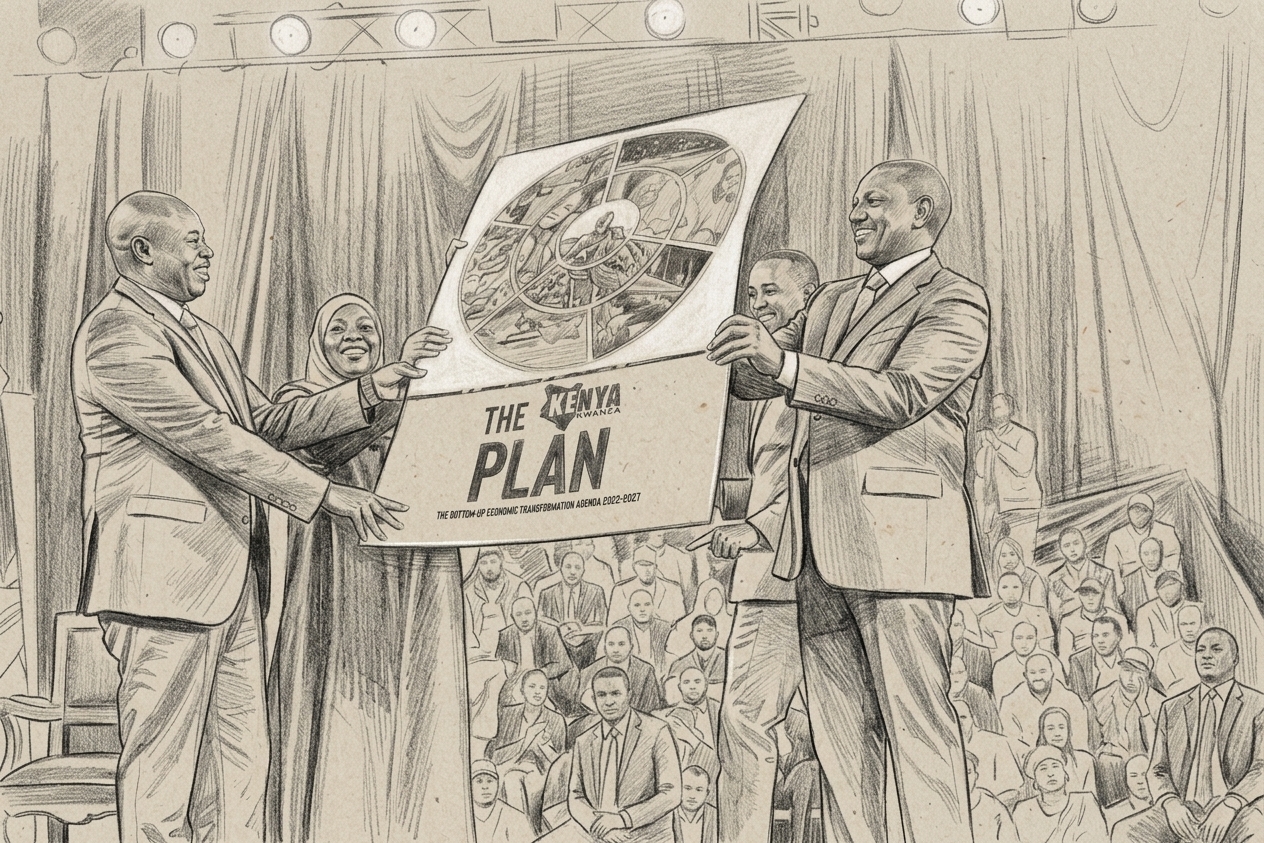
In the final days of the 2022 campaign, William Ruto cast himself as a champion of ordinary Kenyans’ economic concerns. He argued the economy should serve hustlers, small traders, farmers, job-seeking youth, and struggling households.
The ambitious bottom-up economic model aimed to lower living costs, improve food security, expand jobs, support small businesses, and make housing and healthcare more accessible. The government would also review taxes driving up everyday expenses.
Four years later, the gap between that campaign message and governing reality defines Ruto’s presidency. The latest fuel-price review has brought the question back into sharp focus.
From October 15 to November 14, Nairobi motorists will pay up to Sh226.96 per litre for super petrol, Sh227.76 for diesel and Sh219.87 for kerosene—up by Sh12.93, Sh9.90 and Sh28.49, respectively. The Energy and Petroleum Regulatory Authority cited higher global fuel prices and import costs. Since Kenya imports all its refined petroleum, it remains vulnerable to external price shocks.
A Kenyan president cannot control crude oil prices, shipping costs, or geopolitical tensions disrupting global energy markets. But what did Ruto promise about fuel costs, which prices could his government change, and how well has it protected consumers when global conditions worsen? The answers offer a useful way to assess the wider economic record.
The Fuel Promise And The Cost of Living
During the 2022 presidential debate, Ruto said taxes drove Kenya’s high fuel prices, accounting for nearly half the cost across 15 separate levies. He proposed reviewing and reducing them to ease the burden on households.
Those claims were disputed. Fact checks found taxes and levies made up about 40.3 per cent of petrol and 37 per cent of diesel prices in July 2022; the regulator listed nine, not 15.
The distinction matters: the campaign argued that domestic policy, especially taxation — not just high international oil prices — contributed to the problem and could change.
Fuel taxation persists, forcing the government to balance demands for cheaper fuel with revenue for public services and infrastructure. In 2024, the road maintenance levy rose from Sh18 to Sh25 per litre. More recently, fuel-price stabilisation measures have included using the Petroleum Development Fund and cutting VAT from 16 to eight per cent.
In May 2026, the President said the government spent Sh28.19 billion on fuel-price support and tax relief during April–June, preventing higher prices. October’s increase showed the limits of these measures as import costs rose.
This doesn’t prove government inaction or that every increase reflects a broken campaign promise.
It highlights the gap between promising fuel-price relief and building an economy resilient to external shocks without passing high costs to consumers.
But aggregate growth alone is an incomplete measure of a bottom-up agenda’s success. The relevant question is how much of that growth reaches households and small businesses, and whether it creates a material improvement in living standards.
Fuel costs affect more than motorists; higher diesel prices ripple through supply chains — from food and goods transport to machinery and services — raising costs even for households without vehicles.
For families spending most income on essentials, further increases quickly cut into what remains. The government must prove its interventions are effective, affordable, and sustainable — not merely explain rising prices.
Growth Is Not the Same as Relief
Inflation alone cannot settle the cost-of-living debate. It measures how quickly prices rise, not whether they have returned to previous levels. Kenya’s inflation rate was 6.8 per cent in September 2026, according to the Kenya National Bureau of Statistics. Year over year, food and non-alcoholic beverages rose 9.5 per cent, transport 15.6 per cent, and housing, utilities, and fuel 3.2 per cent.
These figures challenge claims that economic pressure has eased: slower inflation doesn’t lower prices, so households still pay more unless prices fall. If incomes lag, purchasing power declines.
Economic growth can still leave many struggling when benefits are unevenly distributed, essential costs outpace incomes, or jobs are insecure and poorly paid.
The bottom-up model succeeds when people at the base of the economic pyramid gain a more reliable path to earning, saving, and building assets—not merely when national output rises.
Employment tests that promise. The 2026 Economic Survey reported 822,100 new jobs in Kenya in 2025, bringing recorded employment to 21.6 million; 87.2 per cent were informal.
Informal work sustains millions of Kenyan families and contributes to the economy. Small traders, artisans, boda boda operators, domestic workers and digital freelancers should not be dismissed for working outside conventional employment.
The key question is whether this work brings higher earnings, greater security and a path beyond daily survival. Self-employment may count as employment statistically, yet provide too little income for basic needs. Businesses without affordable credit, reliable electricity, predictable taxes or enough customers can remain at subsistence level.
The Hustler Fund and similar credit initiatives should be judged not just by loans issued, but by repeat borrowing, repayment, business survival, income growth and borrowers’ ability to access cheaper, more productive finance.
The administration’s promises about digital jobs and the creative economy deserve scrutiny: success means sustainable work, fair earnings, and opportunities beyond a small, digitally connected group.
The bottom-up proposition is compelling, but success depends on the economic mobility it creates, not its label.
The Debt And Taxation Dilemma
The government’s fiscal position helps explain why some campaign commitments have been difficult to fulfil.
In 2022, Ruto criticised the previous administration’s borrowing and pledged fiscal discipline. Yet public debt has risen. Treasury figures put public and publicly guaranteed debt at about Sh13.1 trillion in June 2026, up from Sh8.76 trillion in September 2022.
Not all of the increase stems from new borrowing. Exchange rates, refinancing, and other factors affect reported debt, and the administration also inherited major financing needs, limited fiscal space, and exposure to rising global interest rates.
Still, the scale of debt matters: servicing it competes with spending on healthcare, education, roads, and support for vulnerable households.
The government must raise revenue to meet obligations and fund development, but higher taxes burden households and businesses. Tax cuts offer relief but may widen the financing gap without spending cuts, greater efficiency or stronger growth.
Fuel taxes show the trade-off. Removing all levies could lower pump prices but reduce public revenue; retaining or raising them protects revenue while increasing transport and production costs.
The issue is not whether taxation is inherently good or bad. It is whether the overall tax system is fair, predictable and productive, and whether the public can see credible returns from the taxes it pays.
This reality offers Sifuna a basket of lessons as he promises to balance the budget.
For a government elected partly on the promise of changing the relationship between the state and ordinary earners, the credibility of that bargain is critical.
The Promise And The Delivery
The broader bottom-up agenda centred on agriculture, small and medium-sized enterprises, affordable housing, healthcare, and the digital and creative economy.
Each offers a legitimate route to expanding opportunity, but each also raises questions about implementation and distribution.
Agricultural subsidies, particularly support for fertiliser, can reduce input costs and help farmers raise production. Yet their ultimate success should be judged by productivity, farm incomes, food availability and consumer prices, not by the volume of subsidised inputs distributed.
Affordable housing can create construction jobs, stimulate demand for local materials and expand access to formal housing. But the number of houses built is only one part of the test. Affordability, access to financing, development location, and the relationship between contributions and benefits also matter.
Healthcare reform is equally consequential. Changing financing institutions and expanding coverage may improve access and sustainability, but patients’, providers’, and employers’ experiences determine whether the reforms deliver on that promise.
Administrative changes cannot substitute for reliable access to treatment and manageable out-of-pocket costs.
Across these sectors, it is essential to distinguish a policy announcement from an economic outcome. A programme can be well-intentioned yet poorly implemented. It can deliver visible benefits to one group while imposing costs on another. It can make long-term progress while offering limited relief to people struggling today.
The fair assessment is therefore neither that the bottom-up model has failed in every respect nor that the existence of programmes proves it has succeeded. Instead, the administration must demonstrate, with comparable data, which interventions have worked, who has benefited, what they have cost, and whether they can be sustained.
The Verdict Belongs To The Household
Any Kenyan administration faces real constraints. International oil prices are beyond State House’s direct control. Public debt accumulated over many years cannot be resolved overnight. Weather shocks, global financing conditions and geopolitical conflict can disrupt even a sound economic plan.
Those constraints are part of governing reality, but they do not remove the responsibility to make choices, explain trade-offs and account for results. Indeed, a campaign promise becomes most meaningful when the conditions under which it was made become difficult.
Ruto’s 2022 message offered Kenyans a specific economic bargain: a government focused on the hustler, the farmer, and the small trader could change the direction of opportunity and ease pressure on ordinary households.
Since then, the record includes growth, policy interventions, and programmes that warrant recognition.
It also includes rising debt, persistent affordability concerns, and heavy dependence on informal work.
The decisive question is whether economic gains reach people in ways they can feel and sustain.
When a motorist pays more for fuel, a trader pays more to transport goods, a family faces higher food costs, or a young person takes another informal job without a dependable income, macroeconomic explanations can sound distant.
They may be correct, but they must be backed by evidence that the government is using its available policy tools effectively.
The test of leadership is not that every campaign promise survives contact with reality unchanged. Governing requires adaptation, prioritisation and sometimes difficult decisions.
The test is whether those decisions remain consistent with the original promise, whether their costs are fairly distributed and whether the results justify the sacrifices demanded of citizens.
Four years after the campaign, Kenya’s economic story is not simply one of promises kept or promises broken. It is a contest between ambition and constraint, growth and affordability, public investment and household pressure.
The bottom-up promise will ultimately be judged not by how often it is repeated, but by whether it changes the economic choices available to ordinary Kenyans.
That is where campaign rhetoric meets governing reality, and those seeking to unseat Ruto must be aware of it.