
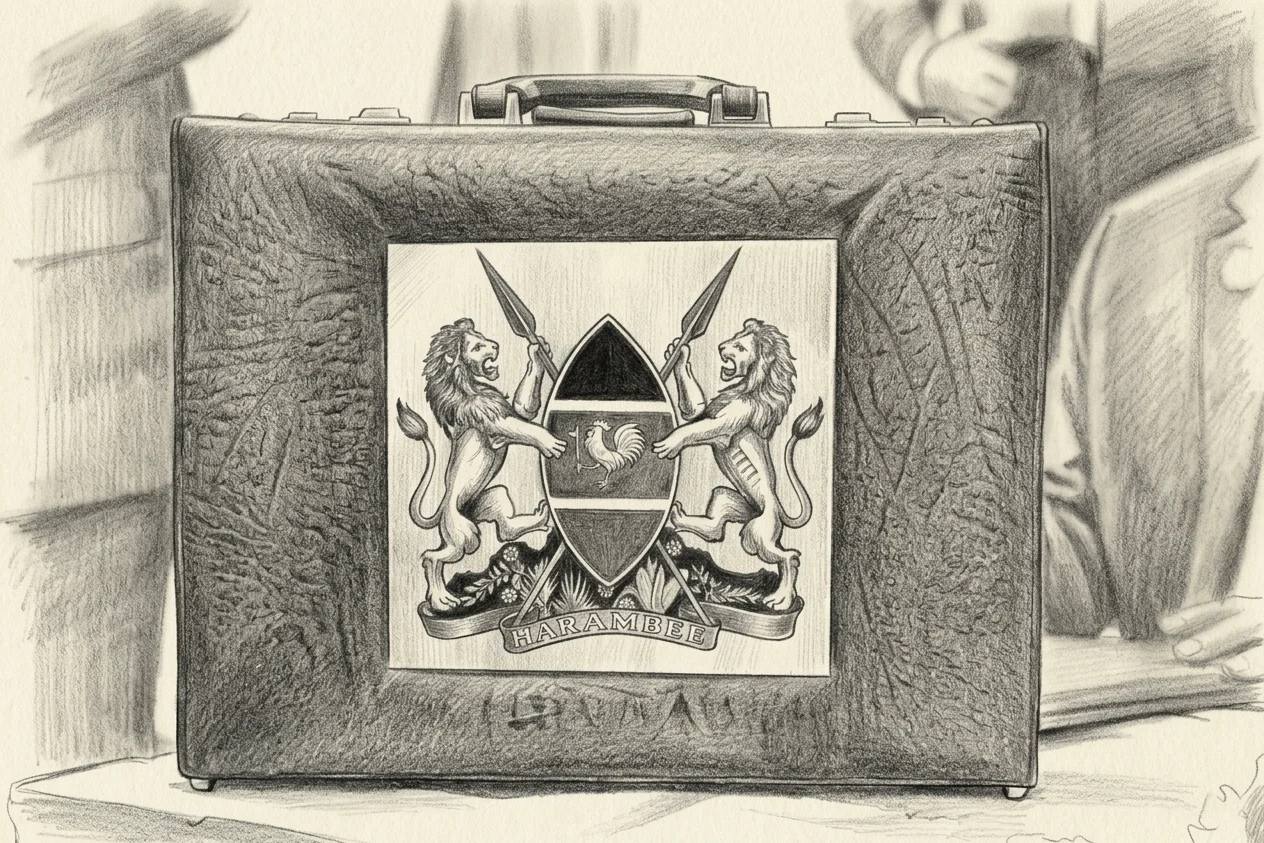
When a candidate promises a balanced budget, ask which kind: the overall balance compares revenue with all spending, including interest; the primary balance excludes interest, showing whether the Government covers current costs before debt payments.
A debt anchor is a legal ceiling on State debt, not a budget balance.
Kenya’s record
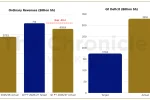
Parliament’s Budget Office tracks Treasury figures from FY2022/23. The overall deficit, including grants, was 5.9 per cent of GDP in FY2022/23, 5.6 per cent in FY2023/24 and 5.9 per cent in FY2024/25. The budget set it at 4.8 per cent in FY2025/26 and 5.5 per cent this year.
The primary balance improved from a 0.8 per cent deficit to a 0.9 per cent surplus in FY2025/26, then to a 0.3 per cent surplus in FY2026/27. Treasury data shows a ten-year average deficit of 6.8 per cent of GDP.
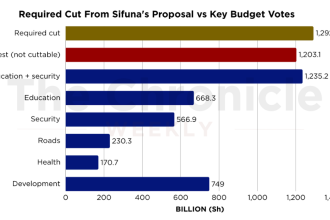
The deficit is now smaller than interest costs, suggesting borrowing covers past debt service but not current expenses. The government budgeted interest at Sh1,203.1 billion this year. Long-term results remain poor: one widely used series records the best outcome since 1998 as a 0.8 per cent surplus in 2000.
The Rules That Already Exist
Kenya has no balanced-budget rule. The Public Finance Management Act sets out two at-risk fiscal rules. Public debt must stay below 55 per cent of GDP in present value, but it reached 65.3 per cent in 2025 and is projected to exceed the limit through at least 2029; development spending must comprise at least 30 per cent of total spending.
The Plan Already on the Table
Treasury projections matter when assessing a challenger’s promise. The Budget Statement forecasts the deficit falling from 5.5 per cent of GDP this year to 3.3 per cent in FY2028/29, month 15, for a government sworn in around September 2027.
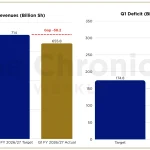
Thus, the gap between the incumbent’s plan and a balanced budget would be about 3.3 per cent, not 5.5 per cent. Whether that’s achievable is another question: the first quarter of FY2026/27 recorded nearly twice the planned deficit, according to our Exchequer Tracker.
Three Questions For Any Candidate
Which balance? Overall, primary or the debt anchor, said plainly and with a date.
Against which baseline? Treasury’s 3.3 per cent path for FY2028/29, or today’s 5.5 per cent.
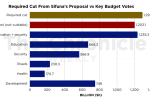
Paid for by what? Named vote heads and named taxes, with the revenue given up shown beside the savings.
A promise that names its balance, its baseline and its lines can be checked. One that names none of them cannot.