




Kenya wants to finance infrastructure on a scale that budget allocations and borrowing alone may struggle to sustain, while easing the pressure that debt servicing puts on public finances.
The National Infrastructure Fund is the vehicle for that ambition. Its success will depend on more than how much money it can mobilise.
Our argument is narrow. A fund that multiplies public seed capital changes who carries risk, not whether risk exists. Whether that is a good trade for taxpayers depends on five answers, and the public does not yet have any of them in writing.
The early deployment is a useful starting point. Reuters reported on October 7, 2026, that the fund began deploying its Sh340 billion seed capital by buying domestic government bonds, aiming to ease bank liquidity and encourage private-sector lending.
The fund expects the portfolio to earn about Sh42 billion a year, an implied return of roughly 12 per cent. Buying bonds is an investment activity, but it is also lending to the state. It is not yet a road, a power plant or a water scheme.
The Fund also targets Sh3.6 trillion in investment capacity over a decade across energy, transport, information and communications technology, agriculture and water.
These are reported plans and targets, not evidence that the programme has been delivered.
Leverage Is Not Free Money
Any financing vehicle promises that a limited pool of capital can attract a much larger one. Here the multiplier is roughly tenfold, and it works only if private investors accept the terms.
Investors price risk. Leverage changes how capital is assembled and how exposure is distributed. It does not eliminate the exposure.
The tools differ. A public-private partnership brings a private company in to finance, build, or run an asset the state would otherwise deliver.
A concession gives an operator defined rights to run an asset or service under set conditions. A government guarantee protects a lender or investor against a particular risk.
Asset recycling uses proceeds from existing public assets to finance new ones. None of them automatically removes the cost from taxpayers.
If a project needs public land, a payment commitment, a guarantee, or support when revenues fall short, the state remains exposed even when a private investor supplies most of the upfront capital.
Five Questions The Fund Must Answer
Who carries the risk? Investors may bear construction, operating or commercial risk. The government may keep obligations tied to land, regulation, public services or contractual payments.
The refinery’s owner has said it will need government protection from cheaper imports, a risk the state would be asked to hold before the first barrel.
Who owns the asset? Ownership can stay with the state, transfer to a private operator for a set period, or sit in a project company. The choice decides who controls the asset, who maintains it, who collects revenue, and what happens when the contract ends.
What happens if the project fails? Projects run late, cost more than planned, attract fewer users than forecast or fail to earn enough to service their financing. The public needs to know whether the losses fall on investors, lenders, the fund or the Exchequer.
What does the public earn? A commercially viable project should explain its expected returns, wider economic benefits, service obligations and public costs. Jobs and growth are legitimate objectives. They are not a substitute for an account of the financial terms.
Who can scrutinise the decision? The fund needs published project-selection criteria, reporting on commitments and actual disbursements, disclosure of material public liabilities, and independent oversight. Commercial confidentiality can justify withholding some details. It cannot be a blanket reason to hide an investment’s public consequences.
Lamu As The Test Case
The proposed Dangote refinery brings all five questions together. The fund is also considering a stake in the project. The Treasury has said Kenya has been allocated 10 per cent, and no agreement has been published. Reported interest is not approval, and the refinery’s financing terms should not be treated as settled.
The project also faces a legal challenge over land and transparency claims. The court must judge that dispute on the record. It reinforces the need for the public to understand how the project is structured, who benefits, and what obligations the state takes on before commitments become hard to reverse.
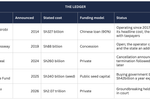
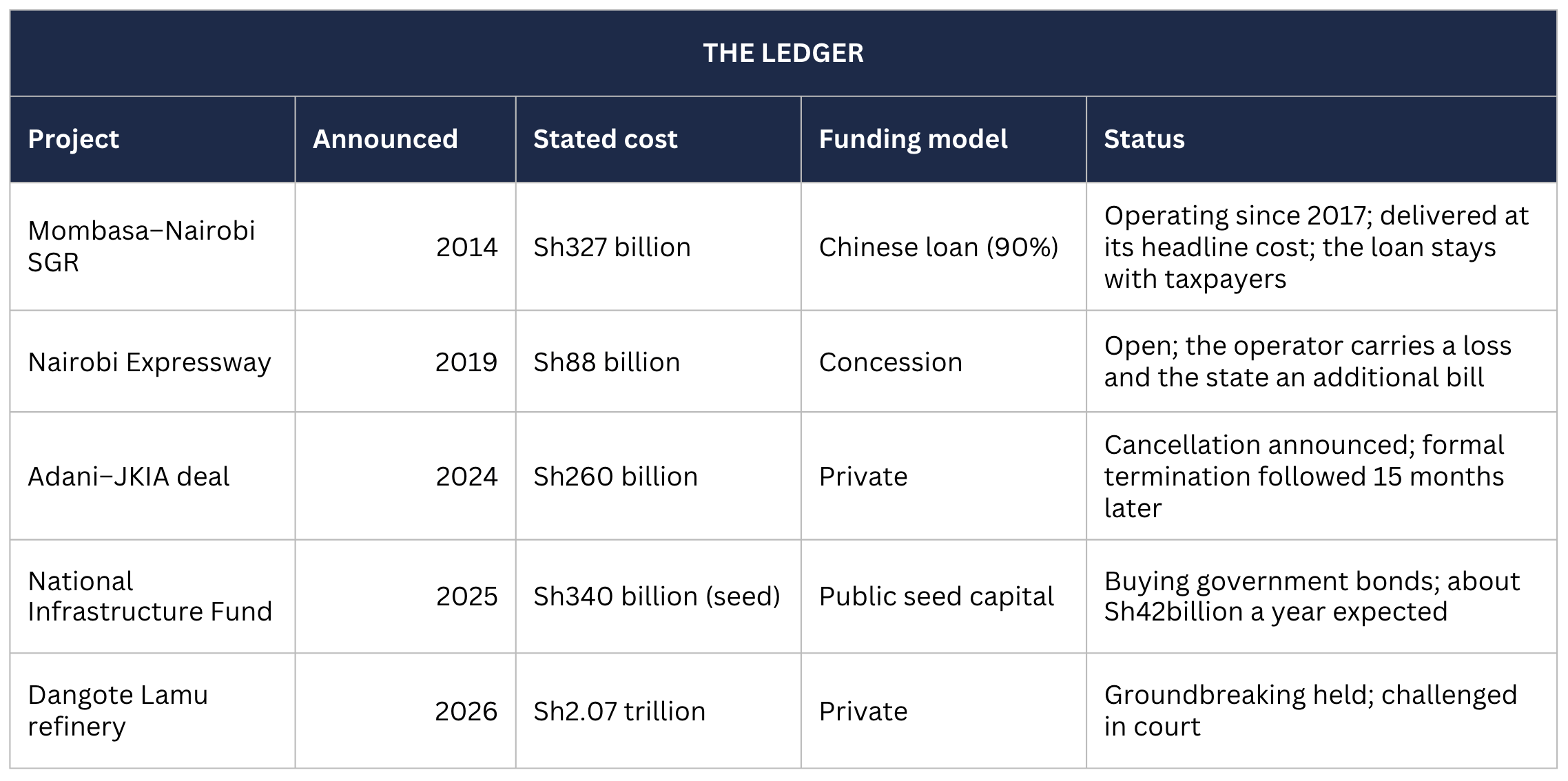
A financing model should be judged against a record of decisions and outcomes. For the selected projects, the ledger records the original announcement, stated cost, funding model, and current status. Where a figure is unavailable, we say so rather than infer it, and we keep estimates, contractual commitments and actual spending separate.
Kenya needs investment that can finance productive assets without placing unsustainable pressure on public finances. A fund’s ability to attract capital is only one part of that task.
Its credibility will also depend on whether citizens can see the obligations being created, understand who carries the downside and judge whether the returns justify the risks. Private capital may widen the country’s options. Transparent rules decide whether the public can trust the choice.