On October 4, Nairobi Senator Edwin Sifuna outlined what a Sifuna presidency would do with the economy. He diagnosed Kenya’s problem not as insufficient revenue, but as misplaced spending and waste.
His remedy was to scrap the Housing Levy and VAT on petroleum products, ease VAT on electricity, and balance the budget within 15 months by reducing the State’s appetite for domestic borrowing and redirecting credit to the private sector.
Five days later, he supplied numbers. In an interview on October 9, Sifuna said a team of experts told him they could cut between Sh500 billion and Sh1.8 trillion from the budget as wastage, which would pay for removing fuel VAT and the Housing Levy and lowering VAT on electricity.
On 4 October, he had promised a line-by-line analysis so that he could not be accused of “voodoo economics.” That analysis has not been published, limiting the ability to evaluate this proposal in full, but a balanced budget remains a consistent theme.
In a July interview, he described cutting public spending as the first act of a Linda Mwananchi government, something that needed no financing. At a Thika rally in June, he named the State House budget as the first target.
The ambition is clear, but the arithmetic is missing, and it’s where this promise lives or dies.
Two Meanings Of “Balanced”
A balanced budget can mean either the overall balance, revenue versus total spending, including interest, or the primary balance, which excludes interest. The promise’s scale depends on which definition applies.
Politicians usually mean the first, but Treasury economists often prefer the second, because interest is a cost inherited from past decisions rather than a choice made in this year’s budget.
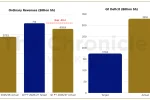
Overall, the number is large. Treasury’s Annual Borrowing Plan, published on August 26, puts the net financing requirement for FY2026/27 at Sh1,145.2 billion, or 5.5 per cent of GDP.
On the primary meaning, the number is small. Interest payments are about Sh1.20 trillion in FY2026/27, more than a quarter of the budget. Set against a Sh1.145 trillion deficit, the primary gap is roughly Sh58 billion.
The primary figure is a budget target, and the first-quarter overshoot suggests the outturn may differ, but the target is already set based on that reading.
Sifuna’s language about freeing credit for private borrowers points to the overall balance. This piece takes that reading, because it is the only one on which the promise means anything.
The Size Of The Hole
Start with the gap: Sh1.145 trillion, the amount the Treasury must borrow to cover FY2026/27. Now add the revenue Sifuna proposes to give up. Supplementary estimates projected the Housing Levy at about Sh97 billion for FY2025/26.
When the Finance Act 2023 doubled fuel VAT to 16 per cent, the Treasury expected to raise Sh50 billion annually. After it fell to 8 per cent, KRA reported a Sh9.1 billion revenue loss in April–May 2026.
The cut was part of the government’s efforts to cushion Kenyans from global shocks that have seen crude oil prices soar. VAT on electricity consumed is set at 16 per cent. Together, they amount to roughly Sh147 billion in forgone revenue.
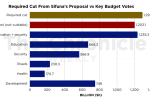
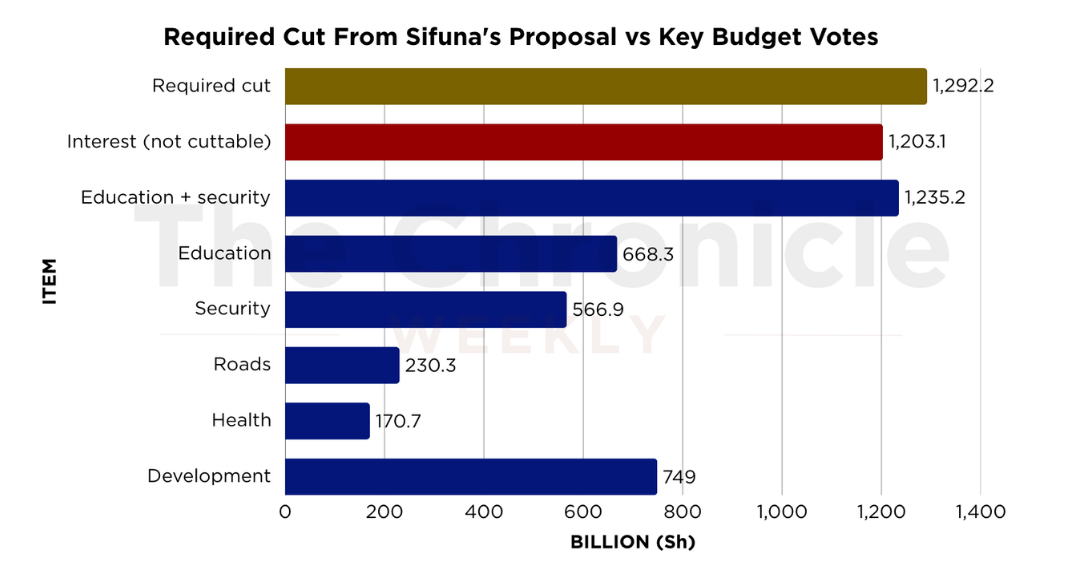
Sifuna must therefore raise at least Sh1.29 trillion: the deficit plus the forgone revenue, before any electricity relief. That is about 27 per cent of the Sh4.82 trillion budget, and about 35 per cent of what remains after setting aside interest.
Education and national security are allocated Sh668.3 billion and Sh566.9 billion, totalling Sh1.235 trillion. The required cut exceeds their combined budgets.
Hold Sifuna’s range against that. At the low end, Sh500 billion less Sh147 billion in forgone revenue leaves about Sh353 billion, closing roughly 31 per cent of the deficit.
At the high end, Sh1.8 trillion clears the gap with room to spare, but only by removing 37 per cent of the entire budget, or nearly half of everything that is not interest.
Neither end is a plan. A range that runs 3.6 times from floor to ceiling tells us the lines haven’t been costed yet, which Sifuna himself says is still the job to be done.
What Cannot Be Cut
The usual defence of such figures is that wastage is large and the State knows where it is. Perhaps. But the budget structure limits how much of the total can be called waste.
Interest is not discretionary. Public debt stood at Sh13.01 trillion at the end of June 2026, up 9.22 per cent in a year, according to Treasury figures. Interest has risen from 15 per cent of the budget in FY2018/19 to more than 25 per cent in FY2025/26.
Then there is the rest of the budget. Of Sh4.82 trillion, Sh3.53 trillion is recurrent, and only Sh749 billion is development spending. Here is the difficulty for the wastage thesis in one line: if development spending were cut to zero, it would still not cover the Sh1.29 trillion required.
The savings must come from recurrent spending, wages, pensions, operations, and transfers, and a line-by-line audit doesn’t delete any of that in 15 months.
Cutting spending also does not cancel what is already owed. Pending bills had passed Sh520 billion when the Cabinet approved payment of Sh23.74 billion of verified bills in October.
A government that balances its books by delaying payment moves the deficit into arrears; it does not remove it.
Sifuna’s own pledge to pay hospitals within 30 days of service pulls cash forward in the opposite direction.
Finally, “balanced” does not touch maturing debt. Treasury’s gross financing requirement for the year is Sh1.996 trillion, so about Sh850 billion is refinancing debt that falls due.
Reducing the appetite for domestic borrowing as that wall comes due means refinancing elsewhere, at a time when no IMF programme anchors the terms.
The Clock And The Cushion
Then there is the calendar. The general election falls in August 2027, and a president-elect would be sworn in around September.
The outgoing Treasury will write and pass the FY2027/28 budget, which starts on 1 July 2027. The first budget a Sifuna government would write is FY2028/29, tabled in June 2028, roughly nine months into the term.
Fifteen months after a September 2027 inauguration is December 2028, midway through that budget’s first year. In plain terms, Sifuna would spend his first year executing Ruto’s budget, and the promised balance would have to come halfway through his.
The cushion is thin, and Kenya is unlikely to sign a new IMF deal before the 2027 election, with Fund staff due back in December for Article IV consultations.
The earlier programme ended early because Kenya failed to meet conditions, including higher domestic revenue mobilisation, State-owned enterprise reforms, and disclosure of ring-fenced spending.
Kenya has leaned on the World Bank, which approved a US$750 million (Sh97.3 billion) loan in June after a year’s delay. A government that arrives promising to scrap three taxes will face a lender that wants more revenue, not less.
The revenue base is also weakening: KRA missed its FY2026/27 first-quarter target by Sh58.2 billion, narrowed to Sh40.4 billion after an Appropriations-in-Aid surplus.
A government that starts a term with a revenue shortfall and has promised to give up three taxes must find the money elsewhere.
What He Gets Right
This doesn’t make the premise false: waste is real, as Controller of Budget data has often shown. At an October 8 Jamhuri Park town hall, President Ruto said a dispute over the Kenya Sugar Board prevents spending about Sh4 billion in sugar levy.
A report tabled in Parliament in 2025 found more than Sh30 billion of Housing Levy proceeds sitting unspent in Treasury bills. Idle money is waste even when nobody steals it.
Crowding out is a respectable argument too. Treasury plans to raise close to Sh1 trillion in net domestic borrowing this year, and private borrowers compete with the State for the same savings.
Slower government borrowing would, other things equal, free up credit. And Sifuna has done something campaigners seldom do: he has promised to show the lines.
The Chronicle will hold Sifuna to the analysis he has promised. When it lands, five things will tell us whether it is a budget or a slogan.
Vote-level lines. Every shilling attached to a named vote head in the FY2026/27 estimates, not a percentage of “wastage.”
A stated definition. Overall balance or primary balance, said plainly.
Declared exclusions. How much interest, wages, pensions, and county transfers are treated as untouchable.
Arrears. How pending bills and the 30-day hospital pledge will be paid.
A timetable. A quarterly path across the FY2027/28 and FY2028/29 budgets, with the revenue given up shown beside the savings.
The same standard applies to the other side. The incumbent’s record includes a 5.5 per cent deficit of GDP, debt up about Sh1.2 trillion in a year, a first-quarter revenue miss, and a Treasury that keeps reaffirming its commitment to consolidation owes the public lines too.
Taking an ambition seriously means asking everyone for lists, not slogans. Waste is a finding. A budget is a list. Until Sifuna publishes the list, 15 months is a slogan, not a schedule.