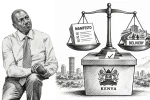


Four years ago, William Ruto came to power with an unusually clear political proposition: Kenya’s economy was built from top down, concentrating opportunity among the well-connected while leaving the “hustler” – the mama mboga, boda boda rider, farmer, and small trader – at the bottom.
The solution was Bottom-Up Economic Transformation, a pledge to turn the economic pyramid upside down and make the state an instrument of low-income empowerment. This was not just a manifesto slogan; it was the central promise of the Ruto presidency.
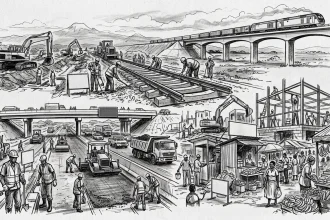
Four years later, the administration is offering a different standard of evaluation. The language of systemic transformation has largely given way to the language of physical delivery, with the President pointing to houses under construction, rehabilitated roads, electrical grid expansions, modernised markets, digitised government services, and agricultural reforms.
The record supports neither government triumphalism nor opposition claims of unmitigated failure.
Instead, it reveals a presidency caught between an ambitious vision and severe fiscal constraints – between tangible projects that photograph well and structural reforms whose impacts remain hard to feel.
Crucially, it highlights a disconnect between improved macroeconomic indicators and the daily squeeze on household budgets.
Macroeconomic Evolution: 2022 vs 2026
To judge the administration fairly, its core record must be weighed against the macroeconomic baseline it inherited in late 2022. When Ruto took office, Kenya was reeling from a severe cost-of-living crisis driven by global supply chain disruptions, currency depreciation, and a looming debt cliff.
Headline inflation had peaked at 9.6 per cent, driven by soaring food and fuel prices, while foreign exchange reserves were dwindling. Real GDP growth was decelerating from post-pandemic highs down toward 4.8 per cent, and total public debt stood at roughly Sh8.7 trillion, representing nearly 67 per cent of national output. Ordinary revenue collection hovered around Sh1.9 trillion, leaving the government severely reliant on expensive short-term borrowing to fund public operations.
By 2026, the administration can point to measurable, policy-driven macroeconomic stabilisation. Headline inflation cooled significantly, normalising to around 6.6 per cent. The Kenyan shilling, which experienced steep losses through 2023, stabilised, backed by foreign exchange buffers that reached over USD 13 billion.
Annual revenue collection expanded sharply from Sh1.9 trillion to approximately Sh2.7 trillion, helping stabilise overall gross domestic product growth at a steady 5.0 per cent despite global headwinds.
Yet this structural stabilisation came at a high cost that directly complicates the administration’s political narrative.
Total public debt expanded significantly, surging past Sh13 trillion by 2026 – a jump of more than Sh4 trillion over four years – driven by ongoing deficit financing, domestic debt issuances, and Eurobond liability management. Debt service obligations now consume over half of all ordinary revenue, severely restricting discretionary fiscal space.
Furthermore, while headline inflation dropped, the actual cost level remained elevated; food inflation stood at 9.4 per cent, and transport costs were up 15.7 per cent year-on-year. Consequently, the statistical stabilisation recorded in Treasury briefings has not translated into lower prices or higher disposable income at the household level.
Shift from Vision to Delivery
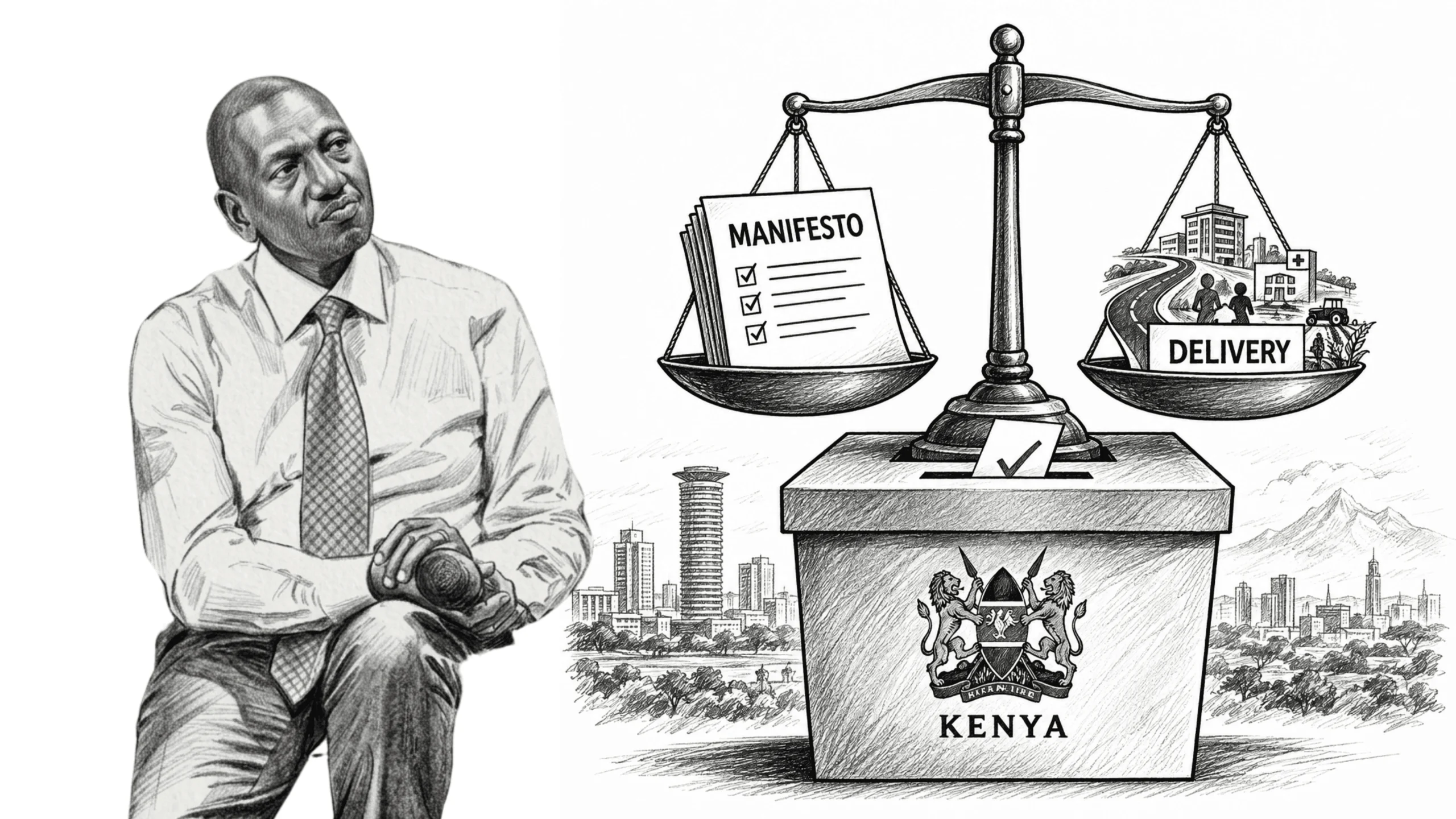
This gap between macro indicators and lived experience explains why the government shifted its emphasis from “Bottom-Up transformation” to concrete physical “delivery.” The original Kenya Kwanza manifesto outlined an expansive program spanning agriculture, housing, healthcare, manufacturing, digital infrastructure, and education.
Evaluating these commitments requires distinguishing between outcomes the state directly controls and those shaped by global commodity cycles, weather patterns, and market forces.
The government’s strongest case lies where it possesses direct execution authority, with affordable housing providing a central example. Over 230,000 units are completed or underway, converting a campaign pledge into a visible public works program.
Yet these numbers present a dual story: the manifesto promised 250,000 units annually, or one million over four years. Thus, 230,000 units represent both a real execution footprint and a significant shortfall against original targets – a contradiction present across the Ruto record.
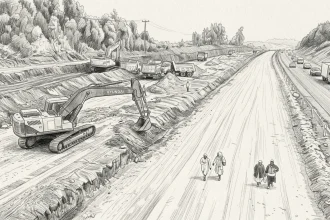
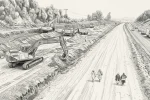
Infrastructure displays a similar dynamic. Over one million new electricity connections have been added, and more than 1,000 kilometres of roads upgraded across 40 counties. Work has also proceeded on venues for the 2027 Africa Cup of Nations.
Yet the distinction between activity and completion remains critical. Financing constraints have stalled several projects, left contractors unpaid, and created funding gaps, including a Sh14.5 billion deficit and over Sh6 billion in unpaid obligations for stadium builds.
The administration has proven adept at demonstrating movement, but achieving complete transformation remains an uphill climb.
Where the Numbers Make the Case
Beyond political speeches, agricultural data offers clear evidence of direct government intervention. Subsidised fertiliser distribution expanded from 2.6 million bags in 2022 to over 5.3 million by 2026. Maize output rose from 61.7 million to 85.7 million 50-kilogram bags – a nearly 39 per cent increase.
In the coffee sector, farmgate prices in certain factories grew from Sh50 to Sh60 shillings up to roughly Sh158 shillings per kilogram, aided by the Direct Settlement System, the Coffee Act 2025, and cooperative debt relief.
While external variables like rainfall and global commodity demand affect these metrics, targeted policy design played a clear role. However, these successes also reveal how difficult institutional reform can be.
The Direct Settlement System managed Sh27.6 billion in coffee sales across more than 500,000 bags, but legal challenges from coffee unions over public participation led to court suspensions, forcing the government to pass fresh legislation capping cooperative deductions at 10 per cent and establishing a Price Stabilisation Fund.
Healthcare illustrates a similar struggle. Replacing the National Hospital Insurance Fund with the Social Health Authority marks one of the administration’s most far-reaching policy overhauls. By 2026, over 29 million citizens had registered, and Sh65.4 billion was disbursed to over 4,700 facilities.
Enrolling citizens at this scale is a major logistical achievement. However, system rollouts have been hit by payment delays, claims backlogs, and hospital disputes, including a Sh76 billion debt owed to private health providers. At a hospital front desk, policy ambitions matter little if patients are turned away due to unsettled claims.
The Gap in Manifesto Delivery
Comparing delivered results against original campaign targets highlights significant operational gaps, particularly in the digital space.
The manifesto promised 100,000 kilometres of national fibre-optic connectivity, but official scorecards record less than 4,700 kilometres completed – roughly 5 per cent of the target.
Similarly, against a pledge of 25,000 public Wi-Fi hotspots, fewer than 1,600 have been established.
A similar dynamic exists in youth and employment initiatives.
Hundreds of thousands of young people completed digital training through programs like Ajira, alongside efforts to expand overseas labour placements and local manufacturing. Yet skills training does not automatically equate to job creation or long-term financial security.
The Hustler Fund reflects this dilemma. With nearly Sh55 billion disbursed across 21.8 million enrolled borrowers, it expanded micro-credit access to populations lacking traditional banking access.
However, with a non-performing loan ratio hitting 21 per cent, it remains unclear whether the fund is building sustainable capital or adding debt to already strained households. Credit access alone does not substitute for broader market access, productive assets, or steady employment.
Governance, State Violence, and Youth Alienation
Evaluating a four-year record requires looking beyond infrastructure metrics and budget allocations to examine governance, institutional integrity, and public trust.
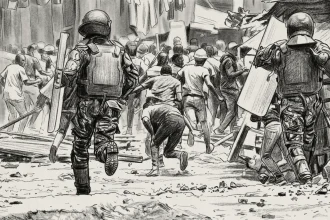
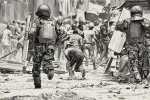
The most severe political crisis of Ruto’s presidency unfolded during the youth-led nationwide protests of mid-2024, which triggered an unprecedented rift between the state and the country’s youth.
What began as an organic, decentralised movement against the Finance Bill 2024 rapidly transformed into a broader referendum on state accountability, corruption, and police brutality.
According to official reports, at least 60 demonstrators were killed in protest-related violence, hundreds were injured, and dozens were subjected to arbitrary abductions and enforced disappearances by state security agents.
The breaching and storming of Parliament on June 25, 2024, followed by police opening live fire on protesters, marked a historic rupture in Kenya’s democratic journey. The human cost of the state’s crackdown severely eroded the administration’s democratic standing and created a deep political disconnect with young voters.
The very demographic that William Ruto had mobilised in 2022 under the “hustler” banner – promising them economic dignity and political inclusion – came to view his government as authoritarian and unresponsive.
While the subsequent establishment of a Sh2 billion compensation framework for protest victims represented an attempt to acknowledge state overreach, it did little to address the fundamental demand for judicial accountability for those responsible for the deaths.
For millions of young Kenyans, the administration’s reliance on heavy-handed security measures shattered the central promise of Bottom-Up economics, shifting the youth dynamic from economic expectation to political resistance.
The Verdict at Four Years
As the administration moves toward the final stretch of its term, the political debate is drawn along clear lines.
The government urges voters to focus on concrete physical outputs, structural reforms, and macroeconomic recovery. The opposition emphasises high living costs, new taxes, expanding debt, and unfulfilled campaign promises. Both arguments draw on real evidence:
The Government’s Case: Kenya has made measurable progress in agricultural yields, housing construction, digital service integration, grid expansion, and macroeconomic stabilisation.
The Opposition’s Case: Everyday life for millions of households remains defined by tight budgets, job scarcity, heavy tax burdens, and implementation friction in health and financial access.
Four years in, the record shows that the government has delivered more than its harshest critics acknowledge, but less than its original manifesto promised.
This gap between campaign vision and daily reality forms the central tension of the Ruto presidency, setting up the key question for the rest of his term.
Will voters view visible physical infrastructure as proof of progress, or will they judge the administration on whether their individual financial mobility has actually improved?