





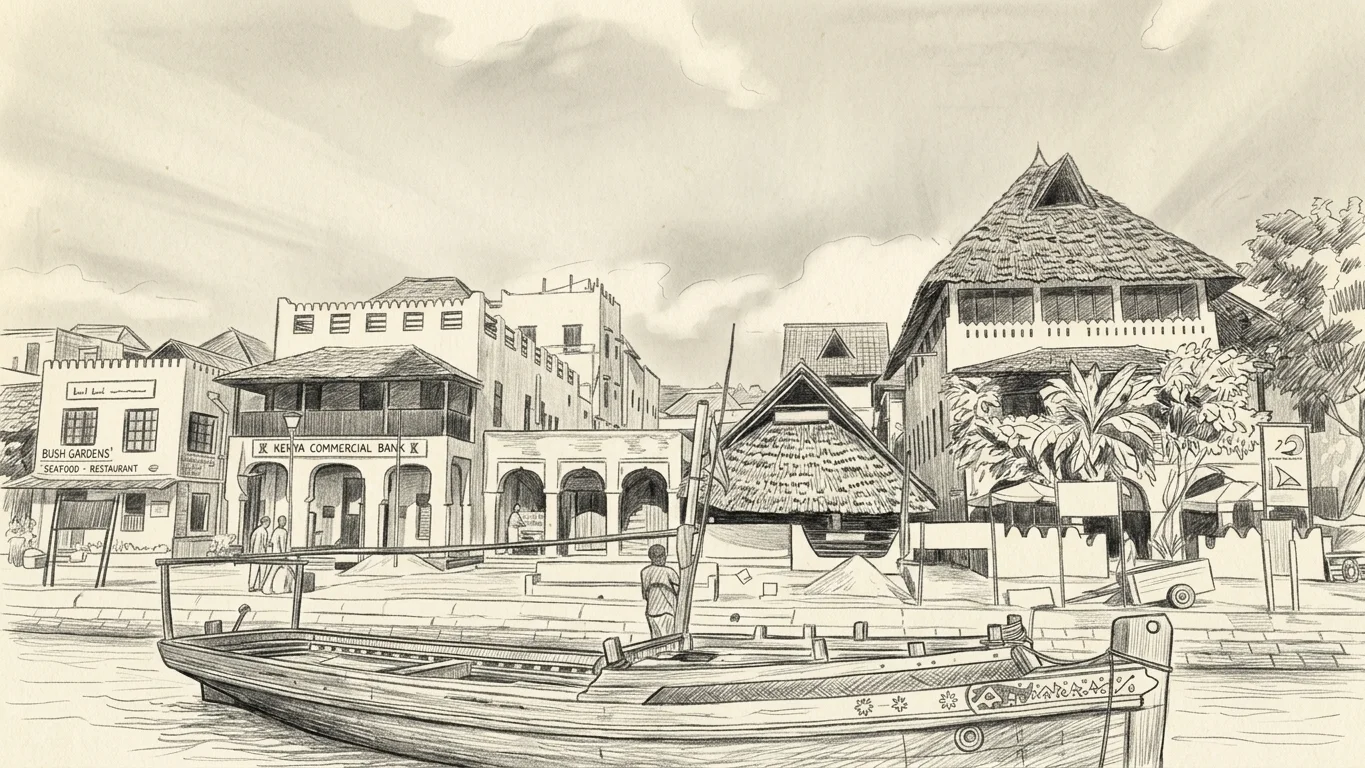
Most heritage sites are preserved as museums. Lamu Old Town is unusual because it still functions as a town even though its alleys have no cars, and donkeys do the carrying.
Fishermen go out and come back with the tide, and mosques anchor the day. UNESCO inscribed it in 2001 as one of the oldest and best-preserved Swahili settlements in East Africa. That recognition came from continuity: people still live there the old way.
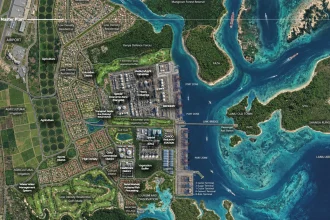
On September 30, Ruto and Dangote broke ground on a refinery intended to process up to 700,000 barrels a day with planners projecting up to 60,000 direct and indirect jobs.
The refinery sits on the mainland at Kililana, but it brings a petrochemical complex, a power plant and, in the President’s words, a new big city. Lamu is being asked to host a second economy, and the old one has to find its place alongside it.
The Sea Is The First Test
Fishing is more than a trade in Lamu. It is a way of knowing the water, the seasons and the grounds. It is also where the corridor has already left its mark.
When the port was built, fishermen went to court, arguing that they had not been consulted and that dredging had damaged mangroves, seagrass and coral.
In 2018, the High Court found that their rights, including their cultural rights, had been violated and ordered Sh1.76bn in compensation. The payout came about six years later, by which time fishermen were protesting in the old town streets, saying their simple gear struggled in the rougher waters the port had created.
That history is the most useful guide to what comes next. Environmental groups are already raising concerns about the refinery’s impact on the marine ecosystem, and reporters have highlighted mangroves and possible pollution reaching the Indian Ocean.
A fishing culture does not disappear in a single dramatic day. It thins as the catch changes, costs rise, and young people decide the sea is no longer their future. The question is not whether Lamu will keep dhows for the postcards. It is whether the next generation will still work them.
Land Is Memory As Well As Property
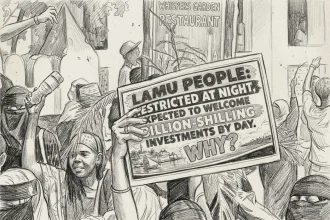
The most human aspect of the dispute is in Chandavai. A group of 133 residents has gone to court over land they say their families have farmed and lived on for generations, with homes, mosques and shrines built on it.
They say they are not against development but want their claim recognised before the diggers arrive.
The government says the land is its own and part of the economic zone, and the court has not yet ruled on ownership. This is where culture meets economics. A shrine on contested land is a history that a bulldozer cannot move.
Meanwhile, the Governor and Dangote have urged residents not to sell cheaply, expecting values to climb. The Governor has also warned about opportunistic buyers, including those targeting people on ancestral land without title.
The advice is sound, but it only helps those who hold the paper. A rising land market rewards the documented and leaves the long-settled but undocumented exposed.
Who Moves In
Ruto has promised to prioritise young people from Lamu and neighbouring counties for jobs and training, and Dangote has promised an engineering school in Lamu. These are welcome commitments. But 60,000 jobs is a large number for a county whose population was 143,920 at the 2019 census.
Much of the skilled work will draw people from elsewhere, and the town they arrive in will feel it in rents, the market, the language on the street and how crowded the ferry gets.
None of that is a reason to fear newcomers. Lamu has always been a meeting place, shaped by traders and settlers from across the Indian Ocean. The difference lies in pace and scale. A culture can absorb strangers over generations, but it struggles to do so in a few construction seasons.
The test of the project’s promise on local hiring is whether Lamu’s young people end up in the skilled roles, and whether anyone is keeping a public count.
The Tourism Bargain
Many people in Lamu depend on visitors, and they want clearer assurances about their livelihoods. Visitors come for what industry cannot manufacture: a place that seems to have stood still.
The refinery is not in the old town, but it is close enough to change how the place is seen from the water, how it is marketed, and perhaps how UNESCO views its integrity.
The World Heritage Committee has previously expressed concern about the corridor’s impact on the site. Lamu’s cultural economy depends on that image, so protecting it is as much a livelihood issue as a heritage one.
Can The Two Coexist?
They can, but not on sentiment or by default. So far, the pattern at Lamu is that approvals and construction move quickly, while consultation, compensation, and safeguards arrive late. Ruto has said land matters will be handled lawfully and fairly, and that environmental and social safeguards will be enforced.
If that holds, Lamu could be a rare case of industry and living heritage side by side. If the old pattern repeats, the heritage will survive on paper, in plaques and festivals, while the lives that made it will move elsewhere.
Dangote said Lagos proved the refinery could be built, and Lamu must prove it can be replicated. For Lamu, the proof required is different: that a community can preserve its sea, its land and its story through a boom. That is the standard by which the island will be judged, and it will be evident long before the first tanker leaves port.