




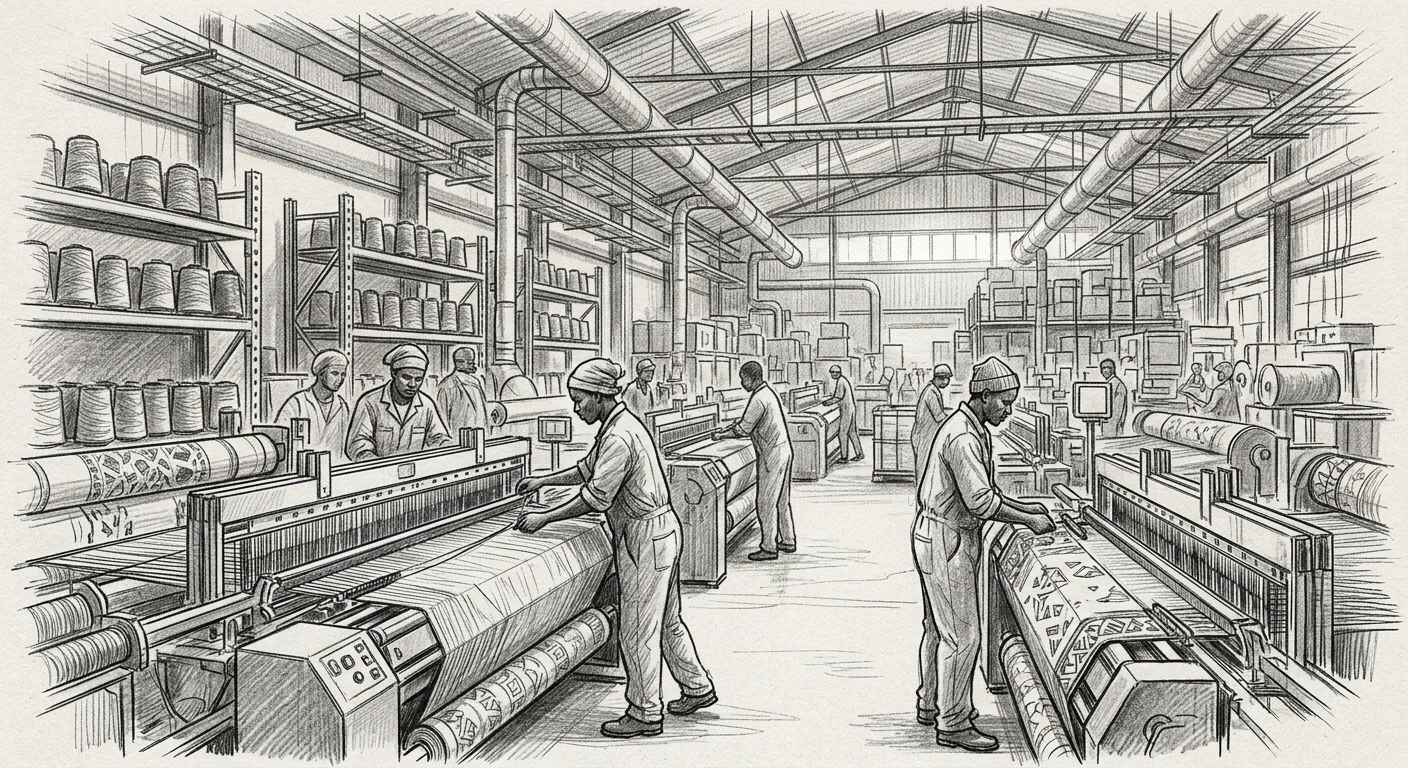
Manufacturing is central to Kenya’s development ambitions, shifting from exporting raw materials and importing finished goods to creating value locally.
Processing agricultural products can benefit farmers, factory workers, transporters, suppliers and retailers. A stronger manufacturing base could also reduce reliance on imports and diversify exports.
Yet industrialisation is easier to promise than deliver. Factories need reliable power, affordable finance, skilled workers, suitable raw materials, efficient logistics and customers willing to pay competitive prices. Without these conditions, policies to promote local production may fail to create viable businesses and lasting jobs.
Kenya’s latest official survey shows both promise and challenges. The Kenya National Bureau of Statistics reported manufacturing growth slowed to 2.0 per cent in 2025 from 3.0 per cent in 2024, while its GDP contribution fell from 7.3 per cent to 7.1 per cent.
Still, formal sector employment rose 5.2 per cent to about 388,600. The sector is creating jobs, but its growth remains too slow to ensure industrial transformation succeeds.
Local Production Needs More Than A Factory
Kenya must first determine what it can produce competitively, at what scale and for which markets.
Manufacturing is diverse: food processing relies on consistent, quality agricultural supplies; textiles on fibres, energy, machinery and responsiveness to demand; pharmaceuticals on strict quality systems and reliable inputs; and construction materials on energy, transport costs and building activity.
Treating every industry alike could dilute public support. Kenya should focus on areas where it has an advantage, local demand can sustain production, and regional or global markets offer growth. It should also acknowledge that locally made goods may remain costlier than imports unless production costs fall.
The 2025 figures show uneven progress. KNBS reported strong growth in cement-related production and vehicle assembly, but weaker agro- processing.
Sugar manufacturing fell 24.8 per cent, as did production of some foods, including made tea and milled coffee. Industrial progress therefore depends not just on investment announcements, but on each value chain’s inputs, market conditions and operating efficiency.
The Cost Of Producing In Kenya
For manufacturers, competitiveness depends on the combined costs of electricity, transport, imported machinery, financing, taxes, compliance and working capital.
Even with a strong domestic market, firms must compete with imports that may benefit from larger production runs, established supply chains or lower costs elsewhere.
Before investing in a production line, a company must assess whether sales will cover the investment, whether raw materials will be available year-round, and whether affordable financing will last until revenue begins.
Small manufacturers also face proportionately higher costs for standards, packaging, distribution, and compliance when spread over low production volumes.
These constraints affect jobs: underused factories may retain workers but delay expansion, uncertain demand may favour machinery over hiring, and limited working capital can cost firms orders despite spare capacity. Industrial policy should help existing firms grow, not just attract new investors.
The public sector can support industry with infrastructure, predictable regulation, reliable energy, technical training and export access.
Any incentives or tax concessions should be transparent, time-limited and tied to measurable gains in production, jobs, skills or exports; otherwise, they may subsidise activity that would have happened anyway.
Import Substitution To Export Competitiveness
Reducing reliance on imports is understandable, but urging consumers to buy Kenyan products is not enough. Manufacturers must meet standards, ensure reliable supply and keep prices affordable. Without productivity, protection can raise costs, shelter inefficient firms and stifle innovation.
The real test is whether firms can compete beyond a protected domestic market. Regional trade lets Kenyan producers reach East African customers, while exports earn foreign exchange and grow production beyond local demand.
Success depends on certification, customs, logistics, predictable rules and the ability to deliver large orders on time.
In July 2026, the Kenya Export Promotion and Branding Agency reported that exports rose from Sh60.5 billion in 2024 to Sh66.9 billion in 2025, supporting over 82,000 formal jobs.
Amid uncertainty over US access under the African Growth and Opportunity Act, it urged market diversification. The figures show progress despite domestic production challenges.
Manufacturing policy must boost domestic production and export competitiveness. Export processors may thrive as local producers struggle because of differing supply chains, incentives and customers. Policymakers should connect exporters, local suppliers, technical institutions and Kenyan consumers.
What Would Industrial Success Look Like?
A credible manufacturing strategy should be judged by a few outcomes: sustained growth in manufacturing value added, more productive jobs, greater domestic value addition, stronger exports, economically viable use of local inputs, and more small and medium-sized manufacturers surviving and expanding.
For tax incentives, report whether production and employment increased. For industrial parks, distinguish land allocated from operational factories and jobs created. For local-content rules, track whether they build capable suppliers or raise costs.
Kenya need not choose between ambition and realism. It needs industrial policy that distinguishes announcing production from making it commercially sustainable.