




Water infrastructure is often judged by engineering scale — plant capacity, transport volume or investment. But for households, businesses and institutions, the key questions are simple: Is water available when needed, safe to use and affordable?
That is the test facing two major proposals in Kenya’s public-private partnership pipeline. The Sh106.1 billion Lamu Water Desalination Plant would initially supply 120,000 cubic metres of potable water daily.
The Sh27.9 billion Sabaki Water Carrier Project proposes to draw 80,000 cubic metres daily from the Baricho aquifer in Kilifi County, with treatment, storage and related infrastructure.
The Public Private Partnerships Directorate’s report for the quarter ending September 30, 2026, listed both projects as under contract negotiations.
They are not completed infrastructure, and water is not yet flowing to intended consumers. The figures reflect proposed investments and capacity, not delivered outcomes.
The two projects are valued at Sh134 billion, with proposed daily capacities totalling 200,000 cubic metres — a substantial investment. But water security depends not just on funding, but on a credible plan to deliver reliable, sustainable service.
Lamu’s Water Crisis And New Supply Costs
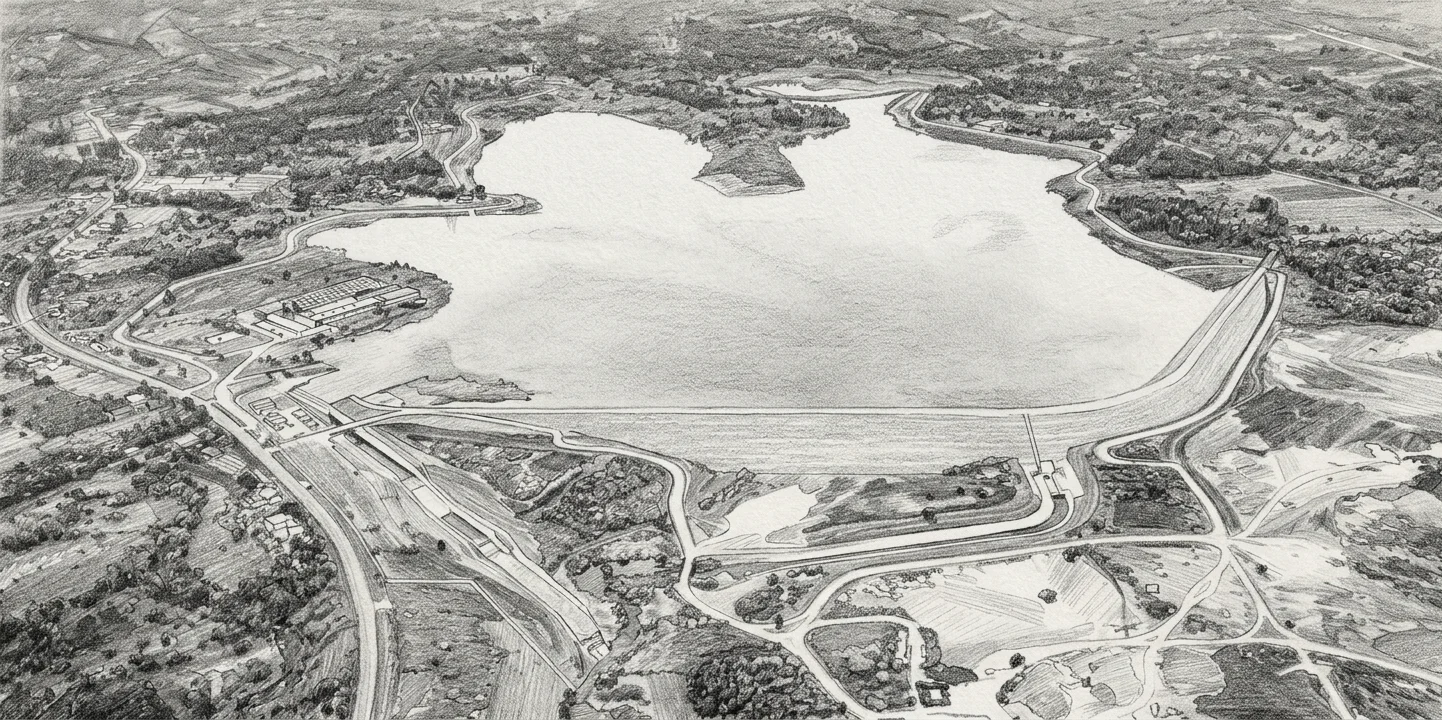
The proposed Lamu Water Desalination Plant will initially produce 120,000 cubic metres of potable water daily for Lamu Town, surrounding areas, and the LAPSSET zone. It also plans to sell products recovered from the minerals.
Approved in December 2023 for development and feasibility studies, the project advanced to contract negotiations in April 2025. A September 2026 report lists it at that stage, naming Rasli Bahari Kenya Ltd as private proponent and the Ministry of Water, Sanitation and Irrigation as contracting authority.
Expanding Lamu’s water infrastructure supports households, public institutions, businesses and LAPSSET corridor ambitions.
But desalination’s economics are central to public debate: beyond plant construction, costs include long-term operation, water treatment and distribution, maintenance and financing.
The status report estimates project value and capacity but gives no final consumer tariff, confirmed financing structure, or evidence of financial close. These gaps require answers, not assumptions.
What will it cost to produce and deliver a cubic metre of water? How will the investment be recovered? What costs, if any, will public entities bear, and what will consumers pay? How will the project protect households least able to afford higher bills?
These questions do not weaken the case for desalination. They are essential to determining whether the solution is technically sound, financially sustainable, and socially affordable.
Sabaki And The Wider Economics Of Bulk Water
The Sabaki Water Carrier Project offers a different route to expanding supply. Estimated at Sh27.9 billion, the project proposes extracting 80,000 cubic metres of water daily from the Baricho aquifer in Kilifi County.
Planned infrastructure includes a water treatment and storage plant, sewage treatment units and a sewer network in project zones.
Approved in October 2023 for development and a feasibility study, the project was cleared for contract negotiations in February 2025, subject to conditions. Negotiations were ongoing as of September 2026. The report names Utility Partners One LLP as the proponent.
The project could advance water supply and sanitation goals, but its public value depends on the whole system — not abstraction volumes alone. Treatment, storage, distribution, sanitation and operations determine the service consumers receive.
Bulk-water capacity does not guarantee household access. Benefits depend on distribution networks, institutions, and providers that connect supply to homes and businesses, so planning must address the entire delivery chain.
The project must also show how it will manage water resources sustainably. Before implementation, the public should have access to evidence on the aquifer’s capacity, abstraction impacts, allocation among competing needs and safeguards to protect the resource throughout the project.
The September report outlines the project’s proposed scope and current stage but does not resolve technical, environmental or affordability questions. Answers depend on the feasibility study, project assessments and negotiated terms.
Missing Link Between Investment And Affordability
Public-private partnerships can bring capital and specialist expertise into infrastructure provision. They can also introduce complex long-term agreements whose costs and risks are not immediately obvious from a headline project value.
For a water project, the key financial question is whether the arrangement can provide reliable service at a cost users and public institutions can sustain — not simply whether a private investor will participate.
This requires scrutiny of financing, operating costs, demand assumptions, payment mechanisms and risk allocation. If consumer tariffs help recover costs, their basis should be transparent. Any public payments, guarantees or other support should clearly disclose the nature and scale of the state’s exposure.
It is equally important to understand what happens when assumptions change. What protections are in place if construction costs rise, demand falls below projections, the project is delayed, or operating expenses exceed forecasts? Who bears the consequences, and how are service continuity and consumer interests protected?
These are not arguments against private participation. They are the standards against which a major public-service investment should be evaluated.
Assess both projects against credible, technically viable alternatives — not simply whether desalination or a bulk-water carrier can be built. Compare value for money, reliability, operating costs, environmental impacts, delivery timelines, and affordability.
That comparison matters because the cheapest initial construction option isn’t necessarily the least expensive over an asset’s life.
Conversely, a technically sophisticated solution isn’t automatically the best if its long-term costs make the resulting service inaccessible to the people who need it.
A Public Scorecard For Water Security
The next stage of scrutiny should be project- specific, rather than relying on general assurances about infrastructure development.
For Lamu, the public needs clear information on the feasibility findings, proposed financing, expected operating costs, tariff implications, environmental safeguards and the conditions that must be met before financial close.
The project’s planned mineral-recovery component also deserves explanation: how it contributes to the commercial model, what products are expected and how much of the project’s viability depends on their sale.
For Sabaki, scrutiny should focus on the source and sustainability of the proposed abstraction, the design and cost of treatment and storage, the distribution arrangements, sanitation components and the intended consumers.
The public should be able to see how the project’s proposed capacity translates into reliable access, and what measures will protect affordability and continuity of service.
For both projects, progress reporting should distinguish between negotiated terms, signed agreements, financial close, construction, commissioning and actual service delivery. These milestones are not interchangeable.
A project advancing through negotiations shows movement in the development process, but it does not prove the financing is secured or that the infrastructure will be delivered on schedule.
The government should also publish understandable updates on material changes in cost, scope or timelines, subject to legitimate commercial confidentiality requirements.
Transparency should let citizens, county governments, legislators, regulators, and independent experts evaluate progress without confusing a proposed investment with a completed public asset.
Kenya needs infrastructure that can expand water access and support economic development. The Lamu and Sabaki proposals could become important parts of that effort, but their ultimate value will depend on what they deliver, at what cost, and for whom.
Success is not measured by the Sh134 billion attached to two project estimates, nor by the 200,000 cubic metres of proposed daily capacity.
It is the reliable, safe, and affordable water that reaches consumers once financing is secured, the infrastructure is built, and the systems are operating.