





Kenya’s Public-Private Partnership (PPP) programme can mobilise private capital, bring technical expertise and accelerate infrastructure delivery.
The September 2026 PPP status report outlines an ambitious pipeline spanning energy, agriculture, roads, water, power and urban infrastructure.
Its success will depend not on pipeline size, but on projects reaching financial close, entering construction and delivering tangible benefits to citizens.
A pipeline, not a scorecard
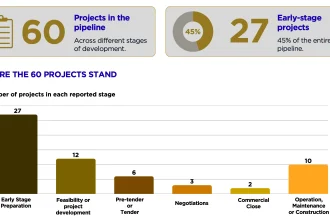
Of the listed projects, 27 are in early preparation, 12 at feasibility or development, six at pre-tender or tender, three in negotiations, two at commercial close, and 10 in operation, maintenance, or construction.
So, 45 per cent of the pipeline remains at the earliest stage. This signals strong investment appetite but highlights the need for discipline, transparency, and rigorous project appraisal.
The financing and risk questions
PPP projects are not just about the headline value. Citizens and legislators need clear answers on:
- How each project will be financed,
- What risks remain with the state,
- Whether the arrangement offers value for money compared to alternative models,
- How tolls, tariffs, or other user charges will affect affordability, and
- What guarantees or contingent liabilities may be created for the public.
The report provides a useful status snapshot, but it does not answer all these questions.
A stronger public scorecard
Kenya needs a consistent way to track PPP projects from approval through operation, covering milestones, progress, costs, risks and service outcomes.
Reports should show beneficiaries, costs, and reliability. In-progress projects need progress updates and explanations for delays; proposals need credible evidence of need, affordability, and feasibility.
Kenya’s ambition is strong. The next step is delivering reliable public services and an economy that works for all Kenyans.